
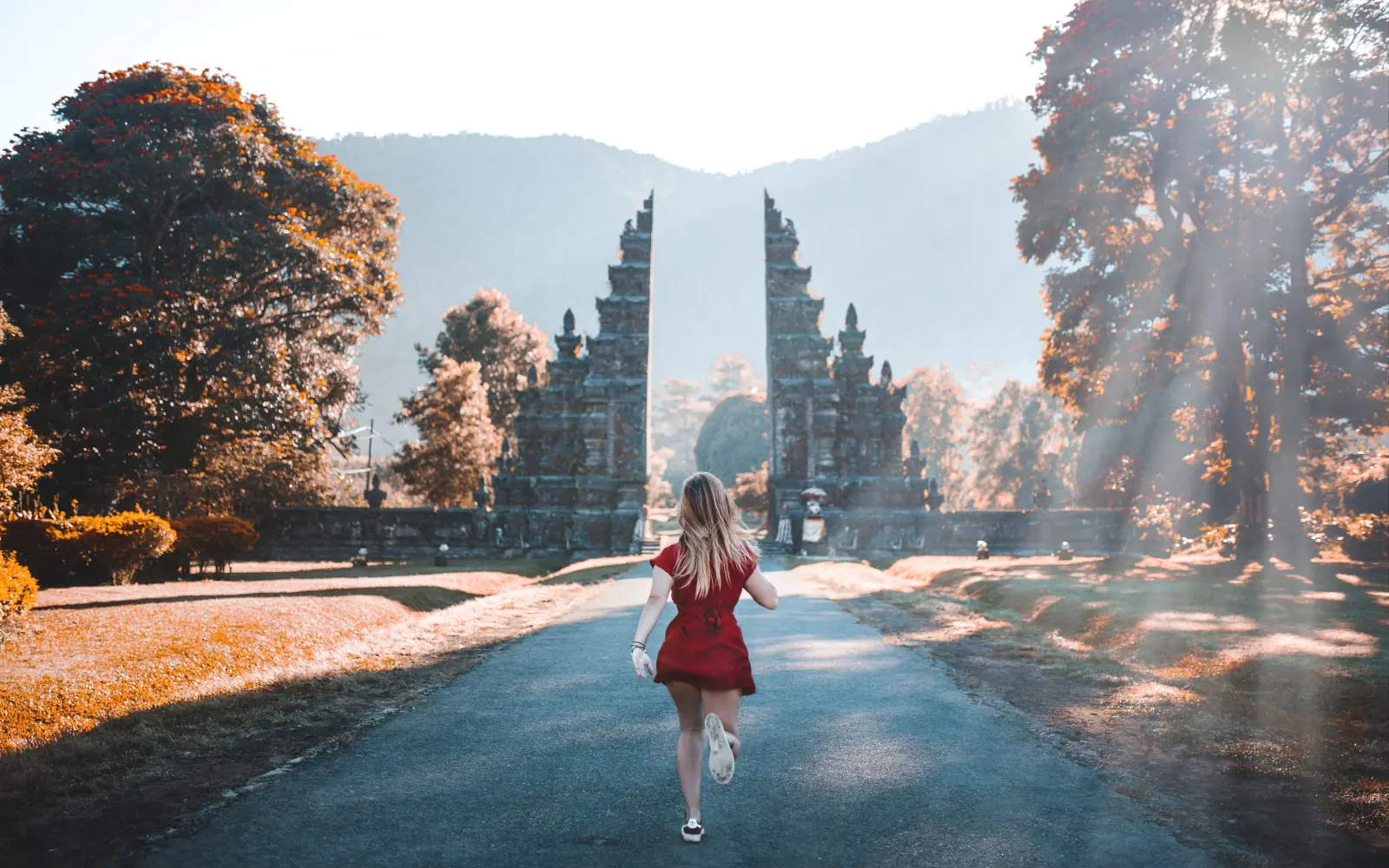
You’re exhausted. Emotionally drained. You’ve been running on empty for months and the only thought that gives you any relief is: I just need to get away.
There’s a name for what you’re experiencing, and it sits right at the heart of the healing travel vs escape travel conversation. Most people don’t realize there are two fundamentally different reasons human beings travel when life gets hard. One leads to genuine transformation. The other leads right back to where you started. Understanding the difference between them and could be the most important thing you read before booking your next trip.
So, you go. And for a while, it works. The new sights, the unfamiliar streets, the freedom of being somewhere nobody knows your name. You feel lighter. More alive. Until you don’t. Until the flight home begins and that familiar weight starts creeping back in, settling onto your shoulders before the wheels even touch the runway.
Sound familiar?
That moment, that quiet, sinking return of everything you thought you’d left behind is the clearest sign of which side of the healing travel vs escape travel divide you’ve been living on. And it’s a difference nobody in the travel space is talking about honestly.
Until now.
The Two Travelers Nobody Can Tell Apart
Here’s the uncomfortable truth: healing travelers and escape travelers look exactly the same from the outside.
Same destinations. Same carefully curated photos. Same out-of-office reply. Same deep exhale at the departure gate. But on the inside? Completely different journeys, with completely different outcomes. One comes home lighter, clearer, and more grounded in who they are. The other comes home to the same problems they left, plus a credit card bill and a vague sense of disappointment they can’t quite name.
Understanding which traveler you are isn’t about judgment. It’s about awareness. And awareness, as it turns out, is exactly where healing begins.

What Is Escape Travel?
Escape travel is driven by avoidance. It is the unconscious and sometimes very conscious act of putting physical distance between yourself and emotional discomfort, believing that if you can just get far enough away, the pain, the stress, or the problem will somehow shrink.
And it does shrink. Temporarily.
When you’re navigating a new city, your brain is too occupied with survival, where to eat, how to get around, what to see next, to ruminate on the things that have been keeping you up at night. This is not nothing. Distraction has genuine psychological value in the short term.
But escape travel is built on a fragile foundation: the assumption that the problem lives in your environment, not inside you. When you return home, the environment is exactly as you left it. And so, usually, are you.
This is why using travel to escape your problems, while deeply human, rarely produces the lasting relief we hope for. The problems don’t disappear they simply wait, let’s explore the signs your travel is actually escapism.
Signs You Might Be an Escape Traveler:
None of these make you broken. They make you human. But recognizing them is the first step toward something more powerful.

What Is Healing Travel?
Healing travel is driven by intention. It is the deliberate, conscious act of using travel as a container for self-reflection, emotional processing, and genuine inner growth.
Where escape travel runs away from something, healing travel moves toward something, a deeper understanding of yourself, a reconnection with what matters, a quiet space in which unprocessed emotions can finally surface and be met with compassion rather than avoidance.
Intentional healing travel does not require a wellness retreat in Bali or a silent meditation center in the mountains, though those can certainly help. It requires something far simpler and far more demanding: the willingness to be present with yourself, even when what surfaces is uncomfortable.
This is why healing travel is harder than escape travel. Escape travel asks you to look outward. Healing travel asks you to look inward and to keep looking, even when the view isn’t pretty. Solo travel for healing is one of the most powerful expressions of this. When you travel alone with genuine intention after a breakup, after burnout, after loss you remove every social distraction and create the conditions for real emotional processing. Not running. Arriving.
Signs You Are a Healing Traveler:
Healing Travel vs Escape Travel: Side-by-Side Comparison
When you lay healing travel vs escape travel side by side, the contrast becomes impossible to ignore. The table below shows exactly how the two differ across every dimension of psychologist prescribing the travel experience:
| Parameter | Healing Travel | Escape Travel |
|---|---|---|
| Motivation | Moving toward growth and self-awareness | Moving away from pain or discomfort |
| Planning Style | Intentional, spacious, flexible | Impulsive or frantically packed |
| Relationship to Stillness | Welcomes quiet and reflection | Avoids stillness with stimulation |
| Emotional State During | Present, sometimes uncomfortable, open | Distracted, temporarily relieved |
| Emotional State on Return | Lighter, clearer, more grounded | Same or heavier than before departure |
| Problems at Home | Feel more manageable after the trip | Unchanged — exactly as you left them |
| Next Trip Planning | Organic, when inspired | Urgent, as soon as you return |
| Core Question | “What do I want to understand?” | “How do I get away?” |
| Long-Term Effect | Genuine, lasting inner transformation | Temporary relief, recurring cycle |

The Psychology Behind the Difference
From a psychological standpoint, the distinction between healing and escape travel maps closely onto two well-established behavioral patterns: approach motivation and avoidance motivation.
Avoidance motivation, the engine of escape travel is a move away from negative stimuli. It provides immediate relief but does not resolve the underlying source of distress. In fact, repeated avoidance tends to reinforce the belief that the distress is unmanageable, making it harder to face over time.
Approach motivation, the engine of healing travel is a move toward a desired emotional or psychological state. It requires tolerating discomfort in the short term in exchange for genuine long-term change via travel therapy.
This is also why what happens when you come home is the real test.
Escape travel leaves your internal landscape untouched. Healing travel changes the terrain. When you return from a genuinely healing trip, the same life that once felt suffocating often begins to feel navigable, not because the circumstances changed, but because your relationship to them did.
Learn more about the corporate retreat planning skills to gain the ROI of well-being through healing travel.
The Real Test: What Happens When You Come Home
No part of your trip will tell you more about whether you were healing or escaping than the moment you arrive back home.
Coming home from escape travel feels like re-entering a prison. The same weight. The same dread. The same unresolved arguments, anxieties, and emotional loops, waiting patiently for your return as if you never left.
Coming home from healing travel feels different. Not because your circumstances changed, your job, your relationship, your finances are all exactly as you left them. But your relationship to those circumstances has shifted. The things that felt suffocating now feel navigable. Not because the walls moved, but because you did.
This is the real test of travel for emotional healing: not how you feel on the beach, but how you feel walking back through your front door.
Ask yourself honestly after your next trip:
- Do I feel different – or just temporarily relieved?
- Do my problems feel more manageable – or exactly the same?
- Did something shift inside me – or did I just press pause?
The answers will tell you everything about whether your trip was truly healing travel or escape travel in disguise.
Can Escape Travel Ever Be Healing?
Yes! and this is where the nuance lives.
Not all escape is harmful. Sometimes the most healing thing you can do is remove yourself from a toxic environment long enough to breathe. Sometimes distance is exactly what perspective requires. A weekend away from a stressful job, a solo trip after a heartbreak, a quiet retreat after a loss, these can all carry genuine healing value even when they begin as escape.
The difference lies not in the act of escaping, but in what you do with the space that escape creates.
Escape becomes healing when you use the distance not just to feel better, but to understand yourself better. When you stop running long enough to actually sit with what you’ve been running from. When you return not just rested, but changed.
The question to ask yourself is not “Am I escaping?” but rather “What am I doing with this space?”

How to Shift From Escape Travel to Healing Travel
You don’t need to overhaul your travel style overnight. Small, intentional shifts can transform the quality of any trip and the person who comes home from it.
1. Travel with a question, not just a destination. Before you book, ask yourself: What do I want to understand about myself or my life by the time I return? You don’t need a dramatic answer. Even something as simple as “I want to reconnect with what brings me joy” gives your trip a healing anchor.
2. Build in stillness. Escape travel fills every moment with stimulation, and for good reason. Stillness is where the feelings live. Healing travel makes room for stillness deliberately: a morning without plans, an afternoon with a journal, an evening without scrolling.
3. Notice what surfaces. Pay attention to what thoughts, emotions, and memories arise when the distraction fades. These are not inconveniences. They are the material of your healing. Bring curiosity to them instead of pushing them away.
4. Reflect on what you’re returning to. Healing travel doesn’t end at the airport. The integration of what you’ve experienced, the new perspectives, the emotional releases, the quiet revelations, is where the real transformation happens. Give yourself time and space to land before re-entering full speed.
5. Ask the honest question on the way home. Do I feel different, or just temporarily relieved? The answer will tell you more about your travel than any itinerary could.
The Traveler You Want to Become
There is nothing wrong with wanting to escape. The desire to flee from overwhelm, grief, burnout, or confusion is one of the most deeply human impulses there is. Travel has always offered that release, and it always will.
But there is a version of travel that gives you something far more valuable than temporary relief. A version that sends you home not just rested, but genuinely transformed. Not just distracted from your problems, but equipped to face them differently.
That version is available to you on any budget, in any destination, at any point in your life.
It just requires one thing that escape travel and mental health never asks of you: the courage to actually show up for yourself.
FAQ: Healing Travel vs Escape Travel
What is the main difference between healing travel vs escape travel?
Healing travel is intentional you travel toward self-understanding, emotional growth, and inner clarity. Escape travel is avoidance-based you travel away from discomfort, stress, or emotional pain without addressing its root cause. The clearest test is what happens when you come home: healing travel leaves you changed; escape travel leaves you exactly the same.
Is escape travel always a bad thing?
Not necessarily. Short-term escape can provide genuine relief and perspective. The problem arises when escape travel becomes a repeated cycle a way of avoiding unresolved emotions rather than processing them. When the relief is always temporary and the same problems keep returning, it’s worth examining whether escape has replaced genuine healing.
Can solo travel be a form of healing travel?
Absolutely. Solo travel for healing is one of the most powerful tools available particularly after burnout, heartbreak, or grief. Traveling alone removes social distractions and creates the space for real self-reflection. The key is intentionality: going with an open question, allowing stillness, and being willing to sit with what surfaces.
How do I know if I’m using travel as a coping mechanism?
Signs include booking trips impulsively during emotional crises, feeling dread as the return date approaches, coming home feeling exactly the same or worse, and immediately planning the next trip before the current one ends. If travel feels more like urgent necessity than genuine excitement, it may be functioning as an emotional coping mechanism.
What is intentional healing travel?
Intentional healing travel means approaching a trip with a clear inner purpose: a question you want to explore, an emotion you want to process, or a reconnection with yourself you’re seeking. It involves building in stillness, slowing down, and being present with what arises rather than filling every moment with distraction.
Can a regular vacation become healing travel?
Yes. You don’t need a wellness retreat or a spiritual pilgrimage. Any trip can become healing travel if you approach it with intention, allow space for reflection, and use the distance to genuinely explore your inner landscape rather than simply escape it.
What types of travel are best for emotional healing?
Slow travel, nature-based travel, solo travel, and retreat-style experiences tend to support emotional healing most effectively because they naturally create stillness and space for reflection. However, the destination matters less than the intention you bring to it.