
Custom Psychometric Test Development
We bring world-class expertise and unmatched experience to the custom development of psychometric test and psychometrics assessments.

Tailored Psychometrics Assessment Solutions for Your Unique Organizational Needs
Whether you require tools for talent assessment, standardization, certification, or high-stakes testing programs, our team designs scientifically backed, bespoke assessments built around your exact requirements.
Our Approach: From Needs Analysis to Personalized Test Development
A truly effective psychometric test cannot be pulled off a shelf; it must be engineered for your specific context. We specialize in the personalized development of psychometric assessments, ensuring every question and metric aligns with your organizational goals.
Our proven methodology begins with a comprehensive Needs Analysis:
Thorough Planning & Discovery
We conduct an in-depth implementation planning session to understand your desired outcomes, target audience, and the exact traits or skills you need to measure.
Dedicated Project Team
A specialized team of applied psychologists develops a tailored blueprint.
Data-Driven Consultation
We provide ongoing consultation and data modeling to ensure compliance with industry best practices and strict professional standards.
We are Ready to Assist you
The 6 Phases of Custom Test Development
Our comprehensive analytics and research services go far beyond basic statistical checks. We utilize advanced methodologies, including Item Response Theory (IRT) and Classical Test Theory (CTT), to rigorously evaluate every question for maximum precision. Our dedicated research team conducts deep-dive factor analysis and differential item functioning (DIF) studies to eliminate cultural and experiential bias, ensuring fairness across all demographics from corporate professionals to athletes and everyday individuals. By bridging rigorous academic research with applied, solution-focused psychology, we engineer psychometrically sound assessments that deliver crystal-clear, predictive, reliable, and highly actionable insights, empowering your organization to make confident, data-driven decisions every single time.
Conceptualize and Planning
Item Writing
Pilot Testing
Validity and Reliability Testing
Implementation and Maintenance
Final Test Development
Psychometric tests depend on two main factors that make them effective.
Reliability
A psychometric test is only reliable if it produces highly consistent results under invariable conditions. Our personalized tests are engineered to yield precise, stable scores across multiple testing occasions.
Validity
The true value of a psychometrics assessment test lies in its validity, the degree to which it accurately measures the specific trait, aptitude, or skill it was designed to evaluate. By using scientifically proven methodologies tailored to your needs analysis, our custom tests promise significantly higher validity than conventional interviews.
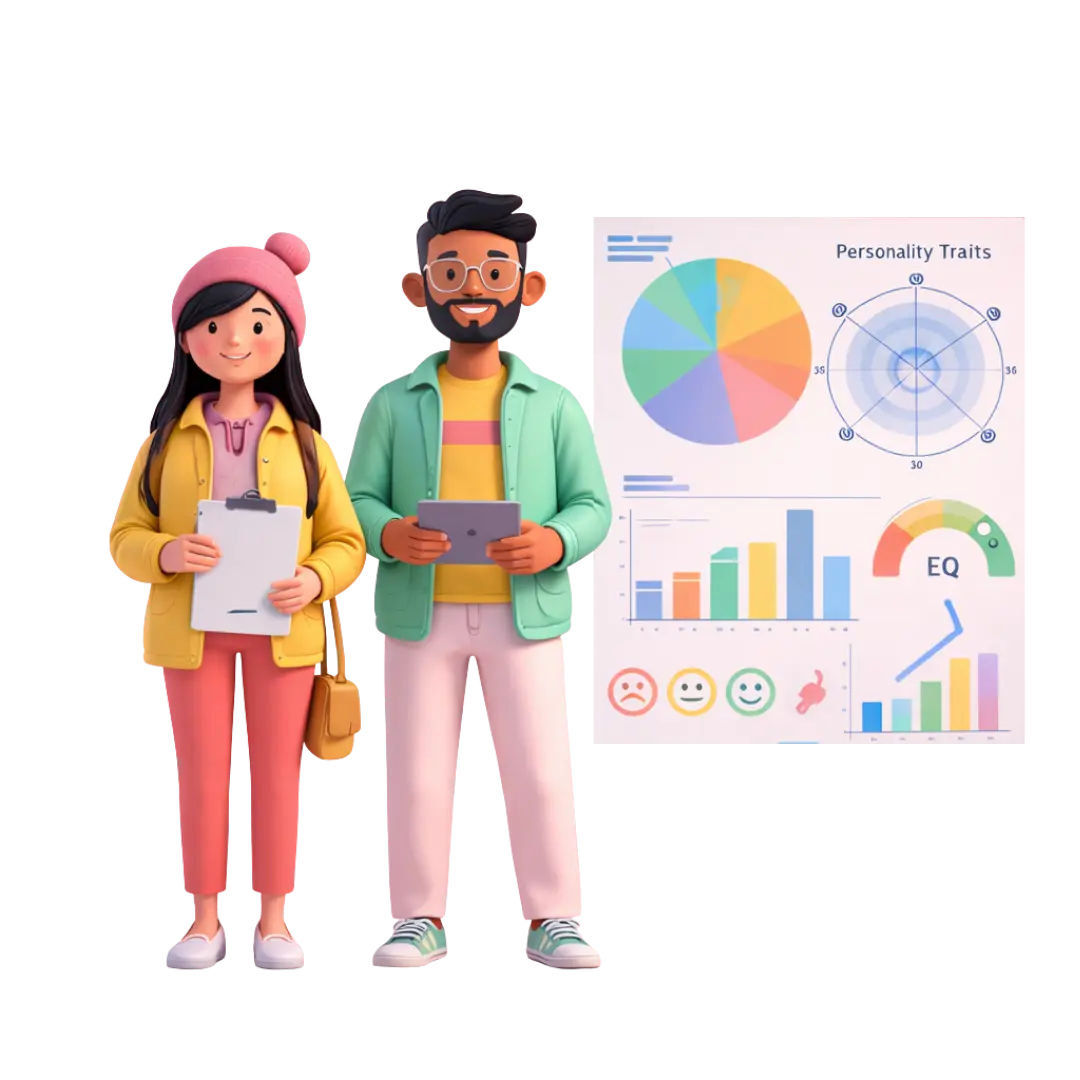
Types of Psychometric Tests We Customize
Every organization, team, and individual faces a unique set of challenges. Because Mandeha is a solution-focused psychology practice built to serve everyone from corporate leaders and professional athletes to travelers and everyday individuals, we do not rely on a “one-size-fits-all” approach.
Instead, we construct and calibrate diverse assessment formats designed to measure exactly what matters most in your specific context:
Ability & Aptitude Tests
Tailored to measure an individual’s capacity to learn, process complex information, and solve problems in areas where they may have no prior experience.
Competency & Skill Assessment
Designed to assess an individual’s ability to perform specific, job-related duties (e.g., coding proficiency, administrative speed, or technical sales ability etc.).
Gamification of psychometrics: new styles of test
We develop accessible, engaging Game-Based Assessments (GBAs). These modern tests prevent gaming-experience bias while delivering robust psychometric data.
Personality Tests
Customized tools to evaluate behavioral preferences, emotional intelligence, work styles, and interpersonal relationship dynamics.
Developed In-House Assessments
- Rigpa Emotional Intelligence Inventory
- Comprehensive Test for Engineers
- Creative Thinking Assessment
- Career Interest & Ability Test
- Travel Personality Profiler
- Corporate Capability Assessment
- Test of Performance Skills
- Tangible Travel Tool