- Why Do Life Lessons From Travel Land Differently Than Classroom Lessons?
- What Does Travel Teach You About Yourself?
- What Does Travel Teach You About Other People?
- Do the Lessons Learned From Traveling Stick After You Get Home?
- How Travel Changes Your Perspective Over Time
- How to Use Travel as a Learning Experience
- Conclusion: Life Lessons From Travel Are Built, Not Collected
- Frequently Asked Questions
Quick Answer: The most useful life lessons from travel are practical, not poetic. You cope with uncertainty better than you expected, unfamiliar norms are different rather than wrong, and your habits come with you. Travel teaches best when you reflect on what happened and then apply one small change at home.
Picture this: your train is cancelled at 11 pm, your phone is at 4 percent, and you do not speak the local language. Within an hour you have probably done something you did not know you could do. As a travel psychologist at Mandeha, I see moments like this again and again, and they are where the most lasting life lessons from travel begin. They are rarely the postcard moments. They are the small, slightly uncomfortable ones where you have to decide, adapt, and keep going.
This article sets out the lessons from travel I find most reliable, explains why travel teaches them so well, and shows how to make them last after you unpack. These are my professional observations, not research findings, and I will say so where it matters.
Why Do Life Lessons From Travel Land Differently Than Classroom Lessons?
Life lessons from travel land differently because you learn by doing, with real consequences, instead of being told what is true. Psychologists call this experiential learning, and it explains why one missed bus can teach you more about planning than a chapter on time management.
The best-known model comes from the educational theorist David Kolb, who described a four-stage learning cycle in his 1984 book, Experiential Learning: Experience as the Source of Learning and Development (a clear summary of Kolb’s cycle). The stages are concrete experience, reflective observation, abstract conceptualization, and active experimentation. In plain terms: something happens, you notice what it meant, you form a rule from it, and you test that rule next time.
Travel supplies the first stage in abundance, which is why so many life lessons from travel feel vivid. You arrive somewhere unfamiliar, and everyday tasks like ordering food, finding a bus, or reading a sign become small problems with real stakes. In my experience, attention is sharper in new places because less of your behaviour runs on autopilot. That is an observation from practice, not a measured claim.
Travel also shortens the feedback loop. At home, a poor decision may take weeks to show its effects. On the road, you take the wrong tram and see the result within twenty minutes. That speed is part of why travel teaches life lessons so vividly: cause and effect sit close together, and you remember the link.
What most travellers skip is the middle two stages. Without reflection, a trip stays a pile of events. With it, those events become what travel teaches you about life, and about the person living it. The rest of this article follows the cycle in that order.
What Does Travel Teach You About Yourself?
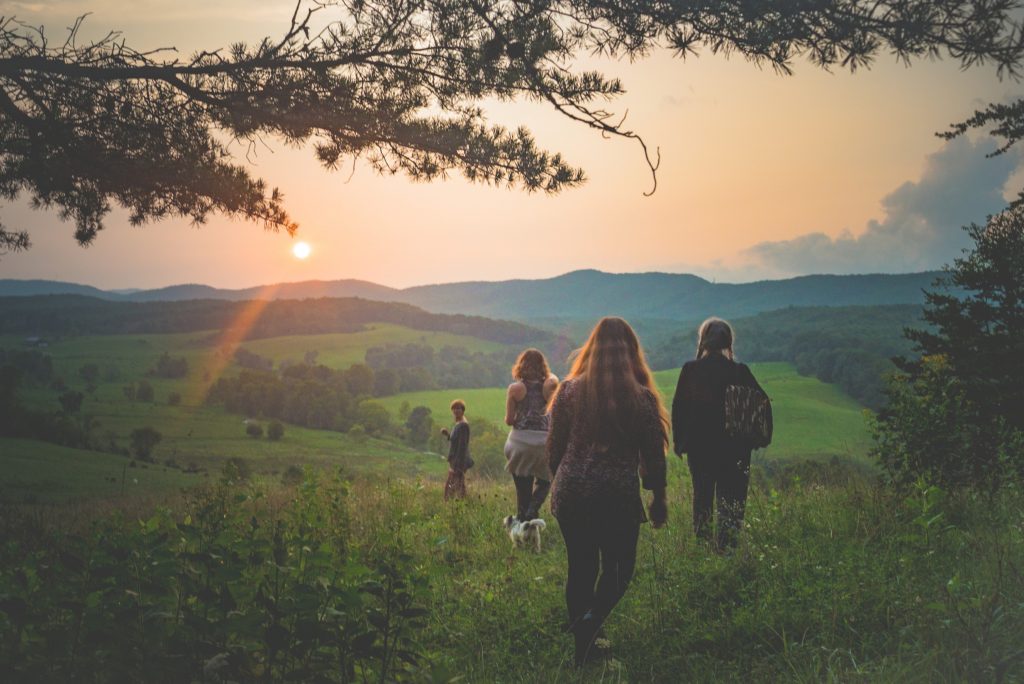
Travel shows you how you behave when your routines, roles, and safety nets are removed. Three of the life lessons from travel come up most often in my work: your comfort zone is negotiable, resilience grows in small doses, and you can decide without perfect information.
Lesson 1: Your comfort zone is more flexible than you think
Most people carry a quiet story about what they can handle. A trip tests that story in low-stakes ways: eating something unfamiliar, asking a stranger for directions, sleeping somewhere that sounds different. Each small success moves the edge of your comfort zone outward, and the movement is usually larger than people predict. A traveller who dreaded speaking a few words of a new language often finds, by day three, that clumsy attempts are met with patience, and the dread was bigger than the task.
I cover how travel can shift personality traits in a separate article. The practical lesson here is simpler: the limit you assumed was often a guess.
Lesson 2: Resilience grows through small, solvable problems
A delayed flight, a lost booking, or a wrong train does not feel like growth while it happens. Afterwards, these often become the stories people are proudest of. This is resilience in its everyday form: not toughness, but the repeated experience of a problem appearing, you responding, and things working out well enough. The proof is personal: next time something goes wrong, you have evidence that you have handled something similar before.
The adaptability you build this way tends to carry into work and family problems. I would call that a pattern I observe, not a measured effect.
Lesson 3: You can decide without full information
At home, we usually research until we feel certain. On the road, certainty is rarely available, so you pick a reasonable option and adjust. Travellers who practise this learn that a decent decision made now often beats a perfect one made late. Choosing a restaurant, a route, or a bed for the night with only partial information is a low-risk rehearsal for bigger choices at home.
It is a quiet form of self-discovery, and a clear answer to the question of what travel teaches you about yourself. You find out you can trust your own judgement more than you assumed. date in sight.
What Does Travel Teach You About Other People?
Travel teaches you that people are often more helpful, and more different, than you expected. Two lessons stand out: short relationships can be honest, and other people’s norms are not mistakes.
Lesson 4: Brief relationships can be surprisingly honest
Conversations with strangers on trains, in hostels, or at shared tables often go deeper than conversations with colleagues of five years. There is no history to protect and no future role to manage. Many people find this freeing.
It also has limits, because depth with a stranger is not the same as being known. I explore both sides in my piece on traveling with strangers.
Lesson 5: Different norms are not wrong norms
Queue behaviour, personal space, bargaining, eye contact, even the meaning of “yes”: norms vary, and travel makes them visible. The skill underneath is perspective-taking, the habit of asking “what makes sense from where they stand?” before judging.
That habit sits at the heart of how travel broadens the mind, which has its own article. Here, the point is practical: the more norms you meet, the less any single one feels like the default. Many travellers tell me the surprise is not how different people are, but how quickly they stop finding the differences strange.
Do the Lessons Learned From Traveling Stick After You Get Home?

Some do, and some fade within weeks. The lessons learned from traveling that last are the ones you attach to a specific habit or decision at home. The ones that stay only as feelings tend to dissolve once routine returns.
This is the gap I see most often after a trip. On the road, your surroundings prompt new behaviour: you walk more, talk more, and plan less. Back home, the old surroundings prompt the old behaviour. The insight survives, but the conditions that supported it do not.
A sixth lesson shows up here, and it is one of the less comfortable life lessons from travel: your habits travel with you. If you worry constantly at home, you may worry in Lisbon too, just in a prettier place. That is not a failure of the trip. It is useful information about what needs attention in daily life.
To make a lesson stick, choose one. Write it as a sentence, such as “I do not need to plan every hour.” Then tie it to a specific cue, like the first Saturday morning after you return. Small, specific, and repeatable beats ambitious and vague.
It also helps to tell one person what you are trying. A friend who asks about it a month later is a surprisingly effective reminder, and it keeps the lesson from becoming a nice memory that never changes anything. This is where what travel teaches you about life becomes something you actually live.
How Travel Changes Your Perspective Over Time
How travel changes your perspective is gradual, not instant: noticing comes first, contrast second, and integration last. In my observation, it unfolds in three phases.
During the trip, you notice. Your assumptions become visible because new places contradict them. In the first weeks at home, you feel contrast. Your usual life looks slightly strange, sometimes dull, sometimes newly clear. Both reactions are normal, and neither means the trip failed. Months later, the useful part is integration, when a travel-born insight has quietly become part of how you make choices.
It is worth being honest about limits. Travel is not therapy, and no trip fixes a deep problem. It can give you distance, and distance often makes patterns easier to see. If something heavier comes up, speaking with a qualified professional is the right next step.
How to Use Travel as a Learning Experience
Travel as a learning experience works when you add reflection to the experience itself, and the same life lessons from travel become easier to keep. Three practices, one for each part of a trip, map onto Kolb’s cycle and need no special equipment.
- Before: Set one question for the trip, such as “How do I handle uncertainty?” This is the core of intentional travel, where you decide what to pay attention to before you leave.
- During: Observe instead of only collecting. Spend ten minutes a day noting one moment that surprised you and what you assumed before it happened.
- After: Within a week of returning, write a short reflection of your life lessons from travel. Three prompts work well: What surprised me? What do I now believe that I did not before? What is one thing I will test at home?
That last prompt completes the cycle. Without it, you have a memory. With it, you have an experiment.
Conclusion: Life Lessons From Travel Are Built, Not Collected
Travel does not hand out wisdom automatically. The life lessons from travel that last come from paying attention, reflecting honestly, and trying one change at home. As a travel psychologist, I would rather you take one lesson home and use it than collect ten and forget them by the end of the month.
Three key takeaways on what travel teaches you about life:
- Experience plus reflection is what teaches. Kolb’s cycle explains why a trip needs a debrief to become learning.
- The reliable life lessons from travel are practical. Flexibility, everyday resilience, deciding under uncertainty, and respect for different norms.
- Lessons stick when they become actions. Pick one, link it to a cue, and test it. How travel changes your perspective depends far more on this step than on the destination.
If you want help turning your next trip into a structured learning experience, you can book a consultation with me at Mandeha.
Frequently Asked Questions
What are the most important life lessons from travel?
The most important lessons are practical ones: you adapt faster than you expect, you can decide without full information, and different norms are not wrong. These come from handling small real problems, not from sightseeing alone.
What does travel teach you about yourself?
Travel shows you how you respond when routines and roles disappear. Many people discover that their comfort zone is wider than they assumed and that they trust their own judgement more than they thought.
How does travel change your perspective?
Travel changes your perspective by contradicting assumptions you did not know you held. The shift is usually gradual, moving from noticing, to contrast, to integration over months.
Can a short domestic trip show that travel teaches life lessons too?
Yes, because travel teaches life lessons through novelty and small decisions, not distance. A weekend in an unfamiliar town can prompt the same cycle of experience, reflection, and testing.
Which lessons learned from traveling last the longest?
The ones tied to a concrete habit or decision at home last longest. A lesson that stays only as a feeling usually fades once your normal routine returns.
Is travel really a learning experience, or just a break?
It can be both, but it becomes a learning experience when you reflect on it. A short written review after the trip is usually enough to turn a break into something you can use.