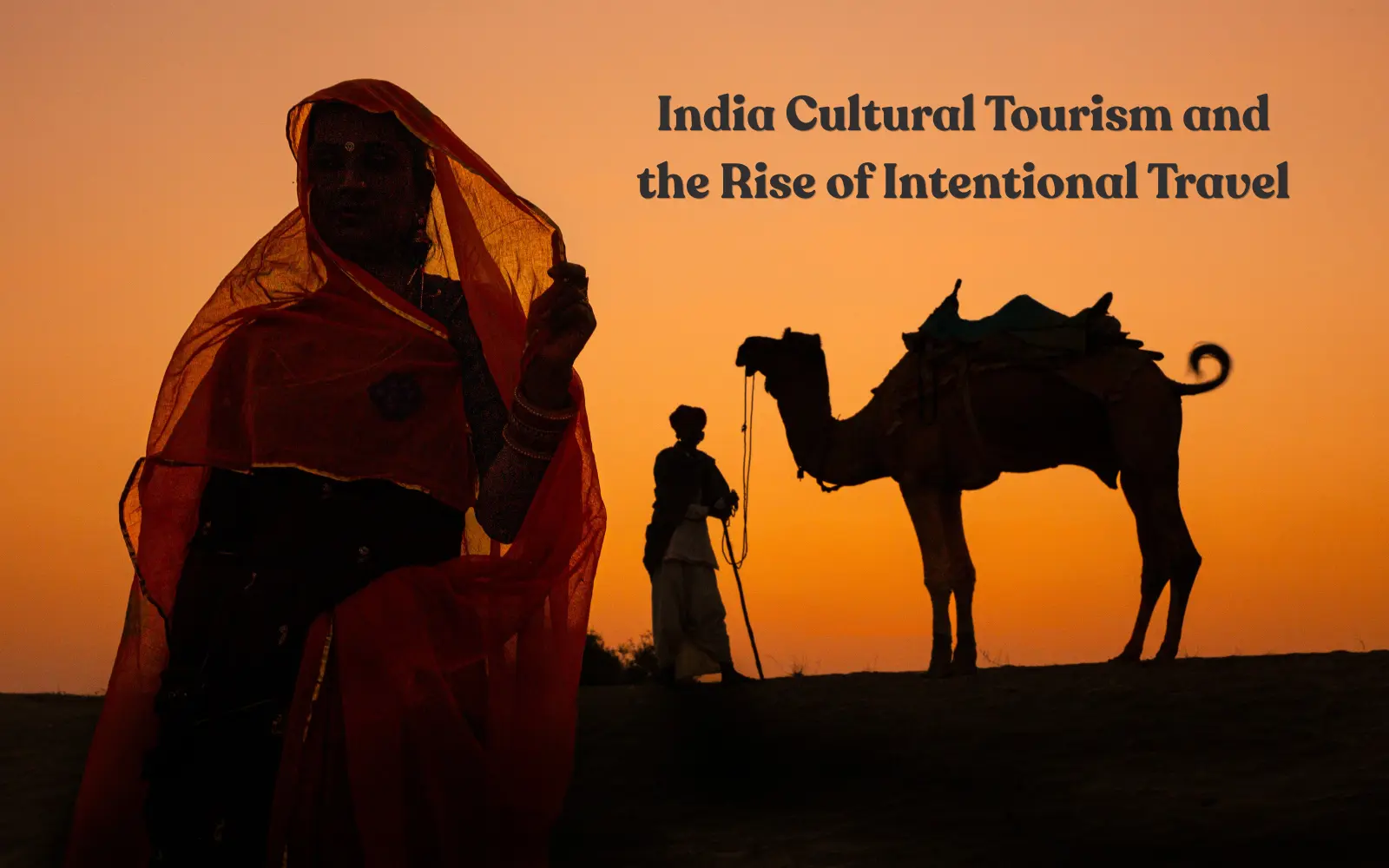
TL;DR: India's cultural tourism market is worth $32.7 billion and growing fast. But a deeper shift is underway. Travelers, especially Millennials and Gen Z, are no longer satisfied with monument-hopping. They want curated travel experiences in India that reveal something about themselves. This post breaks down what's driving the move from heritage sightseeing to intentional travel in India, why it matters, and what the industry needs to build next.
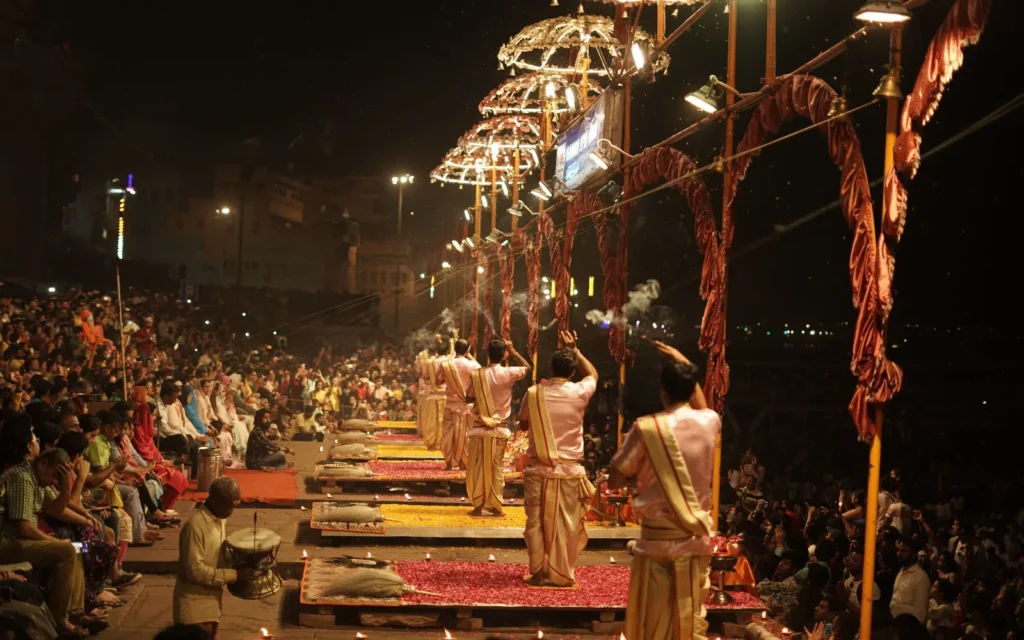
India has 43 UNESCO World Heritage Sites, a heritage tourism market valued at $32.7 billion, and 5,000 years of documented civilisation. And for decades, people “did” India. They photographed the Taj, lit a ghee lamp in Varanasi, and flew home with refrigerator magnets and unprocessed wonder.
That’s changing. India cultural tourism is entering a new chapter. The modern traveler, domestic and international, is arriving with a different question: not “where will I go” but “what will I come back knowing about myself.”
That question is the difference between heritage tourism and intentional travel in India. And it’s reshaping the entire industry from the inside out.
What Is the Difference Between India Cultural Tourism and Intentional Travel?
Cultural heritage tourism is travel to places of historical, architectural, or cultural significance. Intentional travel is travel deliberately designed around a psychological outcome. The destination becomes a context, not the point. In India, the two are converging, but the distinction still matters because most of the industry is building for the former while the traveler is already asking for the latter.
India has always been an extraordinary cultural destination. What it’s learning to become is an extraordinary experiential one.
The shift isn’t subtle. India’s heritage tourism marketwas valued at $31.98 billion in 2024 and is projected to reach $57.14 billion by 2033. Cultural heritage accounts for over 56% of total revenue, making it the single largest contributor to India’s heritage travel economy. That’s not a niche. That’s the spine of the entire tourism industry. But it’s also not the ceiling.
India’s Heritage Tourism Is Already the Largest Story in the Room
Spending a moment with the numbers is worth it.
According to Skyscanner’s Cultural Tourism Report, 82% of Indians in 2025 planned their trips around cultural offerings. Among Millennials, that number rises to 84%. Among Gen Z, it’s 80%. These aren’t tourists being dragged to heritage sites by their parents. These are travelers actively choosing cultural depth over convenience.
Searches for Varanasi surged 76% compared to the previous year. A 45% increase in cultural tourism is expected in 2026, with travelers building entire trips around India’s major festivals. India’s Travel and Tourism market is expected to generate $34.44 billion in revenue in 2026 alone.
India’s Heritage tourism isn’t a niche interest. It’s the main event.
But here’s the thing. Data this strong doesn’t mean the job is done. It means the foundation is solid. What gets built on top of it is the more interesting question, and the one the industry hasn’t fully answered yet.
What Does Intentional Experience Curation Actually Mean?
Intentional experience curation is the deliberate design of travel environments, sequences, and cultural encounters to produce specific psychological outcomes for the traveler. It’s not adding a yoga class to a resort menu. It’s asking, from the start, what the traveler should feel, understand, or become by the end of the journey, and designing backwards from that answer.
The signals that curated travel experiences India-wide are growing are real. The government’s Swadesh Darshan 2.0 has developed over 110 tourism projects built around thematic circuits, including spiritual, heritage, coastal, tribal, and ecological themes. These aren’t just infrastructure upgrades. They’re attempts at large-scale intentional design.
The private sector is responding too. Properties offering curated programming, including social events, local cultural experiences, and guided excursions, report occupancy rates 18% higher than those offering only accommodation. And spending on experiences grew 90 times in 2025 compared to 2024, with some travelers spending up to ₹40,000 on a single experience booking.
The infrastructure is arriving. The psychological framework is still catching up.
Why India’s New Traveler Is Rewriting the Brief
This shift isn’t being driven by luxury travelers or international tourists alone. It’s being driven by the Indian traveler themselves.
Booking lead times have increased by 34% compared to the previous year. People are thinking harder before they book. Trips are becoming more planned and purposeful. For experiential travel India-wide, the Booking.com 2026 Travel Predictions report found that Indian travelers are leading a global shift toward journeys that are ultra-personalized and emotionally resonant.
The checklist traveler isn’t disappearing. But they’re being joined, and increasingly outnumbered, by the psychologically aware traveler. Someone who wants to know, before they pack a bag, what the trip is actually for.
That’s not a consumer insight. That’s a design brief.
What Role Does Travel Psychology India Plays in Tourism Transformation?
Travel psychology is the applied science that gives experience curation its “why.” It studies how travel environments, cultural encounters, and journey sequences affect the human mind, and uses those insights to design trips with intentional psychological outcomes rather than leaving transformation to chance.
For a country like India, this matters enormously. India’s cultural contexts are extraordinarily rich in psychological potential. A spiritual circuit through Varanasi isn’t just heritage tourism. Designed with authentic experiences, it becomes a genuine encounter with impermanence, identity, and continuity. A forest stay in Coorg isn’t just an eco-resort booking. With the right psychological design, it activates restoration, sensory recalibration, and cognitive reset.
Travel psychology India isn’t a niche addition to the wellness tourism menu. It’s the structural layer the industry is still learning to build.
Our travel psychology journey at Mandeha is built on exactly this premise. The LEGIT Model applies structured psychological frameworks to design journeys that don’t just expose travelers to culture, but use culture as a deliberate tool for personal growth. If you want to understand what that looks like as a lived experience, the HumanX experiential program is where it becomes real. You can also explore the travel psychology principles behind this work to go deeper on the framework.
What the India’s Travel and Tourism Market Needs to Get Right Next
The raw material is there. India’s cultural depth is unmatched. Traveler appetite is real and growing fast. Government investment is accelerating. But the industry still has a significant gap.
Too many “curated” packages are curated in name only. A cooking class dropped into a five-night itinerary isn’t intentional experience design. A morning yoga session on a hotel rooftop isn’t travel psychology. These aren’t bad offerings. They’re incomplete ones.
What’s missing is the psychological architecture behind the design. The understanding of why a particular sequence of cultural encounters produces growth rather than fatigue. The ability to design journeys that are grounded in behavioral science, not just travel aesthetics.
As India tourism trends 2026 continue to move toward depth over density, the brands that lead this era won’t be the ones with the most heritage sites on their itinerary. They’ll be the ones that know of does travel heals them.
For hospitality brands and travel organizations wanting to build this capability, our travel psychology services offer the B2B frameworks to make intentional experience design operational, not aspirational. For professionals who want to build this expertise themselves, understanding how to become a travel psychologist is a useful first step into this space.
Conclusion
India’s cultural tourism story is already remarkable. A $32.7 billion market, 82% of travelers choosing cultural depth, and a government investing in thematic circuits at national scale. The foundation is solid.
But remarkable supply and growing demand aren’t enough on their own. The traveler has already shifted toward intentional travel in India. The industry needs to catch up with the psychological intentionality behind the design.
Three things to take away from this:
India’s Heritage tourism is the foundation. Intentional experience curation is what gets built on top of it. The traveler wants to come back changed, not just informed. That requires deliberate design, not just access to culture. And travel psychology is the applied science that bridges the two.
If you’re a traveler ready to experience India with psychological intention, explore our travel psychology journey.
India has always had the content. It’s time to design the experience.
Frequently Asked Questions
What is intentional travel in the context of India cultural tourism?
Intentional travel in India means designing a journey around a specific psychological outcome rather than a list of destinations. It’s the difference between visiting Varanasi and understanding something through Varanasi. The destination becomes a context for a deliberate inner experience, not just a location on an itinerary. It’s the next evolution of India cultural tourism, moving from access to activation.
How is India’s government supporting experiential travel India-wide in 2025-26?
The government’s Swadesh Darshan 2.0 program has developed over 110 tourism projects across thematic circuits including spiritual, heritage, coastal, tribal, and ecological themes. The 2026-27 Union Budget also positioned tourism as a priority growth lever, with specific emphasis on experience-led circuits and heritage destination development.
Why are younger Indian travelers choosing cultural and curated travel experiences India over standard tourism?
Millennials and Gen Z want travel that returns something personal. Skyscanner’s 2025 Cultural Tourism Report found 84% of Millennials and 80% of Gen Z prioritize cultural experiences over standard tourist spots. They’re also planning more carefully, with booking lead times up 34%, and spending more per experience. Social media has accelerated this by showing them what depth looks like, not just what a place looks like.
What role does travel psychology play in designing better India’s heritage tourism experiences?
Travel psychology India studies how environmental conditions, cultural encounters, and journey sequences affect the mind. Applied to India’s heritage tourism, it gives experience designers the behavioral framework to build journeys with specific psychological outcomes. Rather than hoping the traveler is moved by what they see, intentional design creates the conditions for that change. Explore our Travel Psychology Course to understand the principles behind this applied science.
How can hospitality brands adapt to India tourism trends 2026 around intentional and experiential travel?
Hospitality brands need to move beyond adding wellness or cultural elements as amenities and start designing around psychological outcomes. That means sequencing experiences deliberately, training staff in traveler psychology, and building partnerships with applied psychology practitioners. As India tourism trends 2026 continue to prioritize meaning over novelty, the brands that design with psychological intentionality will lead the next decade of India’s travel economy.