

Quick Answer: Wellness travel means trips built around a measurable wellbeing outcome, not relaxation as an afterthought. In 2026, wellness travel is one of the fastest-growing parts of tourism, worth hundreds of billions of dollars a year. But research on ordinary vacations shows the mood boost fades within days unless a trip is planned, paced and followed up on with intention.
A friend of mine came back from five days at a retreat in Bali glowing. By day three back at her desk, her shoulders were back up around her ears. That gap, between what a wellness trip promises and what actually survives the flight home, is the reason I’m rewriting this piece for 2026.
Wellness travel has moved from spa-brochure language to one of the most closely watched categories in tourism. Hotels are rebuilding entire wings around it, employers are listing it as a benefit, and travellers now budget for it the way they used to budget for excursions. But as a travel psychologist, the question I hear most isn’t “where should I go?” It’s “d
oes this actually work, or am I just buying a nicer form of tired?” This piece answers that honestly, with the data behind it.
What Is Wellness Travel?
Wellness travel is trip planned specifically to improve physical, mental or emotional wellbeing, rather than travel where rest happens to be a side effect. It ranges from a single spa weekend to a fully structured multi-day retreat with therapeutic programming.
The distinction that matters is intent. A beach holiday can be restful, but wellness travel is designed around a named outcome from the outset, sleep, stress recovery, movement, a digital detox, emotional processing, and it’s usually planned, guided and reviewed. In our work at Mandeha, clients often start wellness travel chasing one thing (burnout relief) and leave having discovered a second one: a different relationship with rest itself.
Wellness Travel Market Size and Statistics in 2026
The wellness travel market size reached an estimated $894 billion in 2024, according to the Global Wellness Institute (GWI, 2024 data), making it one of the largest single segments inside the broader $6.7 trillion global wellness economy. By 2026, that trajectory has played out as predicted: Global Market Insights and Grand View Research now put the market between roughly $1.06 trillion and $1.09 trillion this year, meaning wellness travel has officially crossed the trillion-dollar mark.
The wellness travel statistics behind that headline number are consistent year over year: wellness trips have grown faster than tourism overall, and travellers taking a wellness trip spend meaningfully more per trip than the average tourist, because they’re paying for structure and programming, not just a room. Demand data backs this up directly — Simon-Kucher’s 2026 travel research found that 44% of high-income travellers took a wellness trip in 2025, and 58% already have one planned for this year.
For context, McKinsey’s Future of Wellness research puts the total global consumer wellness market at $1.8 trillion, with 82% of consumers in its most recently surveyed markets saying wellness is now a top or important daily priority. Numbers like these explain why hospitality groups, airlines and even corporate benefits programmes keep investing here: this is a spending pattern, not a passing trend.
Wellness Travel Trends 2026
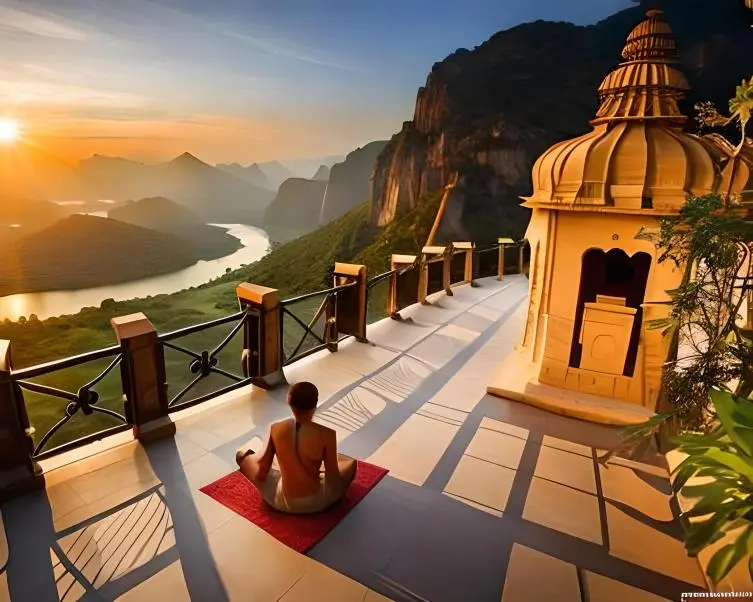
The single biggest wellness travel trend in 2026 is measurement. Travellers and operators alike want proof a trip changed something, not just a nice photo, and the generic “wellness menu” of a decade ago is being replaced by programmes built around a specific, trackable goal.
Three other wellness travel trends stand out this year:
- Shorter, more frequent trips. Instead of one long annual reset, travellers are taking several shorter wellness breaks a year, often closer to home.
- Mental health, named directly. Sleep-focused retreats and stress-recovery protocols are now marketed on their own terms, not folded quietly into a general spa stay.
- Psychological design over amenities. The properties earning repeat bookings are the ones that structure the arc of a stay, arrival, immersion, integration, rather than simply adding more treatments to the menu.
We see this shift directly in Mandeha’s work with hospitality partners: guests increasingly ask what a programme is designed to change, not just what’s included in it. It’s part of why we built out our thinking on mental health in wellness resorts as its own piece.
Why Wellness Travel Is Growing
Wellness travel is growing because ordinary travel isn’t solving the problem people are bringing to it. Burnout, always-on work culture and screen fatigue built the demand; wellness travel is simply the industry’s answer.
There’s a generational piece too. Younger travellers are less interested in sightseeing for its own sake and more interested in a trip that leaves them measurably better than it found them: better sleep, lower stress, sharper focus. That’s a psychological ask, not a logistical one. That’s why wellness travel is growing across almost every traveller segment, not just retirees or executives on a forced reset.
Wellness Travel and Travel Stress
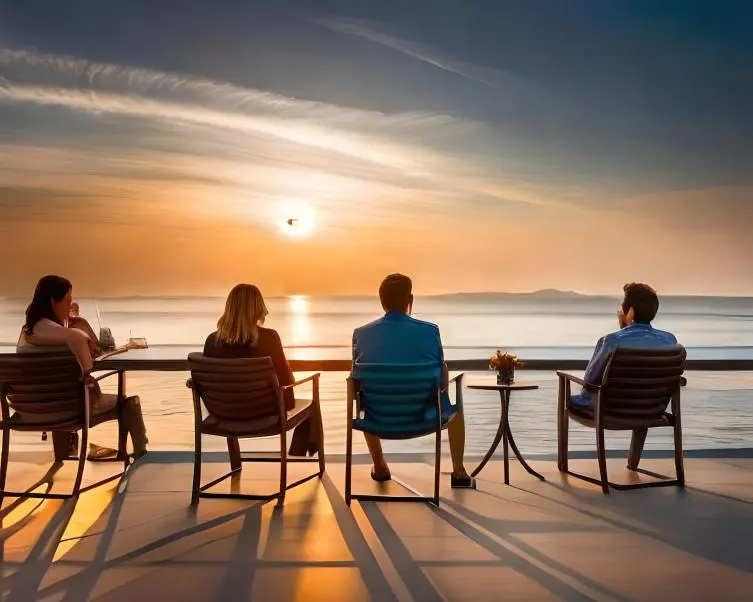
Wellness travel and travel stress are more connected than most marketing admits. The process of getting somewhere, jet lag, unfamiliar routines, decision fatigue, can undercut the very wellbeing a wellness trip is supposed to deliver. Ignore that stress and the trip is fighting itself before it starts.
This is where our approach differs from a straightforward spa itinerary. Travel stress is on the rise for reasons that have little to do with the destination, and we treat it as a variable to manage, not a footnote. A pre-trip assessment, a realistically paced itinerary, and a few practical ways to manage travel anxiety built in beforehand do more for outcomes than one extra treatment ever will.
Is Wellness Travel Worth It?
Is wellness travel worth it? The research says yes, with a catch. The frequently cited meta-analysis by de Bloom and colleagues (2009, Journal of Occupational Health) found that vacation improved health and wellbeing with a moderate effect, but that the effect faded out almost as quickly once people returned to work.
That fade-out effect isn’t an argument against wellness travel. It’s an argument for designing it properly. Peer-reviewed research on travel and psychological wellbeing points to a handful of specific mechanisms, detachment from routine, autonomy, mastery of something new, meaning, and connection, as the real drivers of benefit. A trip built to hit more of those mechanisms is worth more than a trip that hits none of them, regardless of star rating.
So: wellness travel is worth it when it’s built around a specific outcome and reviewed afterward. It’s a weaker investment when it’s simply a nicer label on an ordinary holiday, which is really the gap between healing travel and escape travel.
Passive wellness travel vs. psychologically designed wellness travel
| Passive wellness travel | Psychologically designed travel | |
| Intent | Relaxation, undefined | A named outcome (sleep, stress, focus) |
| Planning | Booked on amenities | Built on a pre-trip assessment |
| During the trip | A menu of treatments | Deliberate pacing, few forced transitions |
| After the trip | No follow-up | A short, planned re-entry |
| Typical result | Mood boost fades within days | Benefits are more likely to hold |
How to Get Real Value from Wellness Travel
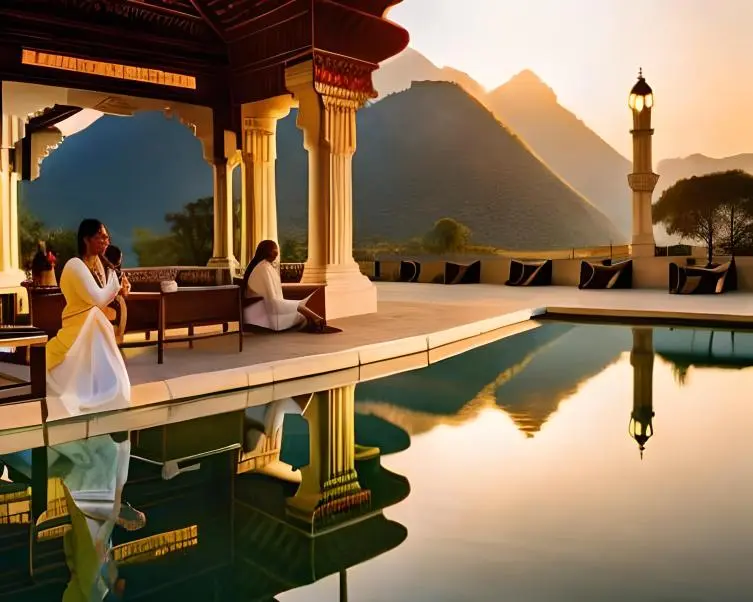
Getting real value from wellness travel means treating it as three phases, before, during and after, rather than one event. Most of the value people lose happens in the phases nobody plans for.
Before the trip: get honest about what you actually need. Our Tangible Travel Tool is built for exactly this, a short self-assessment that surfaces whether you’re chasing rest, stimulation or connection before you book anything.
During the trip: build in unstructured time. An overscheduled “wellness” itinerary can quietly recreate the same pressure a traveller is trying to escape. Intentional pacing matters more than the number of treatments on the menu.
After the trip: plan the first week home before you leave. Decide on one habit or boundary you’re bringing back, and put it in the calendar before jet lag and inbox catch-up take over. This single step is what separates wellness travel that lasts from wellness travel that quietly evaporates by Thursday.
None of this replaces therapy or clinical care. Wellness travel supports wellbeing; it isn’t a treatment for a diagnosed condition, and if low mood or stress is persistent, that’s worth raising with a qualified professional rather than solving with a trip. You can read more on whether travel is genuinely good for mental health here, and Mandeha’s own take on research linking travel and mental health.
Conclusion
Wellness travel in 2026 is a real, fast-growing industry, not a marketing trend, but its benefits are not automatic. Three things are worth carrying with you: first, the market data is genuine, wellness travel is outgrowing tourism as a whole. Second, the research is equally clear that an unplanned wellbeing boost fades within days. Third, the gap between those two facts is closed by structure, not by a bigger budget or a longer stay.
If you’re planning a trip this year and want it to actually change something, start with an honest assessment of what you need rather than a destination. Book a discovery consultation with a travel psychologist and we’ll help you work out which one that is.
Frequently Asked Questions
What is wellness travel?
Wellness travel is travel planned around a specific wellbeing outcome, physical, mental or emotional, rather than travel where rest is incidental. It ranges from a spa weekend to a structured multi-day retreat, and it differs from an ordinary holiday mainly in intent and planning.
What is the current wellness travel market size?
The wellness tourism market reached an estimated $894 billion in 2024, according to Global Wellness Institute data, making it one of the fastest-growing segments inside the broader $6.7 trillion global wellness economy.
Why is wellness travel growing so quickly?
Burnout, screen fatigue and always-on work culture have created demand that ordinary travel doesn’t resolve. Younger travellers in particular now expect a trip to leave them measurably better, not just entertained.
Is wellness travel worth it if I only have a few days?
Yes, but duration matters less than structure. A short, well-designed trip with clear intent going in, and a plan for the return, often outperforms a longer trip with no structure at all.
How does travel stress affect wellness travel outcomes?
Travel stress, jet lag, decision fatigue, unfamiliar routines, can quietly cancel out the benefits a wellness trip is meant to deliver. Managing it with pacing and a pre-trip plan protects the outcome you’re actually paying for.
Why do wellness travel trends now focus on measurement?
Because travellers and operators both want proof a trip worked, not just a pleasant few days. Pre- and post-trip wellbeing check-ins and structured programming are replacing generic spa menus across the industry in 2026.




Insightful article..