
- What is the First Night Effect?
- Why Can't I Sleep in a New Place? Your Brain's Night Watch
- Half Brain Awake While Sleeping: What the 2016 Study Found
- Why You Can't Sleep in a Hotel, Even a Good One
- Trouble Sleeping While Travelling: Where It Shows Up Most
- How to Sleep Better the First Night in a Hotel
- The First Night Effect Passes: Night Two Is Usually Better
- Frequently Asked Questions
The first night effect is the lighter, more broken sleep many people get on their first night in a new place. Research suggests one side of the brain stays more alert during deep sleep, listening for unusual sounds like a night watch. It usually fades by the second night, once the room feels familiar.
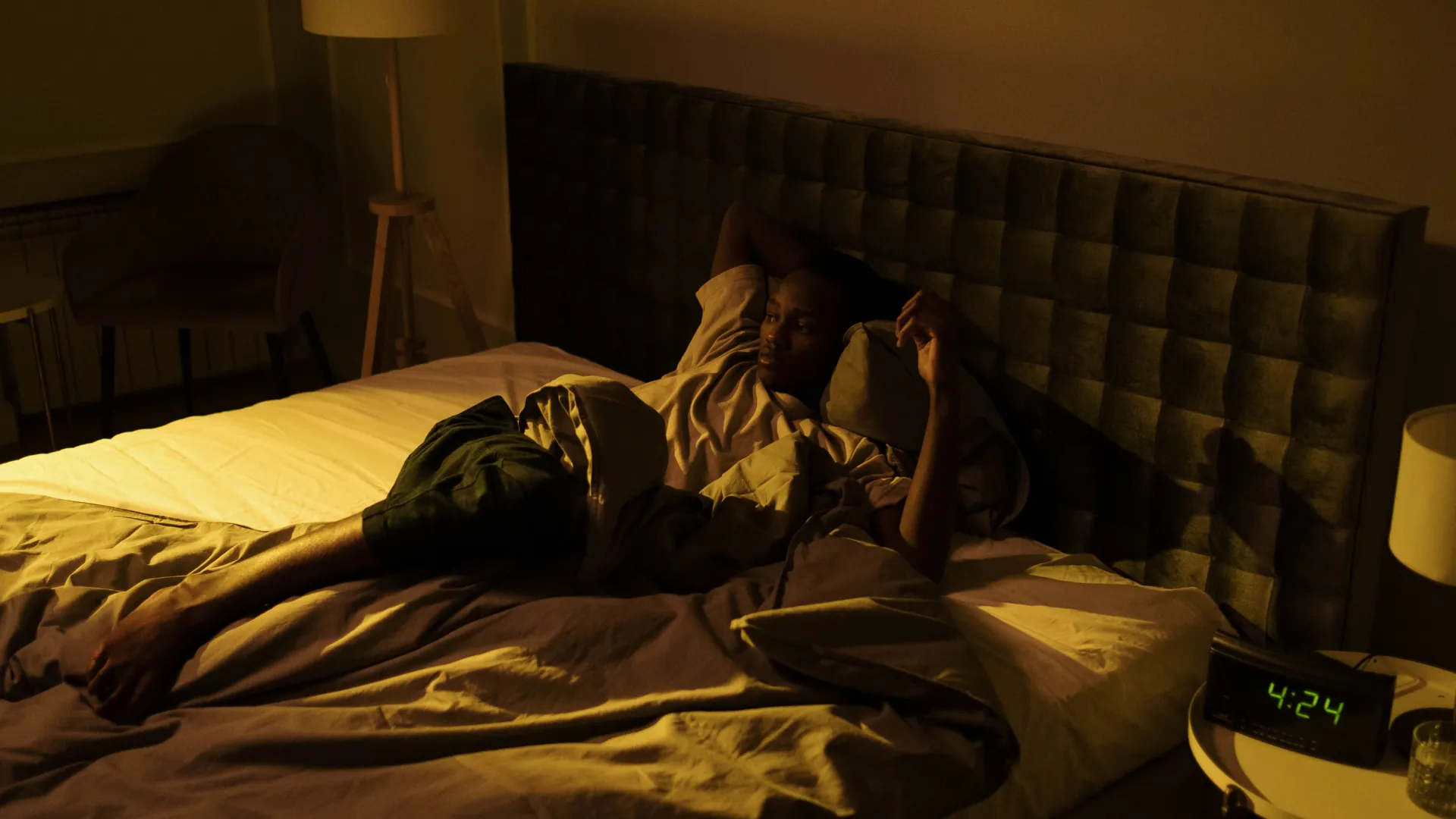
It is late, the room is lovely and you are tired from the journey. Yet you lie awake listening to a lift you have never heard before, a door closing down the corridor and an air conditioner humming in an unfamiliar key.
If you have ever asked yourself “why can’t I sleep in a new place?”, you are not imagining it, and you are not bad at travelling. Sleep scientists call it the first night effect, and in travel psychology it is one of the clearest examples of how the mind responds to new surroundings.
What is the First Night Effect?
The first night effect is the drop in sleep quality on your first night in an unfamiliar room. You may take longer to fall asleep, wake more often and feel less rested the next morning, even in a comfortable bed. Researchers have long known that people sleep worse on their first night in sleep labs, so they often set that night’s data aside.
So is the first night effect real or just stress? It is real. Stress and excitement can add to it, but the effect itself comes from how the brain handles sleeping in an unfamiliar place, which is why it shows up so reliably in sleep labs.
Why Can’t I Sleep in a New Place? Your Brain’s Night Watch
You sleep lightly in a new place because part of your brain stays on guard. Until a room feels known, your brain keeps a light watch for anything unusual, so deep, unbroken rest is harder to reach.
A new room is full of unknowns: its sounds, its smells, where the door is in the dark. The researchers who studied this describe the brain’s response as a “night watch” that helps protect us when sleeping in an unfamiliar place.
Which part of the brain stays awake in a new place? In the best-known study so far, it was one hemisphere, and in that study it was the left.
This kind of split is not unique to people. Some birds and marine mammals, such as dolphins, practise unihemispheric sleep, where one half of the brain sleeps while the other stays awake. Humans don’t go that far, but the first night effect may be a gentler version of the same idea.
Half Brain Awake While Sleeping: What the 2016 Study Found
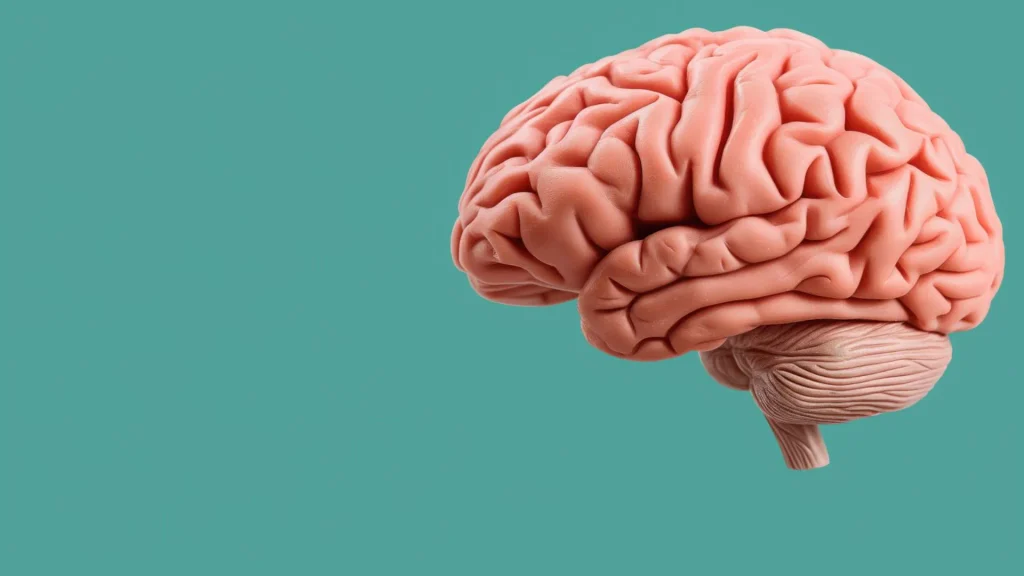
On the first night in a new place, one side of the brain sleeps more lightly than the other during deep sleep. It is a little like having half brain awake while sleeping, ready to wake you if something sounds wrong.
The work came from Brown University researchers Masako Tamaki and Yuka Sasaki, published as the 2016 study in Current Biology. They looked at slow wave sleep, the deepest stage of sleep, often simply called deep sleep.
On the first night, the left hemisphere slept more lightly than the right during slow wave sleep, specifically in the default mode network. When the researchers played unusual sounds, that more alert side responded more strongly and the sleeper woke up faster. The team described it as a “night watch” that protects us in unfamiliar surroundings.
Importantly, the imbalance appeared only on the first night, when the environment was new. That is the heart of the first night effect: it is about novelty, not the bed.
There is one honest gap. The researchers say it is not yet known whether the left hemisphere always keeps watch, or whether the two hemispheres take turns.
Why You Can’t Sleep in a Hotel, Even a Good One
You can’t sleep in a hotel easily on the first night because the room is new to your brain, however comfortable it is. Soft linen helps, but it can’t tell your night watch that the space is safe.
Many travellers ask, “why do I sleep badly in hotels when the bed is better than mine?” Comfort and familiarity are different things. A beautiful suite is still full of new sounds: a clicking minibar, footsteps in the corridor, a lift, a neighbour’s television.
Each unfamiliar noise is exactly what the alert side of the brain is listening for. Late check-ins, early alarms and a screen in bed don’t cause the first night effect, but they can stack on top of it.
Trouble Sleeping While Travelling: Where It Shows Up Most
Trouble sleeping while travelling tends to peak on any first night somewhere new. The first night effect follows you from hotel to homestay to tent, but the setting changes what keeps your brain on watch. Sleep is only one part of adjusting to a new place and its rhythms, along with food, language and the sounds outside your window.
If You Can’t Sleep in a Homestay
Homestays are warm, but they come with the sounds of a household you don’t know yet: a pressure cooker at dawn, a dog, family voices, a creaking gate. A restless first night here is about novelty, not the welcome. Asking your host about the morning routine helps, because knowing the early clatter is just breakfast makes it easier to file as safe.
Sleeping on an Overnight Train in India
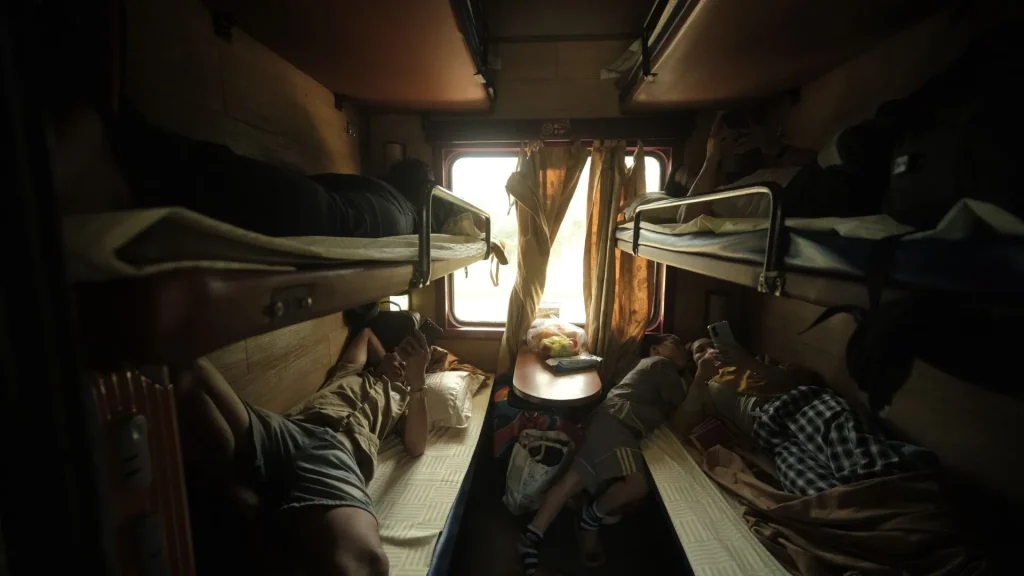
An overnight train may be the most “first night” setting of all. The berth, the swaying, the station announcements, the chai sellers and your fellow passengers are all new, and they keep changing through the night. Treat any rest as a bonus, and use earplugs, an eye mask and a familiar shawl. Keeping valuables close also lets part of you stop guarding them.
Camping in a Tent on a Trek
A tent puts very little between you and the outdoors, so wind, animals, a stream and other campers can all sound loud at the first campsite. Set up before dark so you have seen the space in daylight, and lie down early in the evening to listen, so the sounds are already familiar at bedtime.
The First Night of a Retreat
A poor first night at a retreat can feel like failure. It isn’t. A new room, a new schedule and new people are exactly where the first night effect appears. Go easy on yourself and let the rhythm of the retreat do its work over the following nights.
A Business Trip
Work trips often mean one night in each city, so every night becomes a first night. Add an early meeting and a laptop on the bed, and trouble sleeping while travelling gets harder to shake. Keep the same bedtime routine in every hotel, and if you travel for work often, read more about how work trips affect your wellbeing.
How to Sleep Better the First Night in a Hotel
The best way to ease the first night effect is to make the room feel familiar and keep it steady. The less new and unpredictable your surroundings feel, the less reason your brain has to keep watch.
Bring a Little of Home With You
A familiar object may help your brain read a new room as known. A pillowcase from home, a scarf that carries your usual scent or a small bottle of the oil or lotion you use every night brings a piece of home with you.
Does White Noise Help You Sleep in a Hotel?
It may help. The night watch reacts to sudden, unusual sounds, and a steady background sound such as white noise, a fan or a soft rain recording can make those sounds stand out less. Keep the volume low and constant.
Keep a Short Wind-Down Routine
A routine can feel familiar even when the room does not. Choose a simple ten-minute wind-down, such as washing your face, a few slow breaths and a page of a book, and repeat it wherever you sleep. It works even better alongside a calm pre-trip routine in the days before you leave.
Keep Your Phone Away From the Bed
Scrolling when sleep won’t come keeps the mind busy at the very moment you want it to stand down. Charge your phone across the room, and try these ideas for cutting back on phone use at night while travelling.
Choose a Quieter Room
Ask for a room away from the lift, ice machine, bar or busy road. Higher floors and rooms at the end of a corridor are often quieter, and fewer surprises mean fewer alerts for the brain on watch.
Don’t Judge the Trip by Night One
If you expect a lighter first night, you are less likely to lie awake worrying about it, and that worry is what can turn one restless night into a tense trip. Can you train yourself out of it? Research has not shown a way to switch off the first night effect. What you can do is help new places feel familiar faster, with the same objects, sounds and routines every time, and give yourself permission to rest rather than sleep perfectly.
The First Night Effect Passes: Night Two Is Usually Better
This answers a question many travellers ask: why do I sleep better on the second night of a trip? By then, the room is no longer new. Your brain has heard the lift, learned the hum of the air conditioner and found nothing to raise the alarm about.
So pack something from home, keep your routine and be kind to yourself on night one. A restless first night is not a sign that the trip is going wrong. It is a sign that your brain is looking after you while sleeping in an unfamiliar place. This is general information, not medical advice: if poor sleep continues beyond the first night or two, or happens at home too, please speak to a doctor.
Every traveller responds to new places in their own way. To understand how you react to new surroundings, try Mandeha’s Tangible Travel Tool.
Frequently Asked Questions
What is the first night effect?
The first night effect is the lighter, more broken sleep you get on your first night somewhere new. Research suggests one side of the brain stays more alert during deep sleep, listening for unusual sounds.
How long does the first night effect last?
It is usually strongest on the first night and eases from the second. A new room or a new city can bring it back.
Is the first night effect the same as jet lag?
No. Jet lag is a body clock mismatch after crossing time zones, while the first night effect happens even without any time change.
Is it anxiety or the first night effect if I can’t sleep on holiday?
It can be both, because general worry and the first night effect often overlap. If your mind keeps racing, our guide to travel anxiety may help.
Do frequent travellers still get the first night effect?
Does the left side of the brain always keep watch in a new place?
Not necessarily. The 2016 Brown University study found the left hemisphere slept more lightly on the first night, but researchers don’t yet know if it is always the left or if the two sides take turns.