
- Key takeaways
- What is a Pre-Trip Routine?
- Why a Calming Routine Matters Before You Travel
- How Far in Advance Should You Start?
- Pre-Travel Relaxation Techniques Worth Building In
- A Sample Pre-Trip Routine
- Grounding Techniques You Can Use Anywhere
- How to Calm Pre-Travel Anxiety the Night Before a Trip
- Conclusion
- Frequently Asked Questions
A travel psychologist’s step-by-step timeline and grounding techniques for the days before you go.
Key takeaways
- A pre-trip routine is a set of small, repeated steps you follow before a trip to calm your mind and body.
- Starting it about a week before you travel tends to work better than trying to relax the night before.
- A simple timeline (one week before, night before, day of) makes the routine easy to follow.
- Grounding techniques like paced breathing and the 5-4-3-2-1 method work in the moment, wherever you are.
- If pre-trip nerves feel bigger than “normal nervousness,” a travel psychologist can help you build a routine suited to you.
Some people pack a week early and still feel frazzled at the airport. Others throw a bag together an hour before and walk out calm. The difference is rarely luck. It’s usually a pre-trip routine: a set of small, repeated habits that settle your mind before you even leave the house. Building one doesn’t take much time, and it makes the days before a trip noticeably easier.
At Mandeha, we help travellers build routines that fit how they think and plan. If pre-travel anxiety creeps in as departure day gets closer, and you’ve found only generic advice online, this guide goes further. We walk through what a pre-trip routine is, when to start one, and specific grounding techniques you can use if nerves show up anyway.
What is a Pre-Trip Routine?
A pre-trip routine is a set of small, repeated steps you follow in the days before travelling, to settle your mind, organise the practical details, and feel prepared rather than rushed. It isn’t about eliminating every worry. It’s about giving your mind a predictable structure to move through, so uncertainty has less room to build up.
A good pre-trip routine usually mixes two things: practical preparation (packing, documents, logistics) and calming habits (breathing, a wind-down ritual, a moment of quiet). Most people only do the first half, which is exactly why the days before a trip still feel stressful even when everything is technically organised.
Why a Calming Routine Matters Before You Travel
The days before a trip are full of small decisions and open loops: what to pack, what you might forget, whether the taxi will arrive on time. Each one is minor, but they add up, and a mind full of open loops doesn’t settle easily. A pre-trip routine works by closing those loops early and predictably, instead of leaving them to pile up the night before.
This matters even more if travel stress is already a familiar experience for you. A routine won’t remove every source of stress, but it gives you a stable structure to return to when things feel uncertain.
Staying calm before travelling isn’t about suppressing nerves or pretending you feel nothing. It’s about reducing the number of things demanding your attention at once, so any nervousness you do feel doesn’t have to share space with a dozen unfinished tasks.
How Far in Advance Should You Start?
Starting your pre-trip routine about a week before you travel gives you enough time to handle logistics calmly instead of in a last-minute scramble. This doesn’t mean a full week of preparation, just a few short check-ins spread out, rather than everything compressed into the final evening.
Shorter trips can work with a compressed two-to-three-day version. Longer or more significant trips (a big relocation, a long-haul flight, a first solo trip) benefit from the full week-long version, since there’s more to plan and often more nervous energy to work through.
Pre-Travel Relaxation Techniques Worth Building In
A good pre-trip routine isn’t only logistics. Pairing it with a couple of simple pre-travel relaxation techniques makes the days before a trip feel noticeably lighter.
- A short daily wind-down. Even 5 to 10 minutes of quiet, away from screens, each evening in the week before you travel.
- Progressive muscle relaxation. Tensing and releasing each muscle group for a few seconds, working from your feet upward. This is especially useful if you tend to hold tension in your shoulders or jaw before a trip.
- A consistent sleep and wake time. Travel already disrupts your schedule once you’re on the move. Keeping a steady routine beforehand gives your body a stable baseline to return to.
You don’t need all three. Picking even one and using it consistently in the days before you travel is easier to stick with than trying to fit in a dozen techniques at once.
A Sample Pre-Trip Routine
Here’s a simple, three-stage pre-trip routine you can adapt to your own trip.
One week before
- Make a packing list and add to it gradually, rather than all at once.
- Confirm documents, tickets and bookings so nothing is a last-minute discovery.
- Do one calming activity daily. Even five minutes of quiet breathing counts.
Night before
- Finish packing earlier than feels necessary, so the evening isn’t rushed.
- Lay out what you’re wearing and carrying, so morning decisions are minimal.
- Do a short wind-down: a warm shower, dim lights, no screens for the last 20 minutes.
Day of travel
- Eat something, even if you don’t feel hungry. Low blood sugar can make anxious feelings feel stronger.
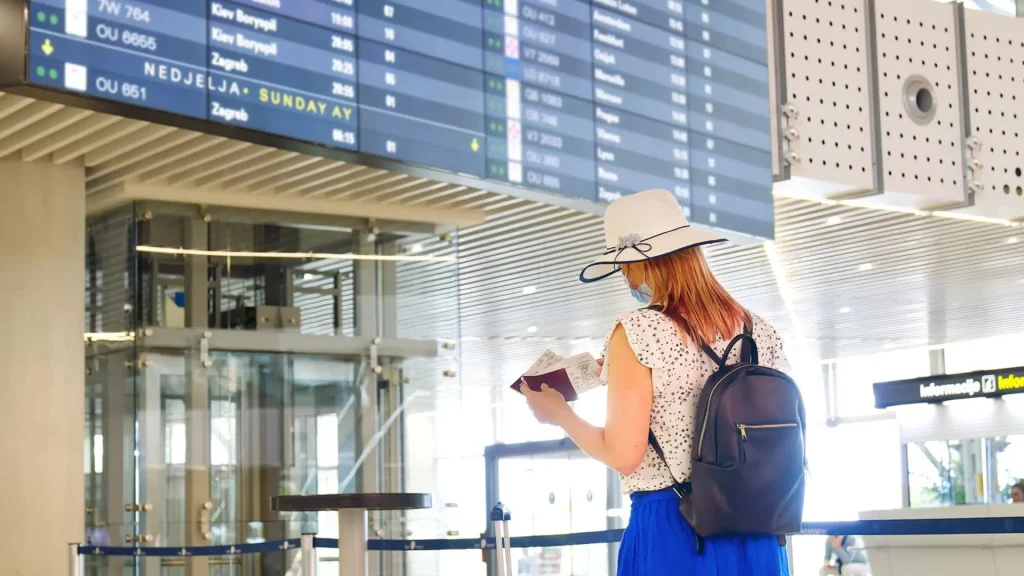
- Arrive earlier than you think you need to. Rushing often adds to pre-travel stress.
- Use a grounding technique (below) if nerves spike at the airport or station.
Grounding Techniques You Can Use Anywhere
Grounding techniques work in the moment, wherever nerves show up, whether that’s a security line, a boarding gate or an unfamiliar station. They need no equipment.
- Paced breathing. Breathe in for a count of four, hold for four, out for six. Longer exhales can help calm the body’s stress response.
- 5-4-3-2-1 grounding. Notice five things you can see, four you can feel, three you can hear, two you can smell, and one you can taste. The Cleveland Clinic describes this as a way to interrupt anxious thoughts by anchoring attention in the present moment.
- A physical anchor. Keep something small in your pocket, such as a smooth stone or a piece of jewellery, and hold it deliberately when you need to reset.
- Name it, don’t fight it. Silently naming what you’re feeling (“this is pre-trip nervousness”) often reduces its intensity more than trying to push it away.
- A grounding phrase. A short, specific line you say to yourself (“I’ve done this before, and it went fine”) can interrupt a spiral of what-ifs more effectively than a vague attempt to “just relax.”
None of these techniques require you to feel calm first. They’re designed to work while you’re still a little keyed up, which is exactly when a pre-trip routine needs them most.
How to Calm Pre-Travel Anxiety the Night Before a Trip
Feeling anxious the night before a trip is common, even for people who travel often and generally enjoy it. If it happens, avoid trying to plan your way out of the feeling at 11pm. Instead, do one calming activity (paced breathing, a short walk, a warm drink), and remind yourself that final preparations can wait until morning if they aren’t urgent.
If the anxiety feels sharper or more persistent than ordinary nerves, our guide to overcoming travel anxiety goes deeper into longer-term approaches, beyond what a single evening’s routine can address.
When a Travel Psychologist Can Help You Build a Routine
A travel psychologist can help you build a pre-trip routine that’s suited to how you think and travel, rather than a generic checklist. This is particularly useful if pre-trip nerves consistently feel disproportionate to the trip itself, if you avoid travel because of how the lead-up feels, or if you’re preparing for something bigger than usual, such as a long relocation or adjusting to an unfamiliar culture once you arrive.
If you’d like to talk through what’s driving your pre-trip nerves, get in touch to discuss what support would help.
Conclusion
A pre-trip routine isn’t about eliminating every nerve before you travel. It’s about giving yourself a structure that handles the small stuff early, so your mind has less to manage in the final hours. Start a little earlier than feels necessary, keep a couple of grounding techniques in your back pocket, and the days before a trip can feel a lot more like preparation than panic.
If you’d like help building a routine suited to you, explore our travel psychology services or reach out to us.
This article is for educational purposes and is not medical advice. If anxiety persists or worsens, please consult a qualified mental health professional.
Frequently Asked Questions
What is a pre-trip routine?
A set of small, repeated steps before travelling that combine practical preparation with calming habits, so you feel settled rather than rushed.
Why is it important to have a routine before travelling?
Without one, worries pile up in the final hours, right when you need to feel calm. A routine spreads preparation out and gives your mind a predictable structure.
How far in advance should I start my pre-trip routine?
About a week before works for most trips. Shorter trips can use a two-to-three-day version, and bigger trips or relocations benefit from the full week.
What are some quick grounding techniques for travel?
Paced breathing (in for four, hold for four, out for six) and the 5-4-3-2-1 sensory technique. Both work anywhere, with no equipment.
What should I do the night before a trip if I feel anxious?
Skip more planning. Do one calming activity, such as paced breathing, a short walk or a warm drink, and leave non-urgent tasks for the morning.
When should I speak to a travel psychologist about pre-trip nerves?
If pre-trip anxiety consistently feels disproportionate, stops you travelling, or lasts well beyond a single evening, speak to a travel psychologist.