
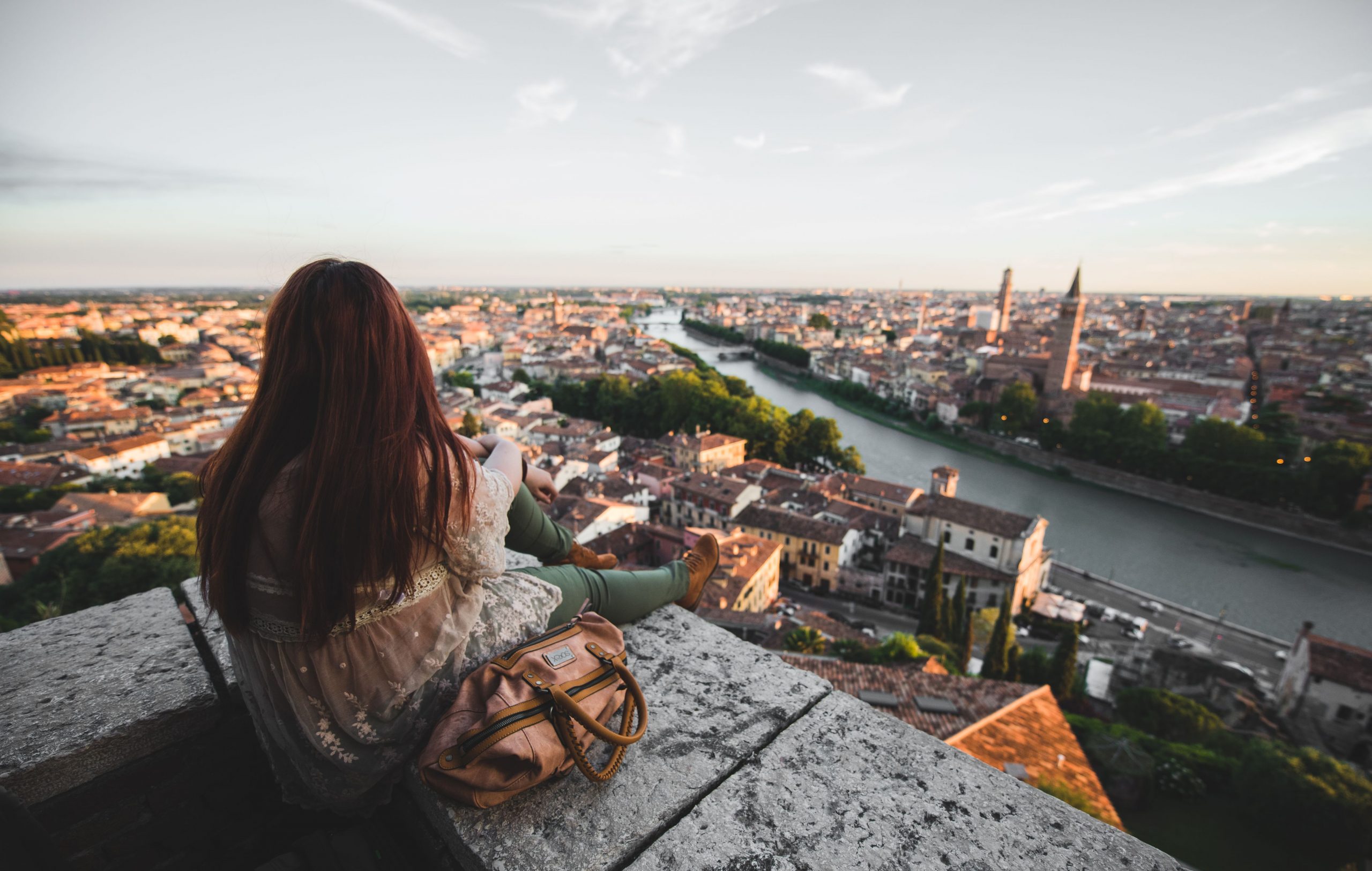
Solo travel is not a personality trait. It is a skill. And like any skill, it can be practiced, developed, and mastered over time.
Most people think solo travelers are born, not made. Either you’re the type who can book a one-way ticket without blinking or you’re not. After working with hundreds of travelers across 11 countries as a travel psychologist, I can tell you this belief is one of the most limiting things holding people back from one of the most transformative experiences of their lives.
Exploration
Thoughts
Challenge
At first glance, travel therapy sounds eminently doable. After all, as humans, we possess remarkable minds that can reflect on the past, process the present, and even make forecasts about the future. We can direct our thoughts on real or imagined, as well as pleasant or unpleasant, scenarios and events. Given the endless forms our thoughts can take, why wouldn’t we when given the opportunity to withdraw from the external world – dive into our own minds and entertain ourselves with our thoughts?
Why Solo Travel Feels So Hard at First – The Psychology Behind it
Here’s something that surprises most people when I share it in sessions: even sitting quietly alone with your own thoughts is something most people actively avoid.
About a decade ago, psychologists at the University of Virginia and Harvard University ran a now-famous experiment. Volunteers were placed alone in a room with no distractions, except an electric shock device, and asked to spend time with their own thoughts. The results, published in Science in 2014, were striking: 67% of men and 25% of women chose to shock themselves rather than simply sit alone in silence.
This isn’t a quirk, it reveals something important about how we’re wired. We are externally oriented beings. We crave stimulus, feedback, and connection. The idea of being alone, without a companion to defer to, can feel destabilizing, even threatening.
Solo travel triggers that exact same discomfort, but on a much larger scale. You are not just sitting alone in a room. You are navigating a foreign city, eating at a restaurant table for one, and making every single decision, from your morning plans to your sleeping arrangements, without a co-pilot.
No wonder it feels hard at first. But “hard at first” is exactly how every learnable skill begins. If you’re already feeling worried before a trip even starts, our article on what travel anxiety is and how to manage it will help you understand what’s happening, and what to do about it.
Solo Travel as a Psychological Skill: What the Research Shows
Research consistently shows that solo travel builds measurable psychological capabilities. A 2025 review published on ResearchGate, drawing on self-efficacy theory, found that solo travelers experience significant improvements in self-confidence, resilience, and emotional flexibility. In a TripAdvisor survey, 84% of solo travelers reported higher confidence levels after their trips.
What does that look like in practice? When you travel alone, you are repeatedly doing something psychologists call mastery experiences, small acts of competence that rewire how you see yourself. You navigate a subway system in a language you don’t speak. You ask a stranger for help and receive kindness. You get lost and find your way back.
Each of these moments adds a reference point your brain files away: I handled that. I can handle the next thing.
This is not coincidence. This is deliberate psychological growth, and it compounds with each solo trip you take. For a broader look at how travel changes you at a deeper level, read our piece on 7 ways travel changes your personality.
The Two Things That Make Travel Solo Feel Harder Than It Should
In our work with solo travelers at Mandeha, we’ve identified two consistent barriers that prevent people from enjoying and improving at solo travel.
1. They don’t set a clear intention for the trip. Our research found that travelers who entered a solo trip without a defined psychological purpose even a simple one, like “I want to practice being comfortable in my own company” enjoyed the experience significantly less than those who set one. Intention acts as an anchor when discomfort arises.
2. They don’t know what to focus on. When solo travelers are given examples of meaningful, enjoyable thought anchors (past achievements, meaningful relationships, places that brought joy), their experience of solitude improves considerably. Left to generate these topics themselves, most struggle. The mind defaults to anxious planning or self-criticism rather than genuine reflection.
This is why solo travel feels harder than it actually needs to be not because you are the wrong type of person, but because no one has taught you what to focus on.
How to Practice Solo Travel as a Skill: 5 Psychology-Backed Steps
1. Start smaller than you think you need to.
Before a solo international trip, practice the component skills. Eat alone at a restaurant you’ve never tried. Visit a museum by yourself. Take a day trip to a nearby city. These are not lesser experiences, they are skill-building reps that prepare your nervous system for the larger solo journey.
2. Set a psychological intention before you leave.
Ask yourself: what do you want to practice on this trip? Overcoming indecision? Being comfortable in silence? Trusting your instincts? Write it down. This intention becomes your compass when solo moments feel uncomfortable. Our Tangible Travel Tool is designed specifically to help you do this before any journey.
3. Prepare your thought anchors.
Before your trip, write down three to five subjects that are both meaningful and enjoyable to you, a proud achievement, a meaningful relationship, a place that felt like home. When your mind begins to spiral toward anxiety or loneliness, you have a list to return to. This is directly supported by Wilson et al.’s research, which found that participants given enjoyable thinking topics ahead of time rated their solitary experience as significantly more enjoyable than those who had to generate topics themselves.
4. Design your time deliberately.
Travel stress doesn’t mean unstructured time. Research shows that structured thinking breaks, specific periods of intentional reflection are more enjoyable than open-ended solitude. Give yourself a morning routine, a journaling window, or even just a daily question to sit with. Structure creates safety, and safety creates the freedom to actually enjoy being alone.
5. Treat discomfort as data, not failure.
Loneliness, boredom, and the occasional low moment are not signs that solo travel motivation is wrong for you. They are information. In our sessions, we help travelers learn to ask: what is this feeling asking for? Sometimes it asks for connection and that becomes a prompt to speak to a local or fellow traveler. Sometimes it asks for rest. Learning to read that signal, rather than panic at it, is itself a profound skill.
Fortunately, these results point to a couple of scientifically backed ways for us to make thinking for pleasure actually enjoyable for Solo travelers. So, now that you are coming to the end of this article and you have a few minutes to spare, why not spend some time with your own thoughts?

Benefits of Solo Travel
The 2025 ResearchGate review on the psychology of solo travel documents several well-supported benefits that go far deeper than most travel articles discuss:
1. Self-efficacy: The belief in your own ability to handle challenges. This generalizes back into your professional and personal life.
2. Emotional intelligence: Solo travel forces you to read rooms, navigate social uncertainty, and regulate your own emotions without the buffer of a companion.
3. Cognitive flexibility: Constantly adapting to new environments, languages, and norms exercises the brain’s executive functions — the same skills linked to better decision-making and problem-solving.
4. Identity clarity: When you remove the social roles you perform for others, you learn what you actually prefer, value, and need. Many of our clients describe this as one of the most valuable outcomes of their solo experience.
This connects closely to why experiential travel is such a powerful personal breakthrough — it’s not what you see, but what you’re confronted with inside yourself that creates lasting change. For a wider look at what the research says about travel and wellbeing, our article on whether travelling is good for mental health is worth reading alongside this one.
Solo Travel for Beginners: Where to Start
If you have never traveled solo, here is the simplest possible framework:
- Choose a destination that is familiar enough to feel safe but different enough to feel new.
- Set one clear psychological intention.
- Pack a journal and leave space in your itinerary for unstructured time.
- Give yourself permission to feel uncomfortable and stay anyway.
You do not need to cross continents on your first solo trip. You need to take the first one. The skill builds from there.
In a world that constantly demands our attention outward toward notifications, group chats, and curated feeds solo travel offers something increasingly rare: the experience of being with yourself, on your terms, in a world that is genuinely new.
It is not always comfortable. It is not always easy. But as the truth about wellness travel in 2026 and our own women’s retreat outcomes consistently show, it is one of the most lasting investments a person can make in themselves.
The thoughts you learn to sit with on a solo trip are the same thoughts that will anchor you through the harder chapters of your life. Practice them while the scenery is beautiful.
Author – Mitesh Jain is a travel psychologist at Mandeha and the lead researcher behind Mandeha’s Travel Psychology Journey program. If you’d like support preparing for your first — or next — solo trip, explore our Travel Psychology services or get in touch directly.
Frequently Asked Questions
Is solo travel safe for first-time travelers?
Yes, solo travel is safe for first-time travelers when approached with the right preparation. The key is starting with destinations that have well-established tourist infrastructure, keeping trusted contacts informed of your itinerary, and building your confidence gradually through shorter trips before taking on longer journeys. Research from travel psychology shows that first-time solo travelers who set a clear intention before their trip and prepare mentally, not just logistically report significantly higher feelings of safety and enjoyment. Safety is as much a mindset skill as it is a planning checklist.
How do I start solo travel if I’ve never done it before?
The best way to start solo travel is to begin smaller than you think you need to. Before booking an international trip, practice the core skills: eat alone at a restaurant, take a day trip to a nearby city, or spend a weekend in a place you’ve never visited. Each of these builds the psychological confidence what psychologists call self-efficacy, that makes a longer solo trip feel manageable rather than overwhelming. Once you’re ready, choose a destination with a familiar language or well-worn tourist routes, set one clear personal intention for the trip, and give yourself permission to feel uncomfortable. Discomfort is how the skill develops.
What are the psychological benefits of solo travel?
Solo travel builds several measurable psychological strengths that carry over into everyday life. The most well-documented include increased self-efficacy (confidence in your ability to handle challenges), stronger emotional resilience, greater cognitive flexibility from adapting to new environments, and deeper self-awareness from time spent without social roles or expectations. In a TripAdvisor study, 84% of solo travelers reported higher confidence levels after their trips. Travel psychologists also note that solo travel creates what are known as mastery experiences small moments of competence, like navigating an unfamiliar city or asking for help in a new language that rewire how you see yourself over time.
This is such an interesting article! And it just hit me… Cause’ as you pinpointed at the beginning: our minds are really powerful, they can go from past, present and even future, cause’ thinking is free! But… that’s why we feel kind of intimidated or just prefer to keep ourselves busy with our phones instead of listening to it. And that could be a root for anxiety/depression.
This is an awesome blog and an amazing practice for all of us! Especially in the current environment we are living.
In these fast moving world, we need to slow down for ourselves with an approach to not be connected with elements which are secondary.
Thank you for all the appreciation.
I really relate with this article! As someone who loves to travel solo, I couldn’t agree more that it’s a skill that can be practiced and improved upon. The tips you provided for improving confidence and resilience while traveling alone are practical and actionable. I especially appreciated the emphasis on mindfulness and self-awareness – taking the time to reflect on our emotions and reactions can be incredibly helpful in developing the inner strength and resourcefulness necessary for successful solo travel. Thank you for sharing your insights on this solo travel!
Thank you for taking the time to read our article and leaving such a positive comment! If you have any suggestions for future topics, please feel free to let us know. cheers!