
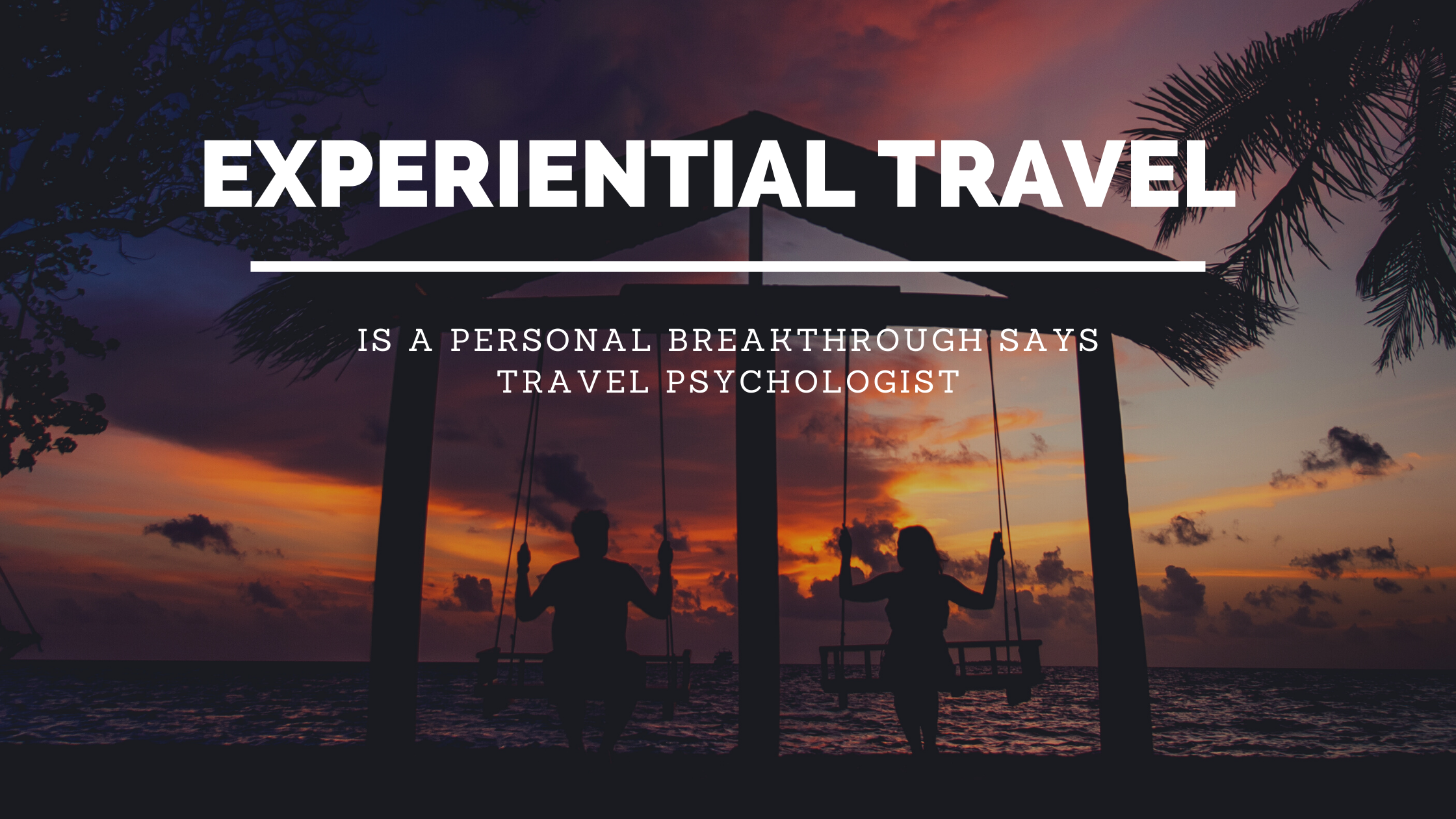
Experiential travel involves taking a cultural cooking class in a local’s home, or exploring a local market with a chef, rather than simply dining in a restaurant. Engaging in conversations with a Western Rajasthani weaver or a Leh’d Monk in Ladakh can enlighten, bond, or fundamentally change your perspective. This is the essence of transformational travel, reshaping the entire global travel industry.
Whatever you call these travel styles, transformative, immersion, or impact travel, you are joining a rapidly growing number of travelers who seek more than just seeing places. The numbers confirm it: the global experiential travel market is projected to reach $150 billion by 2033, growing at 4.5% annually. Closer to home, 70% of Millennials and Gen Z travelers now say they prioritize the journey itself as much as the destination. This is not a niche trend. This is a fundamental shift in how human beings understand the purpose of travel.
📊 The Experiential Travel Market in 2026
Global market projected to reach $150 billion by 2033 (CAGR: 4.5%) | 70% of Millennials & Gen Z prioritize the journey over the destination | India’s cultural tourism sector growing 12% year-on-year post-pandemic
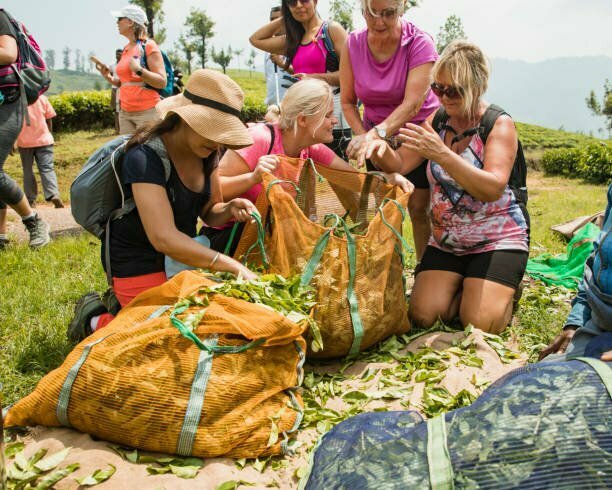
Tourists help Kangra tea pickers harvest fresh tea leaves in Himachal Pradesh, India.
What Is Experiential Travel?
There is no fixed, agreed-upon definition of experiential tourism, and that ambiguity is part of its power. At its core, it reflects our collective desire for deeper immersion: a more local, more real, more human experience of a place.
According to travel psychologists, most travel becomes genuinely experiential when it triggers a change in thinking, evokes a real feeling, or teaches you something about yourself or others. The connection we make with a place is what enables that. Yet many people travel without any internal shift; they consume sights, tick off landmarks, and return home essentially unchanged.
Experiential travel resists that. It demands participation rather than observation. And it produces something that no Instagram photo can replicate: a memory fused with meaning.
Experiential Travel vs. Package Tours: What’s Actually Different?
This is the question nobody in the industry is answering clearly, and the one most travelers are genuinely asking. If you’ve ever felt vaguely dissatisfied after a ‘well-organized’ group holiday, this section is for you.
| Elements | Package Tour | Experiential Travel |
|---|---|---|
| Pace | Fixed, rushed | Flexible, slow-travel friendly |
| Interactions | Scripted guides | Local experts, community members |
| Accommodation | Chain hotels | Homestays, boutique lodges |
| Food | Tourist-grade restaurants | Home kitchens, local dhabas, farm-to-table |
| What changes | Scenery | You, your thinking, empathy, perspective |
| Economic impact | Profits leave the community | Money stays local |
| Post-trip feeling | “I saw the Taj.” | “I understood something new.” |
The difference is not about the budget. A ₹50,000 experiential trip through Rajasthan’s artisan villages can reshape your worldview more profoundly than a ₹5 lakh international package tour. The variable is the depth of engagement, not the price paid.
Why Does Experiential Tourism Matter?
Experiential travel has evolved primarily because something was broken in the conventional travel model. A rebellion against globalization and cookie-cutter tours is prompting people to become actors and participants in their journey rather than voyeurs watching the world through a bus window.
We want to connect, not consume
Many travelers now want to connect with locals, not just observe them from a safe, sanitized distance. We want to understand a place from every angle: its history, culture, arts, traditions, philosophy, and contemporary realities. We are no longer satisfied with skimming the surface. This impulse predates social media. But the pandemic amplified it sharply: when travel was stripped away, we realized how much we had taken it for granted and what we had been doing with it when we had it.
It generates real economic equity
Money from experiential travel stays within the community rather than being transformed into multinational profit. This matters deeply. When local guides, family guesthouses, village artisans, and regional food producers benefit directly from tourism, the travel economy becomes genuinely regenerative. Communities can survive change without abandoning their traditions to find income elsewhere.
It helps preserve fragile cultures
Many Indian traditions, such as block printing in Bagru, Kangra miniature painting, Warli art in Maharashtra, and Banjara embroidery, are threatened by globalization. When travelers engage meaningfully with these traditions rather than purchasing a mass-produced souvenir at an airport, they contribute to their survival. The act of learning to print a block in Sanganer from the artisan’s own hands is a form of cultural patronage.
Experiential Travel in India: Where the Real Journey Begins
India is not a country you observe. It is a country that happens to you. The sheer layering of its cultures, languages, faiths, geographies, and histories means that every region offers a genuinely different experiential lens. Yet most international visitors leave having seen only the surface of the monuments, the markets, the managed experience designed for tourists.
Here is what the standard tour misses, and what experiential travel unlocks, across India’s most transformative regions.
Rajasthan: Artisan Villages Beyond the Palace Circuit
Every traveler visits the Amber Fort and City Palace. Few visit the block-printing cooperatives of Bagru, the blue pottery workshops of Jaipur’s old lanes, or the desert communities of Barmer, where Banjara weavers still produce fabric patterns unchanged for three centuries.
Experiential Rajasthan is not about checking monuments. It is about sitting with a master craftsman in Sanganer who learned block-printing from his grandmother, and understanding that the pattern on the cloth contains a cosmology. It is spending a morning with the Bishnoi community, whose reverence for the natural world predates modern environmentalism by 500 years, and realizing that their forest conservation was never a movement. It was a way of life.
🧵 Experiential Rajasthan Snapshot
Stay: Heritage havelis in Bundi or Shekhawati rather than Jaipur five-stars
Do: Block-printing workshops in Bagru village
Meet: Bishnoi community conservationists near Jodhpur
Eat: Dal baati churma cooked over open flame, not buffet-style
Skip: Camel selfie at Jaisalmer
Do instead: Overnight stay with a Marwari family in the Thar
Himachal Pradesh: The Lesson a Broken-Down Car Taught Me
I want to share a personal experience, because it illustrates exactly why experiential travel cannot be manufactured.
During a visit to Kangra in Himachal Pradesh, I was traveling with a local guide to a tea-planting community when our car broke down on a remote mountain road. What was supposed to be a day trip became an unexpected overnight stay in a rural tea farming household. An electrical storm cut the power. We sat by firelight for hours, talking.
In those conversations, I learned more about Himachali culture, about the economics of small-scale tea farming, about the checkpoints that controlled movement in the valley, and about what it meant to be young and ambitious in a community where options were closing more than weeks of conventional travel could have taught me. The breakdown was the breakthrough. Experiential travel creates conditions for exactly this: the moment where the script falls away and something real takes its place.
Varanasi: Where Time Operates Differently
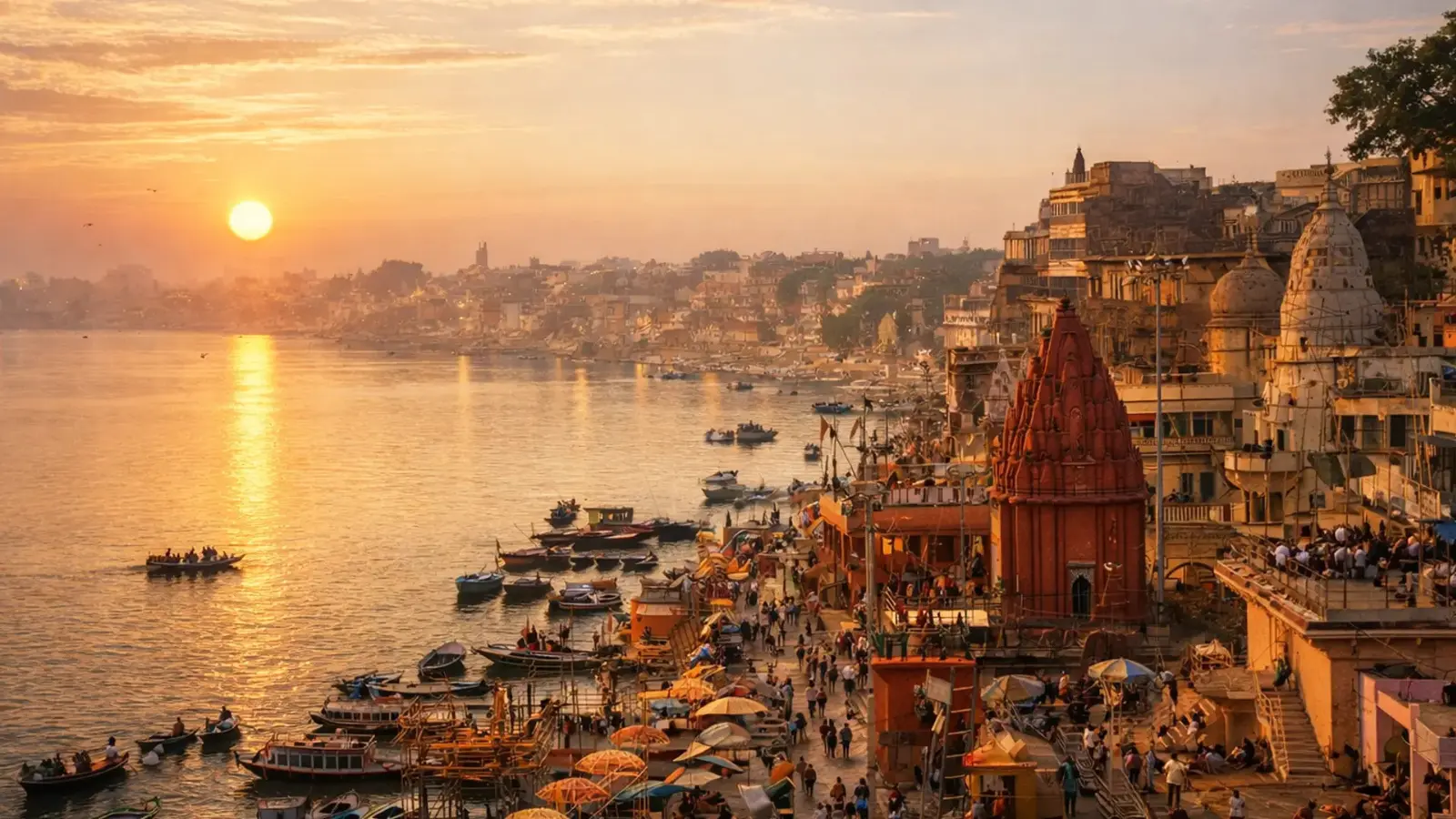
No city in India resists the tourist gaze as stubbornly as Varanasi. You can watch the Ganga Aarti from a boat with 200 others and feel nothing, or you can walk the narrow alleys behind the ghats at 5 am with a resident, past silk weavers already at their looms, past the smell of marigolds being prepared for temple offerings, past a tea stall where the same group of old men has been arguing philosophy since before your parents were born and feel everything.
Varanasi’s experiential travel is not organized. It is surrendered to. The city rewards those who slow down, get lost deliberately, and follow curiosity without an agenda.
Ladakh: Monks, Monasteries, and the Silence Between Words
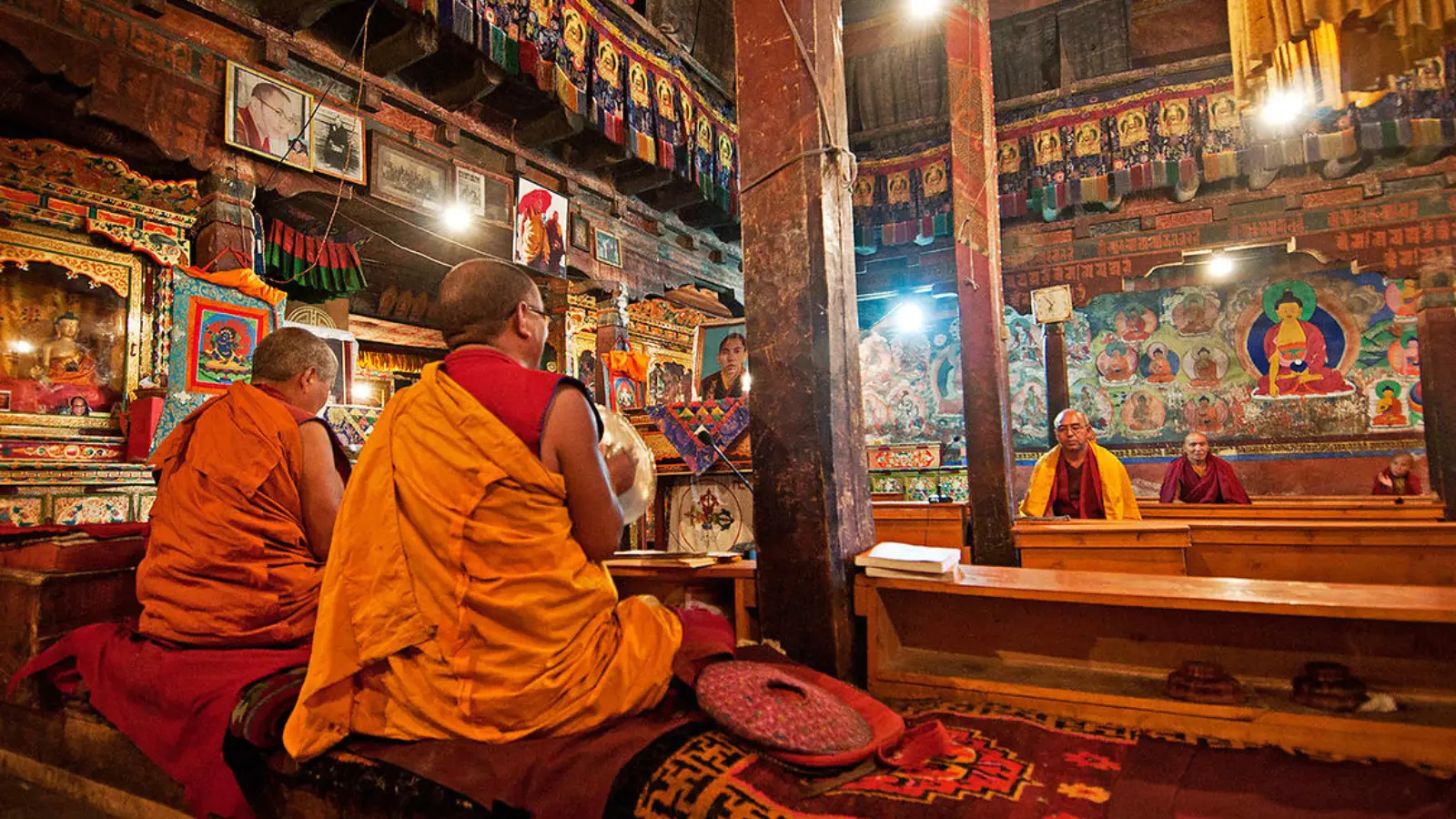
Engaging with a Leh’d Monk in Ladakh, not in a staged monastery visit, but in genuine conversation during a meal or a prayer session you were invited to observe, is a different order of experience from ticking off tourist sights. Ladakhi Buddhist philosophy offers a confrontation with impermanence that is unavailable in most modern life. Travelers who spend time in these communities often describe a recalibration of what actually matters. That is not a marketing claim. That is what happens when you stop moving long enough to listen.
The Travel Psychology Behind Experiential Journeys
As a travel psychologist, I am often asked: What actually happens in the mind during a transformative travel experience? The answer involves several well-documented psychological mechanisms.
1. Cognitive Reframing
When you navigate an unfamiliar cultural context, eat unfamiliar food, observe unfamiliar rituals, and have a conversation with someone whose worldview is entirely different from yours, your brain is forced to examine and loosen its existing frameworks. Psychologists call this cognitive reframing. Travel creates this experience in ways that therapy and books rarely can, because it is immersive and embodied.
2. Identity Expansion
Solo travel, in particular, produces measurable identity expansion. When you are removed from the social context in which your identity is normally defined, your role at work, your family position, and your social group, you encounter yourself more nakedly. This is why many people return from meaningful trips with shifts in career direction, relationship clarity, or life priorities that they cannot fully explain.
3. Elevated Presence
In unfamiliar environments, the brain cannot rely on autopilot. You must pay attention. This enforced presence is functionally similar to mindfulness practice and produces similar outcomes: reduced rumination, heightened sensory awareness, and a stronger sense of being alive. This is why experienced travelers often describe their best journeys not in terms of places visited, but in terms of how alive they felt.
4. Empathy Activation
Genuine contact with people from different cultural backgrounds, not observation, but actual human connection, has been shown to reduce prejudice and expand empathy. The mechanism is simple: when you share a meal, a laugh, a moment of confusion, or a genuine conversation with someone your society has trained you to regard as ‘other,’ that otherness dissolves. Experiential travel is one of the most reliable triggers for this.
7 Types of Experiential Travel (And What Each Unlocks)
1. Meaningful & Authentic Cultural Connections
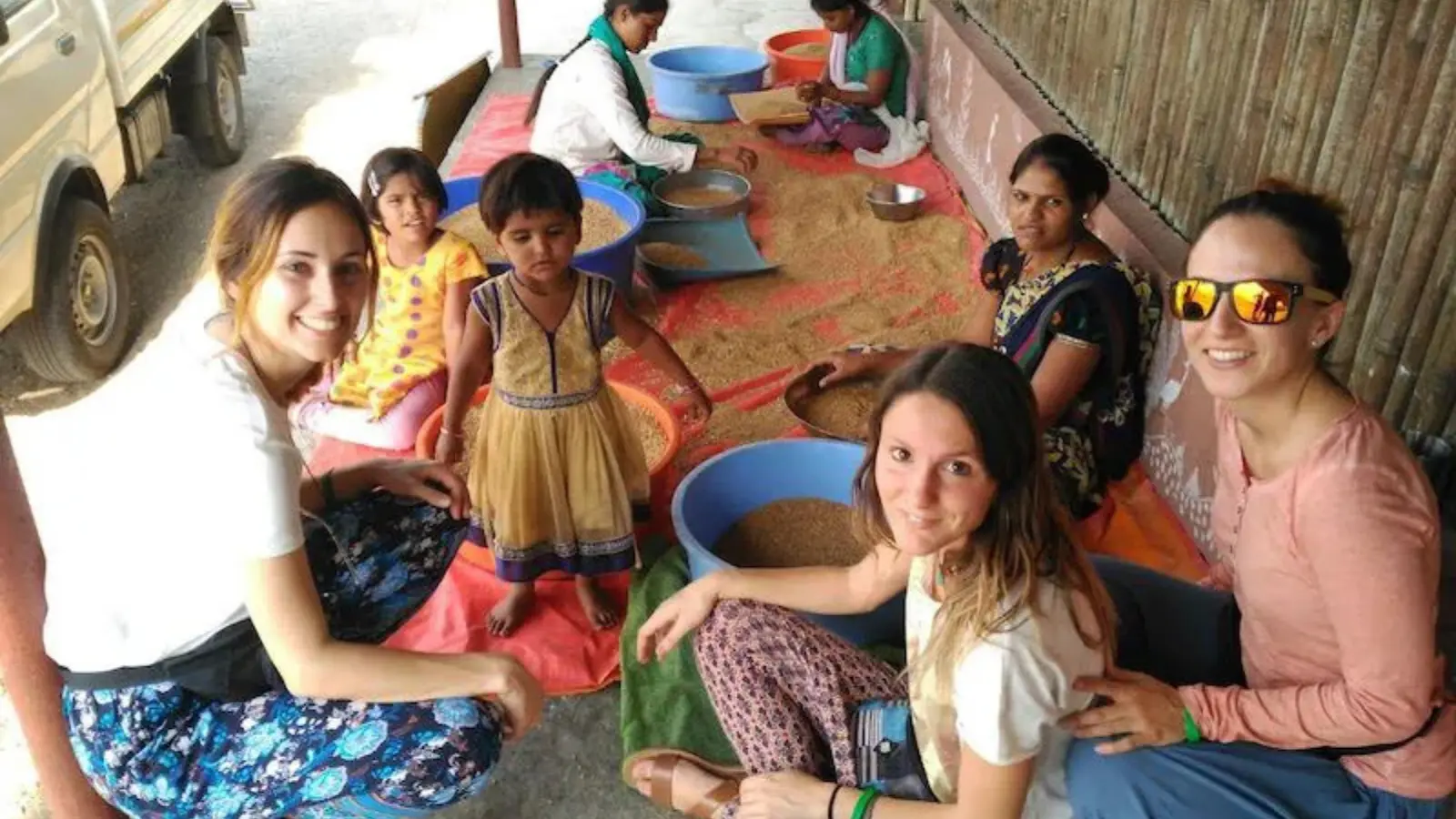
The heart of experiential cultural travel: dinner with a local family, a walking tour led by a resident rather than a professional guide, a homestay where you’re woken by the sounds of the household rather than a hotel alarm. Authenticity here doesn’t mean poverty tourism or an expectation of performance. It means mutual curiosity and genuine exchange.
- Book through local families rather than commercial homestay aggregators
- Choose locally owned accommodation over chain properties
- Select tour companies that employ people who actually live at the destination
2. Purposeful Volunteering
Volunteering travel, done well, creates reciprocal value: the traveler gains depth and meaning; the community receives tangible support. Done badly, voluntourism, where unskilled outsiders displace local workers it causes harm. The distinction matters. Look for organizations with long-term community partnerships, skills-matching processes, and transparent impact reporting.
3. Passionate Learning
Education as the engine of travel: language immersions abroad, cooking classes with a local chef (not a tourist-facing kitchen show), and traditional arts and crafts apprenticeships. A morning learning to throw clay with a Khurja potter or weave a Patan Patola with a master weaver contains more cultural transmission than a week of monument visits.
4. Transformation & Self-Discovery
Travel for internal change, tracing ancestral roots, the empowerment of first solo travel, Ayurveda retreats in Kerala, and silent meditation at a Vipassana center. These journeys are not about escape. They are about deliberately seeking the conditions for insight.
5. Slow & Themed Travel
Slow travel prioritizes depth over breadth: spending two weeks in one district of Rajasthan rather than eight cities in eight days. Themed travel organizes around a specific lens, culinary, literary, architectural, or textile, which creates a thread of meaning across disparate experiences. Literary travel through the lanes that inspired Rabindranath Tagore in Santiniketan is experiential. A selfie at the tourist board sign is not.
6. Spiritual Journeys
Sacred site pilgrimages, time in Himalayan monasteries, participation in regional festival rituals, walking the Camino, and spiritual travel ask something of the traveler beyond logistics. It asks for openness. The Kumbh Mela, attended by millions of Indians for reasons that have nothing to do with tourism, offers a rare window into devotion at a scale that simply cannot be replicated or stage-managed.
7. Boundary-Pushing Experiences
Travel to unrecognized territories, remote destinations with minimal tourist infrastructure, places where the journey itself is the challenge, these test and expand your sense of your own capabilities. The value is not in the hardship but in what the hardship reveals.
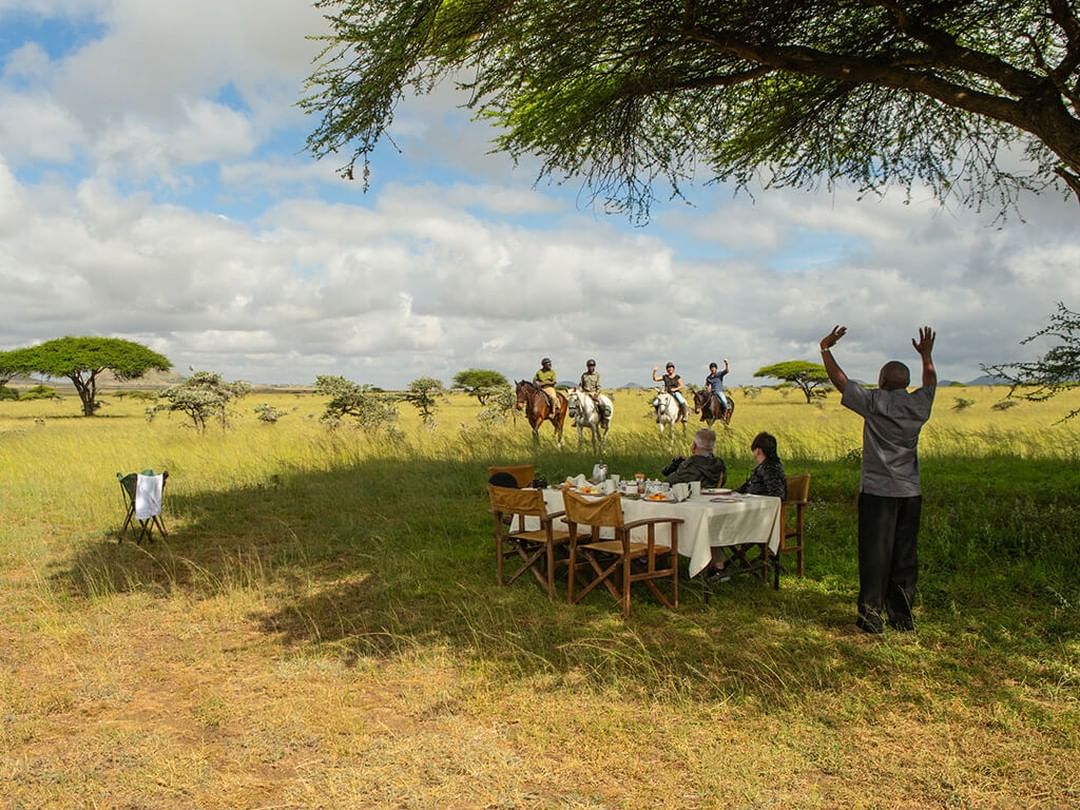
How to Plan an Experiential Trip to India: A Practical Guide for International Visitors
This section answers the questions that most travel sites never address, the practical ‘how’ that stands between intention and actual experience.
Step 1: Choose depth over coverage
The single most damaging planning instinct for experiential travel is trying to see everything. India is not a list to be completed. Choose one or two regions and commit to them. Three weeks in Rajasthan will teach you infinitely more than three weeks spent covering Delhi-Agra-Varanasi-Jaipur-Mumbai-Goa-Kerala at speed.
Step 2: Build in unscheduled time
Every experienced traveler in India will tell you the same thing: the best moments were unplanned. Build at least 30% of your time as genuinely uncommitted. Not ‘free time at the hotel.’ Unscheduled time in the destination, with permission to follow whatever presents itself.
Step 3: Choose the right local partner
The difference between a scripted tour guide and a genuine local expert is enormous. Look for guides who are from the community they’re guiding in, who have relationships (not just access), and who can take you somewhere that isn’t in a guidebook because it’s their neighborhood, not because it’s on the route.
Step 4: Understand what you’re actually buying
Experiential travel has a pricing transparency problem that nobody in the industry addresses. Here is a rough framework:
💰 Experiential Travel Cost Framework (India, per person)
Budget tier (₹20,000–45,000 for 10 days): Village homestays, local transport, community-led activities | Mid-range (₹60,000–₹1,20,000 for 10 days): Boutique heritage properties, expert local guides, curated workshops | Luxury experiential (₹1,50,000+ for 10 days): Private bungalows in tea estates, personal travel designers, exclusive access to artisan families and cultural events.
Note: Price does not determine depth of experience. It determines comfort levels. Even a mid-range experiential trip can be profoundly transformative with the right planning.
Step 5: Prepare psychologically, not just logistically
Most travel preparation focuses on logistics, visas, vaccinations, and itineraries. Experiential travel requires a different kind of preparation: examining your own assumptions about the culture you’re visiting, identifying what you actually want from the journey, and building a tolerance for discomfort, ambiguity, and the unexpected. The car that breaks down, the power cut, the monsoon that ruins the plan, these are not failures of the trip. They are often its most important moments.
What Travelers Actually Experience: Stories from the Field
The Honest Downsides of Experiential Tourism
As a travel psychologist, intellectual honesty requires acknowledging what goes wrong because it goes wrong more often than the industry admits.
Commercialization of the ‘authentic’
Experiential travel companies are appearing everywhere and packaging authenticity as a marketing proposition. The irony is sharp: the moment an experience is sold as authentic, its authenticity is compromised. Some companies end up commercializing the very experience they claim to offer, money is repatriated as profit, the local community sees little of it, and the traveler gets a high-production simulation of immersion rather than the real thing.
Overtourism risk
As lesser-known destinations become popular through experiential travel marketing, they attract volume, and volume destroys the very quality that made them worth visiting. The dangers of overtourism are well-documented. Every responsible traveler must consider the aggregate impact of their ‘off the beaten path’ choice when that path is now being taken by thousands.
Fragile traditions under pressure
Our search for the ‘authentic’ can paradoxically threaten the traditions we seek. When artisans or communities realize that tourists expect a performance of their culture, they may begin producing a version designed to please visitors rather than expressing their actual living tradition. The Bhil paintings that move tourists are not the same as the ones painted for ritual. Knowing the difference matters.
Pseudo-experiential travel
A quick swing through a local market with a group of 20 others, or a ‘village visit’ that is managed by the same company running your five-star hotel, is not experiential travel. It is mass tourism with a thin local veneer. In the age of social media, the photograph of the experience has become more socially valuable than the experience itself, which produces exactly the opposite of what experiential travel is supposed to offer.
Conclusion: Escape Into Reality
As I write this, I am planning a visit to Lakshadweep. After researching guides and itineraries, I have decided to simply wing it for a day or two, choosing a point of departure and not planning anything else. Wandering. Observing. Moving with the islands rather than trying to shape them to any expectation.
If things start feeling too easy or too familiar, veering off the path is not just recommended. It is essential. Chuck the itinerary. Sit next to someone on the boat and smile. You may be met by a suspicious glower, or you may be met by a smile in return. It could be the start of something that changes you with confidence in travelling helps in mental health recovery.
That is what experiential travel offers. Not a destination. A breakthrough.
Frequently Asked Questions
Q: What is the difference between experiential travel and a package tour?
Package tours deliver a pre-scripted sequence of sights with managed logistics. Experiential travel prioritizes depth of engagement over coverage it means cooking with local families rather than eating in tourist restaurants, walking with residents rather than following a script, and staying in community-owned accommodation rather than chain hotels. The key difference is not price or comfort level. It is the degree of genuine human and cultural contact.
Q: Is experiential travel more expensive than conventional tourism?
Not necessarily. A well-planned experiential trip staying in village homestays, using local guides, and eating at local establishments can cost significantly less than a standard package tour. What changes is where your money goes; more of it reaches the community directly. Luxury experiential travel does exist and can cost ₹1.5L+ per person for 10 days, but the format scales across all budgets.
Q: How do I know if an experience is authentic or just touristy?
Authentic experiences involve local guides who actually live at the destination, interactions with communities that exist independently of tourism, and activities that locals participate in for their own reasons, not because visitors are watching. Touristy experiences are designed primarily for visitor consumption, often involve staged performances of culture, and funnel money away from the local community.
Q: What are the best experiential travel destinations in India?
Rajasthan offers an unmatched artisan culture, block printing, blue pottery, and Bishnoi conservation communities. Himachal Pradesh, particularly the Kangra and Spiti valleys, offers rural Himalayan culture still largely unchanged by mass tourism. Varanasi rewards travelers who slow down and move beyond the ghat performances. Ladakh offers Tibetan Buddhist culture in a landscape of profound silence. The Northeastern states of Nagaland, Meghalaya, and Manipur offer tribal cultures that are genuinely among the world’s most distinctive.
Q: What is the psychological benefit of experiential travel?
Travel psychologists have identified several consistent outcomes from genuine experiential travel: cognitive reframing (loosening fixed worldviews), identity expansion (discovering who you are outside your social roles), elevated presence (the enforced mindfulness of unfamiliar environments), and empathy activation (genuine human contact across cultural differences). These effects are not inevitable; they require active engagement rather than passive consumption. But when conditions are right, experiential travel produces measurable and lasting personal change.
Q: How is experiential travel different from sustainable travel?
Sustainable travel focuses on minimizing negative environmental and cultural impact. Experiential travel focuses on maximizing meaningful engagement with a destination. The two are complementary experiential travelers because they develop genuine relationships with local communities and environments, and tend to make more sustainable choices naturally. But they are not the same thing. You can travel sustainably and have a completely surface-level experience. You can also have a deeply meaningful experiential journey that is not optimally sustainable.


Just finished reading your piece on experiential travel and its profound impact, as explained by a travel psychologist. I’ve always believed that travel is more than just visiting places; it’s about transformative experiences that lead to personal growth. Your article beautifully articulates this sentiment and provides a deeper psychological understanding of why these experiences are so impactful. As someone passionate about meaningful journeys, I truly value the depth and perspective your piece offers. Thank you for enlightening us on the profound effects of immersive travel.