

Quick Answer: Travel journaling is the habit of capturing your thoughts, feelings and observations while you travel, using words, photos or voice notes. It takes five minutes a day, helps you process what you experience, and supports your wellbeing on the road. Mandeha’s LEGIT Travel Psychology Framework gives each entry a simple five-step structure. It is not a replacement for therapy or clinical care.
It is the third night of a trip. The photos are lovely and the itinerary is full, yet you feel oddly flat, or wired, and cannot say why. As a travel psychologist, I hear versions of this all the time. The trip is happening, but the processing is not. That gap is where travel journaling helps. A few honest lines each day give your mind somewhere to put what it is taking in. This guide covers the benefits of travel journaling, how to journal while traveling, Mandeha’s LEGIT Travel Psychology Framework, and which travel journal prompts and travel journal ideas to try. If you want the wider context first, read the science behind travel and mental health.
What Is Travel Journaling?
Travel journaling is the practic e of recording your inner experience of a trip, not just where you went. It combines quick notes about events with honest reflection on how you felt, what surprised you and what you noticed about yourself. It can live in a notebook, a phone app, voice notes or captioned photos.
Think of it as the space between a diary and a trip log. A log says, “We reached the fort at ten.” Travel journaling adds, “I felt small and a bit tearful standing there, and I am not sure why.” That second sentence is the useful one.
This idea sits close to expressive writing, a well-studied method in psychology. A 2012 Psychology Today blog post on expressive writing makes the key point: it is less about what happened and more about how you feel about what happened.
From a travel psychology point of view, a trip is a compressed period of novelty. New places, foods, languages and social situations arrive faster than we can absorb them. Journaling slows the intake just enough for you to notice your reactions. It fits the approach we take at Mandeha, including our LEGIT Travel Psychology model, because it turns a trip into something you reflect on rather than simply get through.
A journal is also private, unlike a travel blog, so you can be blunt and unfinished. Later, I will show how to journal while traveling in that spirit.
The Benefits of Travel Journaling
The benefits of travel journaling include clearer memories, better emotional processing and stronger self-awareness. Writing turns a blur of experiences into a story you can understand.
It helps you process what you experience. In a 1986 study, Pennebaker and Beall asked students to write for 15 minutes on four consecutive days about upsetting experiences. Four months later, those students reported fewer visits to the health centre than students who wrote about trivial topics, as summarised by Baikie and Wilhelm in Advances in Psychiatric Treatment (2005). That study was about difficult events, not holidays, so I would not promise the same effect from a trip diary. It does show why the benefits of travel journaling start with putting feelings into words.
It supports memory. Writing details while they are fresh gives your memory extra hooks: a smell, a stranger’s comment, the way a moment felt. Months later, one line can bring the scene back, which is why the benefits of travel journaling last well beyond the trip. A 2001 APA Monitor report on research by Klein and Boals found that writing about a stressful event reduced intrusive thoughts and improved working memory. That work was not about trips, but it suggests writing frees up mental space.
It builds self-awareness. One quieter benefit of travel journaling is pattern-spotting, such as noticing irritability when you are hungry and overscheduled. That is mindful travel in practice. If you want a framework for those observations, Mandeha’s Tangible Travel Tool maps the psychology behind why you travel, and the LEGIT Travel Psychology Framework below turns that insight into a daily habit.
It leaves a record of change. A journal shows how a trip changed you. The benefits of travel journaling grow with time, since you can look back and see who you were on day one. Next, here is how to journal while traveling.
How to Journal While Traveling

How to journal while traveling comes down to lowering the effort. Choose one small daily slot, one tool you already carry, and one simple rule, such as three lines with no editing. Consistency matters far more than length or beauty.
If you have never kept a journal, start smaller than you think you need to. Here is how to journal while traveling without it becoming a chore, using travel journal ideas that cost nothing:
- Anchor it to a routine. Write after breakfast, on the train, or just before sleep.
- Use a three-line template. What happened? How did I feel? What did I notice about myself?
- Set a five-minute timer. When it rings, stop, even mid-sentence.
- Use what is already in your pocket. Your phone’s notes app works perfectly well for travel journal prompts and quick entries.
- Skip days without guilt. A gap is not a failure.
The Best Way to Journal on a Trip
The best way to journal on a trip is the one you will actually repeat. For most people, that is a short evening check-in at the same point each day. If you are on your own, solo travel often makes this easier, because the evenings are quiet and nobody is waiting for you to finish.
Tired days count too: “flat, hungry, missing home” is a real entry, and knowing how to journal while traveling on low-energy days keeps the habit alive.
Mandeha’s LEGIT Framework for Travel Journaling
The LEGIT Travel Psychology Framework is Mandeha’s five-step structure for travel journaling: Learning, Experience (or Explore), Growth, Intentions and Transform. It applies our LEGIT Travel Psychology model to everyday entries, so each one moves from what happened to what it means for you.
It is designed as a companion to the Tangible Travel Tool (TTT), Mandeha’s psychometric framework for understanding why you travel before you go. LEGIT Travel Psychology picks up where TTT leaves off, extending the benefits of travel journaling beyond planning. In short, TTT maps your why, and LEGIT Travel Psychology records your how.
The Five Steps of LEGIT Travel Psychology
| Step | Question to ask | Example entry |
| L: Learning | What happened today, and what did it teach me? | “The bus to the fort was two hours late. Plans here bend, and so can I.” |
| E: Experience / Explore | How did it feel, and what did I explore because of it? | “Irritated, then I explored the market nearby and felt relieved.” |
| G: Growth | Where did I stretch or surprise myself? | “I settle down once I stop trying to control the plan.” |
| I: Intentions | How does this link to why I am traveling? | “I came here to slow down, and the delay did that for me.” |
| T: Transform | What will I change or carry home? | “Leave one unplanned hour in each day, at home too.” |
The first three steps match the three-line template above. On a busy day, write Learning, Experience and Growth only, then add Intentions and Transform when you have more time. That flexibility is the core of how to journal while traveling without pressure, and each step works as one of your travel journal prompts.
Travel Journal Prompts
Travel journal prompts are short questions that get you writing when you do not know what to say. The ones below are grouped by before, during and after your trip, so you can use them as a menu rather than homework.
Before the Trip (Travel Journal Prompts for Planning)
- What am I hoping this trip gives me?
- What am I nervous about, and what would help?
- What do I want to leave behind while I am away?
- What is one thing I want to notice on purpose?
If planning itself feels heavy, read how an AI trip planner can reduce travel planning stress.
During the Trip
- What surprised me today?
- Where did I feel most like myself?
- What drained me, and what restored me?
- What do I want to remember about this exact moment?
After the Trip
- What has changed for me since I left?
- Which moment do I keep returning to?
- What do I want to carry home with me?
- What would I do differently next time?
These travel journal prompts work best when you answer quickly, which is also how to journal while traveling on a busy day. Good travel journal prompts open a door, and you decide whether to walk through.
Travel Journal Ideas Beyond Writing

Travel journal ideas do not have to involve a pen. Voice notes, captioned photos, sketches and one-word-a-day entries all capture your inner experience, and they suit people who dislike writing. The benefits of travel journaling are the same whichever format you pick. The goal of travel journaling is self-reflection, not a polished notebook.
- Voice notes. The easiest of the travel journal ideas here: talk for 60 seconds at the end of the day. Speaking is often easier than writing when you are tired, and it shows how to journal while traveling even without a pen.
- Photos with captions. Choose one photo daily and add a single line about what you felt, not what it shows.
- Quick sketches. A rough drawing of a doorway or a meal takes two minutes and anchors the memory.
- One word a day. Pick a word for the day, then add one sentence about why.
Each of these travel journal ideas takes under five minutes and can follow the LEGIT steps. Try two across the first week, then keep the easier one. The best travel journal ideas are the ones you never have to talk yourself into.
Travel Journaling for Mental Health
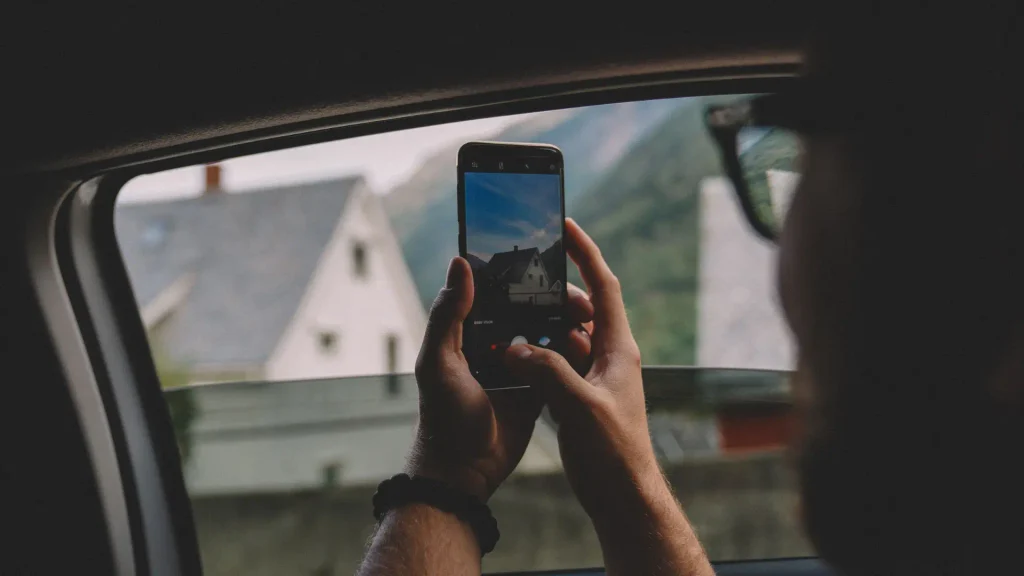
Travel journaling for mental health works by giving your feelings a place to land. It helps you notice stress early, make sense of transitions and reflect after you return. It supports wellbeing, but it is not therapy and does not replace clinical care.
Processing stress and difficult emotions. The benefits of travel journaling show up most when emotions run high. Trips can bring up nerves, homesickness, irritation with travel companions and quiet loneliness, and writing a feeling down often makes it more manageable. If nerves spike before departure or at the airport, listing what you fear is a useful first step in managing travel anxiety. The University of Rochester Medical Center notes that journaling can help you track how you feel day to day and spot your triggers. A short daily entry on the road does the same job.
Making sense of transitions. Arrival, the mid-trip slump and the return home each carry their own emotional weather. A short entry at each point helps you see them as phases, not failures.
Reflecting after the trip. A reflective entry a week after you get home, using the after-trip travel journal prompts above, helps you decide what you want to keep from the journey.
Journaling can sit alongside travel therapy, the wider idea of using travel purposefully to support wellbeing, but it is a self-guided habit rather than treatment. A 2025 systematic review in PLOS ONE examined positive expressive writing in non-clinical populations as a low-intensity self-help tool. Its authors noted that study methods vary widely, so I read the evidence as encouraging, not settled.
Baikie and Wilhelm (2005) note that expressive writing can bring a short-term rise in negative feelings. If writing leaves you feeling worse in a way that does not settle, stop, do something grounding, and speak with a qualified mental health professional, such as a counselling psychologist. Travel journaling for mental health should feel supportive, not punishing, so choose travel journal ideas that feel light.
Conclusion
Travel journaling is a small, low-cost way to stay in touch with yourself while the world moves quickly around you. The benefits of travel journaling do not depend on talent. Start with five minutes, a few travel journal prompts and whichever of the travel journal ideas feels easiest, then use the LEGIT steps to give your entries shape as the habit grows. As a travel psychologist, I have found that the people who benefit most are rarely the best writers. They are simply the ones who keep showing up.
Four Key Takeaways
- Keep it small: five minutes, three lines, no editing.
- Give it shape: the LEGIT Travel Psychology Framework moves each entry from what happened to what it means for you.
- Choose your format: the travel journal ideas in this guide, from writing to sketches, all count.
- Treat it as support, not treatment: it helps you reflect, and it does not replace professional care.
If you would like guided support in turning a trip into lasting insight, explore Travel Psychology for travelers or book a consultation with Mandeha.
Frequently Asked Questions
What is travel journaling?
Travel journaling is recording your thoughts, feelings and observations while you travel, not just your itinerary. It can be written, spoken, photographed or sketched.
How do I start if I have never kept a journal?
Write three lines a day at a fixed time: what happened, how you felt, what you noticed. How to journal while traveling is mostly about keeping the bar low.
What is the best way to journal on a trip?
The best way to journal on a trip is a five-minute check-in at the same time each day, usually in the evening. It is the simplest answer to how to journal while traveling.
What is Mandeha’s LEGIT Travel Psychology Framework?
It is Mandeha’s five-step structure for journal entries, based on its LEGIT Travel Psychology model: Learning, Experience (or Explore), Growth, Intentions and Transform. It works alongside the Tangible Travel Tool, which explores why you travel, by recording how each trip is shaping you.
What are some good travel journal prompts?
Good travel journal prompts are short and feeling-focused. Try “What surprised me today?” or “What do I want to carry home?” Use one or two a day.
What are some travel journal ideas if I dislike writing?
Try a 60-second voice note, a photo with a one-line caption, a rough sketch or one word a day. These travel journal ideas keep the benefits of travel journaling within easy reach.