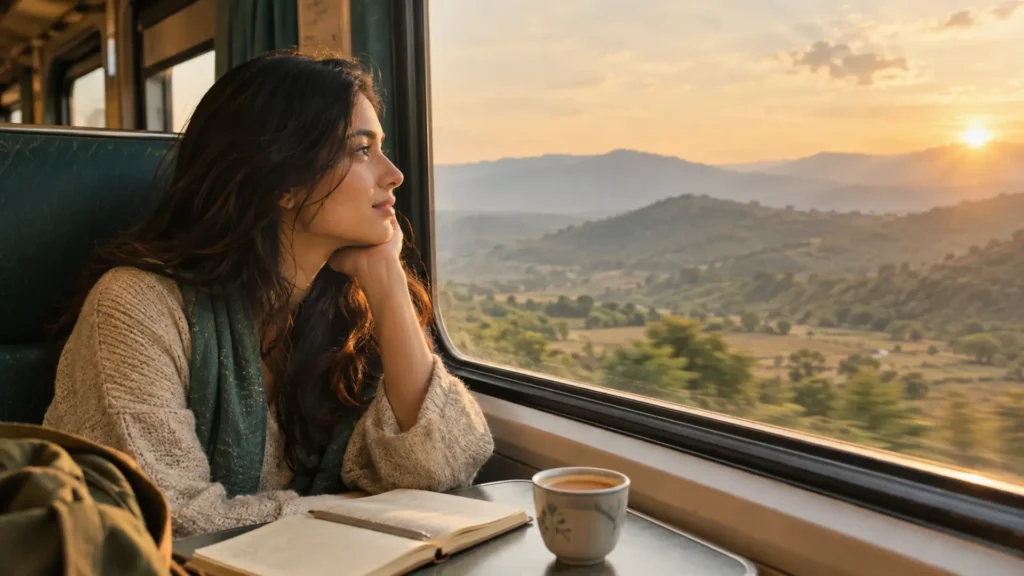

Quick Answer: The psychology of solo travel centers on self-efficacy, identity reconstruction, and autonomous decision-making. Without a companion to defer to, every choice becomes yours – and research shows this specific kind of unshared responsibility is what drives the confidence, self-discovery, and personal growth solo travelers consistently report.
There’s a particular kind of moment every solo traveler recognizes: standing at an unfamiliar intersection, no one to ask, no one to blame if you choose wrong. That discomfort is exactly where the psychology of solo travel does its work.
What Is the Psychology of Solo Travel?
The psychology of solo travel studies what happens differently when a trip removes the usual social scaffolding – a partner, friends, a group leader – and leaves every decision, risk, and discovery to one person alone. Sociologist Karen Stein’s concept of a “vacation identity” is central here: travelers construct a temporary self during a trip, shaped by unfamiliar surroundings and freed from the routines that usually anchor identity at home.
Solo travel intensifies this. A 2025 doctoral dissertation from Liberty University’s School of Behavioral Sciences, comparing solo and group travelers, found solo travelers reported significantly more memorable travel experiences than those who traveled with others – a meaningful finding given how strongly memorable experiences correlate with lasting psychological impact (Holland, 2025).
Why Solo Travel Builds Confidence

This is the mechanism at the heart of solo travel benefits: self-efficacy – your belief in your own ability to handle what comes. Psychologist Albert Bandura’s foundational research on self-efficacy established that successfully navigating challenges independently, without a safety net, builds this belief more effectively than supported or guided experiences.
A 2024 study by researchers at EM Normandie Business School, based on in-depth interviews with women solo backpackers, found solo travel produces measurable empowerment through three mechanisms: personal growth from spontaneous decision-making, recovery from difficult life periods (breakups, job loss, grief), and a shift in perspective from stepping outside one’s usual life (Trelohan et al., 2024). The researchers also found something worth naming directly: many women’s fears about traveling alone turned out to be larger than the actual risks they encountered.
That’s why solo travel and self-efficacy are so closely linked – the repeated act of making an independent call, and having it work out, compounds into genuine confidence that persists well beyond the trip.
Psychological Benefits of Traveling Alone
Pulled together, the research points to a consistent set of solo travel benefits:
- Self-efficacy and confidence – from repeatedly handling situations without support
- Extended self-reflection – without constant social exchange, solo travelers report deeper introspection, consistent with narrative identity theory (the idea that we build our sense of self through the stories we tell about our experiences)
- Identity flexibility – freedom to try on different versions of yourself, away from the roles others expect of you at home
- Recovery and reprocessing – several studies link solo travel to processing difficult life transitions, functioning almost like an informal form of therapy
Is Solo Travel Good for Mental Health?

Generally, yes – with a caveat worth naming honestly. Solo travel mental health benefits are strongest when the trip is chosen freely, not used purely to escape an unresolved crisis. Research on women backpackers found solo travel often functions as recovery support after a breakup, job loss, or bereavement – but the psychological transformation came from actively engaging with the challenge of traveling alone, not just from physical distance itself.
Solo Travel and Self-Discovery
This is where solo travel self-discovery research gets specific. A study on extraordinary travel experiences found that solo travelers go through something close to a rite of passage: separation from ordinary life, transformation through the experiences of the trip itself, and incorporation of a changed sense of self on return – new values, new confidence, sometimes a new direction entirely.
This connects closely to the broader mechanisms covered in our pillar guide, Benefits of Travel Psychology, and to designing a trip around lasting change – see Intentional Travel for how to structure a solo trip so the psychological gains actually stick.
Frequently Asked Questions about the Psychology of Solo Travel
Why does solo travel change how you see yourself?
Because it removes the social roles and expectations that usually shape your identity at home, leaving you to make every decision independently – research links this directly to identity reconstruction and increased self-efficacy.
Is traveling alone good for your mental health?
Generally yes, particularly for building confidence and processing difficult life transitions – though it works best when chosen freely rather than used purely as an escape from an unresolved crisis.
Why does solo travel build confidence more than group travel?
Because successfully navigating challenges without support reinforces self-efficacy more strongly than guided or supported experiences – you build trust in your own judgment because there’s nothing else to rely on.
What’s the psychological difference between solo and group travel?
Solo travel tends to produce more memorable experiences and deeper self-reflection, according to recent research, while group travel leans more on shared connection and social novelty.
Can solo travel help you process a difficult life event?
Research on solo travelers, particularly women backpackers recovering from breakups, job loss, or bereavement, found solo travel can support psychological recovery and personal transformation during major life transitions.
Is solo travel actually riskier than traveling with others?
Research on women solo travelers found their initial fears were often larger than the actual risks encountered – though sensible safety precautions remain important regardless.