Quick Answer: Tourism psychology is a specialized branch within the broader field of travel psychology, focused specifically on how destinations, trip structure, and tourism design – not just individual mindset – shape traveler wellbeing. Where you go and how a trip is built determine which psychological mechanism gets activated: stress recovery, identity growth, or social connection.
You already know a good trip can shift your mood. What’s less obvious is that how tourism itself is designed – the destination, the pacing, the type of experience on offer – plays as large a role in that shift as your own mindset does. That’s the core of the benefits of tourism psychology : it applies the principles of travel psychology at the level of the industry and the destination, not just the individual traveler.
Tourism Psychology vs. Travel Psychology: What’s the Difference?
This distinction is worth clearing up, because the two terms often get used interchangeably – and they shouldn’t be. Tourism psychology isn’t a separate field running parallel to travel psychology; it’s a specialized branch within it.
Travel psychology is the umbrella field. It looks inward, at the individual – your motivations, your sense of identity, how your mind responds to stress and novelty on a journey. It explains why travel moves us the way it does, across every kind of trip, for every kind of traveler.
Tourism psychology narrows that lens outward, onto the system surrounding the individual: how destinations are designed, how tourism infrastructure is built, how guided experiences are structured, and how the industry itself shapes psychological outcomes at scale. It takes the core principles of travel psychology and applies them to how trips and destinations are built – not just to how travelers feel.
So the relationship isn’t “two words for the same idea” – it’s “a broad field and one of its applied branches.” Travel psychology asks: what does travel do to the mind? Tourism psychology asks a sharper question within that same field: what is it about how this trip was designed that did that?
Understanding psychology’s role in the tourism industry, then, means treating destinations and experiences as designed systems – not just backdrops travelers happen to pass through.
How Does Tourism Improve Mental Health?
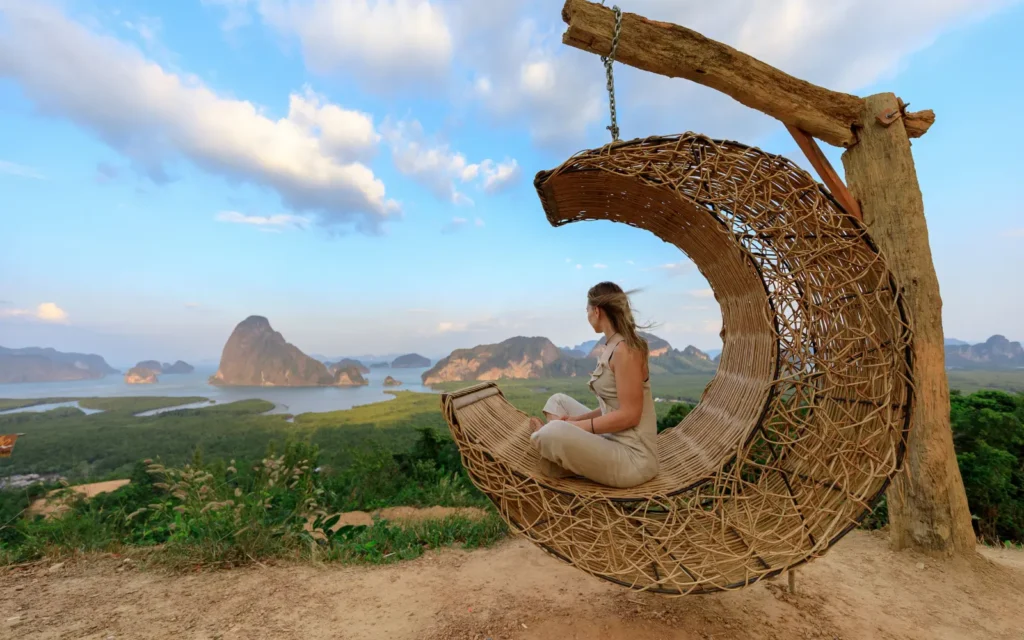
Tourism improves mental health mainly through recovery – stepping away from routine demands, lowering stress hormones, and giving the mind room to process. This is one of the clearest benefits of tourism psychology: it isn’t vague relaxation, it’s a measurable recovery process shaped by destination choice.
A peer-reviewed review published in the International Journal of Environmental Research and Public Health found that nature-based tourism contributes meaningfully to mental health outcomes post-pandemic, with frameworks now linking park visits directly to increased visitor wellbeing (NCBI, 2022). A controlled study published in Sustainability similarly found that a nature tourism experience produced large, clinically relevant reductions in depression, anxiety, and stress among participants – though the benefits required repeat exposure to hold (Sustainability, 2025).
This is positive psychology in tourism in practice: not just “nature is nice,” but nature tourism functioning as a measurable, if time-limited, non-pharmacological intervention.
How Does Destination Choice Affect Mental Wellbeing?
This is one of the most practical benefits of tourism psychology to understand: not all destinations activate the same psychological mechanism.
- Nature-based destinations work primarily through attention restoration and stress-hormone reduction.
- Cultural and historical destinations work more through perspective-shifting and meaning-making.
- Wellness-designed destinations – increasingly common in 2026 – are built explicitly around recovery, connection, or reflection as outcomes, not amenities.
Psychology of Nature-Based Tourism vs. Volunteer Tourism
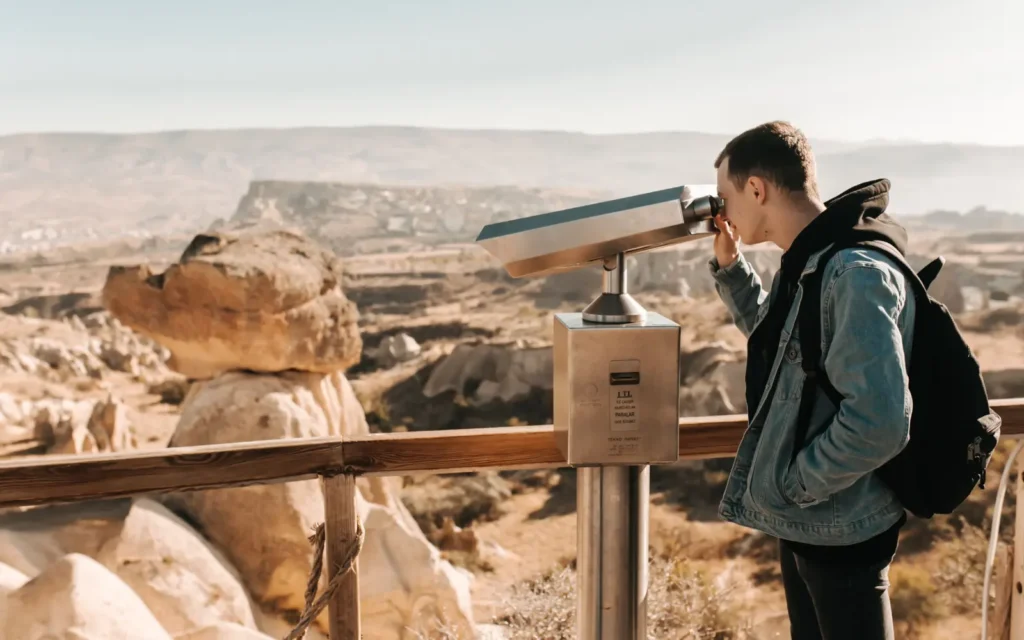
Both fall under the broader umbrella of tourism psychology explained, but they work through different channels. Nature-based tourism leans on attention restoration and biological stress recovery – the mechanism behind the NCBI and Sustainability findings above. Volunteer tourism, by contrast, works more through purpose and social connection: contributing to something outside yourself, alongside others, tends to activate self-worth and belonging rather than pure physiological recovery.
A related but distinct category – dark tourism (visiting sites associated with death, disaster, or atrocity) – shows that not every destination produces straightforward wellbeing gains. A peer-reviewed study found that dark tourism’s effect on wellbeing is more complex, tied closely to visitors’ existing psychological traits rather than a universal recovery effect (NCBI, 2022). This matters for anyone applying the benefits of tourism psychology in practice – destination type isn’t automatically therapeutic; it interacts with who’s visiting.
What This Means for Travelers Choosing a Destination
Understanding the benefits of tourism psychology changes how you might choose a trip. Instead of picking a destination purely on aesthetics or cost, matching the destination type to the outcome you actually need – recovery, connection, perspective, or purpose – is where the science-backed advantage lies.
This connects closely to how individual travel experiences are designed once you arrive – covered in depth in our pillar guide, Benefits of Travel Psychology: The Science Behind It. For hospitality brands applying these same principles to guest experience design, see Benefits of Hospitality Psychology.
Frequently Asked Questions
What are the benefits of tourism psychology?
The main benefits of tourism psychology are a clearer understanding of how destination design, trip structure, and tourism infrastructure shape traveler wellbeing – turning destination choice into an informed decision rather than a guess.
How does tourism affect the human mind?
Tourism affects the mind primarily through stress-hormone recovery, attention restoration, and – depending on destination type – perspective-shifting or purpose-driven engagement (as with volunteer tourism).
What is tourism psychology used for?
It’s used to design destinations and tourism experiences around specific psychological outcomes, and to help travelers and researchers understand why certain types of trips produce certain effects.
Is nature-based tourism more beneficial than volunteer tourism?
Not more – different. Nature-based tourism works mainly through biological stress recovery; volunteer tourism works through purpose and social connection. Both are supported by peer-reviewed research, through different mechanisms.
What’s the difference between tourism psychology and travel psychology?
Travel psychology studies the individual traveler’s mindset and experience. Tourism psychology studies the destination and industry-level systems that shape that experience – the design layer behind the personal one.
Does dark tourism actually improve wellbeing?
Research suggests it’s more complicated than typical restorative tourism – wellbeing outcomes from dark tourism are closely tied to a visitor’s existing psychological traits, not a guaranteed universal benefit.