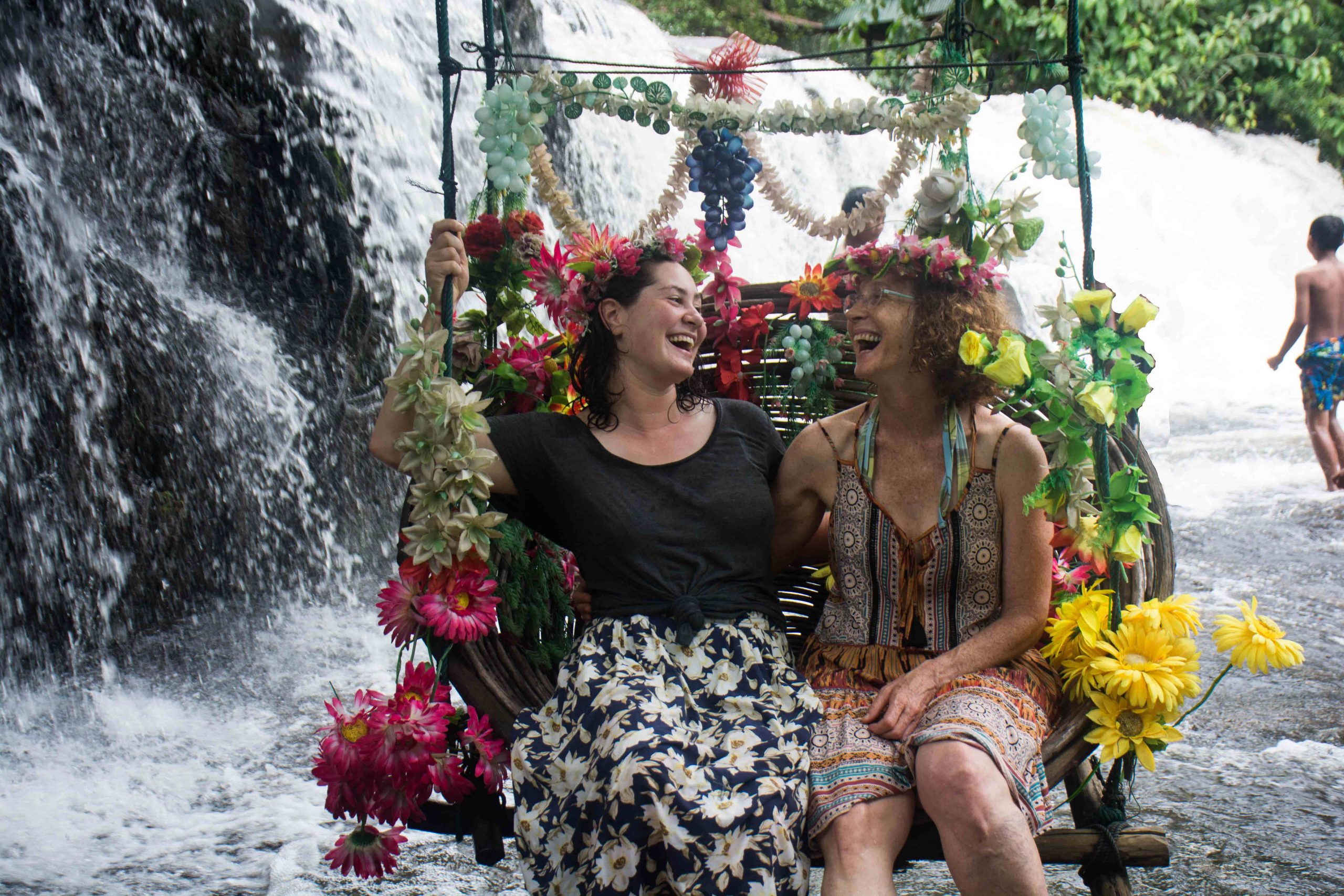
There’s just something about travel that immediately heightens the senses and gets the heart pumping a beat faster. But beyond the thrill of exploring the unknown, time spent away from home doesn’t just change your mood, it fundamentally rewires your psychological baseline. With that we will explore how travel changes your personality.
As a travel psychologist, I often see people return from journeys not just refreshed, but functionally different. The science backs this up: extensive travel has been clinically shown to alter key dimensions of our personality, creating longer-lasting effects that impact us on a deep, identity-shifting level.
Here is the psychological breakdown of exactly how traveling changes your personality for the better.
In the Bollywood film “Tamasha,” a man named Ved rediscovers his true self during a spontaneous trip to Corsica. Breaking free from societal expectations and embracing his inner child, he learns to express his creativity and passions authentically. This transformative journey highlights how travel can unleash hidden aspects of our travel personality, leading to greater self-awareness and happiness.
How traveling changes your personality
1. Spikes Your “Openness to Experience”
In psychology, we use the “Big Five” personality traits to measure human behavior.
Of these five, “Openness to Experience” is the trait most drastically impacted by travel. A landmark study by psychologists Zimmermann and Neyer found that extended travel significantly promotes goals related to openness. When you immerse yourself in a completely different culture, you are forced to abandon your default worldview. You stop taking everyday routines for granted and begin to appraise your experiences from multiple vantage points, naturally increasing your cognitive flexibility.
Furthermore, research by Filep (2014) demonstrated that meaningful travel reflection contributes directly to psychological resilience.

2. Builds High-Level Emotional Resilience
When you travel, unanticipated changes missed flights, language barriers, getting lost in a new city are inevitable. At home, a disruption might derail your entire day. On the road, it’s just part of the itinerary.
This constant exposure to micro-stressors in a novel environment forces you to practice emotional regulation. Over time, travel changes your personality away from reactivity. You learn to embrace obstacles rather than getting deterred by them, building a profound resilience that translates directly into your personal and professional life back home.
3. Lowers Neuroticism Through “Controlled Discomfort”
The quickest way to break out of a psychological rut is to actively step out of your comfort zone. Travel personality acts as a form of exposure therapy. By navigating the unknown, you prove to your brain that you are capable of handling uncertainty.
Over time, frequent travelers often see a decrease in neuroticism (the tendency toward anxiety, self-doubt, and negative emotional states). When you realize that you can successfully navigate a foreign transit system or communicate without a shared language, your internal locus of control strengthens.

4. Accelerates Interpersonal Intelligence
Building social skills on the road isn’t just about making friends in a hostel; it’s about developing deep interpersonal intelligence. Watching how people in different cultures interact with one another requires active observation and empathy.
Whether you are engaging in a meaningful conversation with a local or navigating a group dynamic on an experiential tour, travel forces you to communicate beyond words. This broadens your social adaptability, making it easier to connect with diverse groups of people long after your trip ends.
Research utilizing the Broaden-and-Build Theory (Fredrickson, 2004) shows that positive affect generated during memorable tourism experiences needs time to be internalized to enhance an individual’s sense of meaning in life.
5. Sparks Neuroplasticity and Creative Problem Solving
There is a reason the greatest artists, writers, and inventors throughout history were avid travelers. Absorbing the vast intricacies of the world isn’t just inspiring; it physically changes your brain.
Navigating foreign environments stimulates neuroplasticity, the brain’s ability to reorganize itself by forming new neural connections. This heightened cognitive state gets your creative juices flowing in evolving travel personality. You aren’t just looking at beautiful scenery; your brain is actively mapping new ways to approach complex problems.
6. Forces Identity Clarification (The Self-Concept)
When you stay in one place for extended periods, your personality is often heavily influenced by your environment and the expectations of the people around you.
Travel strips away that external scaffolding. When you are entirely on your own especially during solo travel, you are forced to rely on your intrinsic desires and decision-making skills. This leads to profound intrapersonal clarity. You discover who you actually are when nobody is watching, allowing you to return home with a much stronger, more authentic self-concept.
7. Navigating “Reverse Culture Shock” and Long-Term Integration
The final way travel changes your personality happens when you return. “Reverse culture shock” is a well-documented psychological phenomenon where your newly evolved mindset clashes with your old, static environment.
While initially uncomfortable, this friction is a catalyst for profound personal transformation. It forces you to consciously apply the open-mindedness, adaptability, and psychological freedom you gained on the road into your everyday life with intent and purpose.

The Bottom Line: Travel is a Catalyst for Transformation
In conclusion, travel has a direct influence on one’s personality factors, in the way we interact with our external surroundings, as well as perceiving and experiencing things internally. This is extremely important, as it is not just to be aware of the travel personality changes through having an open mind, but to consciously apply them into our lives with intent and purpose.
Travel personality isn’t just about collecting passport stamps and souvenirs; it’s a catalyst for profound personal transformation travel. As you navigate unfamiliar landscapes and immerse yourself in diverse cultures, you’ll discover hidden strengths, challenge your assumptions, and ultimately evolve into a more open-minded, adaptable, and resilient individual. The experiences you encounter on the road will shape your outlook, expand your horizons, and leave an enduring mark on your personality.
Travel isn’t just about collecting passport stamps and souvenirs. As you navigate unfamiliar landscapes, you’ll discover hidden strengths, challenge your assumptions, and ultimately evolve into a more adaptable, resilient individual. Let the world be your classroom and let your travels ignite a personal transformation that will last a lifetime.
Frequently Asked Questions
Does traveling actually change your personality?
Yes, extended travel significantly alters the ‘Big Five’ personality traits. When travel changes your personality, primarily increases Openness to Experience and Emotional Stability while permanently decreasing Neuroticism. A landmark 2013 study by Zimmermann and Neyer published in the Journal of Personality and Social Psychology empirically proved that engaging with new cultures and expanding social networks abroad directly caused measurable, long-term increases in Openness and Emotional Stability compared to a control group that stayed home.
How does travel improve mental health?
Travel personality acts as a psychological reset, reducing perceived stress and enhancing both hedonic (pleasure-seeking) and eudaimonic (meaning-making) states. It is a proven mechanism to de-stress, manage anxiety, and improve overall well-being. A 2022 macro-study by Badulescu et al. analyzed panel data across 27 EU countries from 2000 to 2019, finding a direct correlation between positive tourism experiences and long-term mental well-being. Furthermore, research by Filep (2014) demonstrated that meaningful travel reflection contributes directly to psychological resilience.
How long do you have to travel to experience psychological changes?
While short vacations (2-4 days) can temporarily lower cortisol levels, permanent personality shifts require extended travel (several weeks to months). Extended immersion forces a psychological paradigm shift, whereas brief tourism merely provides a temporary break. Research utilizing the Broaden-and-Build Theory (Fredrickson, 2004) shows that positive affect generated during memorable tourism experiences needs time to be internalized to enhance an individual’s sense of meaning in life. It is the prolonged exposure to micro-stressors and cultural differences that builds the cognitive flexibility on how traveling changes your personality baselines.