
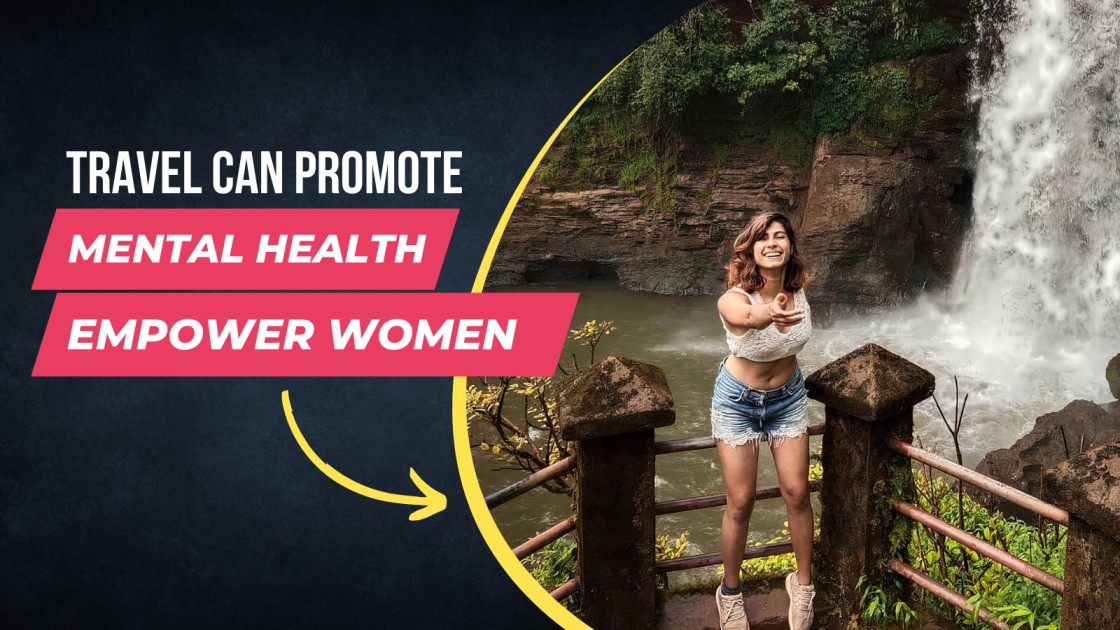
You didn’t plan this trip just to lie by a pool. You planned it because something has been quietly wearing you down. The mental load of managing everything. The anxiety that creeps in before every journey. The feeling that your wellbeing keeps getting bumped to the bottom of your to-do list. Women’s retreat results in more love for mental wellness is not just a hopeful tagline. It’s a documented psychological outcome. And for women specifically, the need for this kind of structured, travel-based mental support has never been more urgent.
According to the WHO’s depression data, depression is more prevalent in women than in men. And as travel stress is rising across all demographics, women are carrying an especially heavy psychological load on every journey they take.
This post breaks down what a best women’s wellness retreats actually does to your mind, what the research says about real outcomes, and how a travel psychologist makes the difference between a good trip and a genuine transformation.
A Women’s Retreat for Mental Wellness Works
A women’s retreat for mental wellness works by creating a concentrated, immersive environment where the normal stressors of daily life are removed. This gives the nervous system space to reset, the mind space to reflect, and the emotional self-space to grow. Unlike weekly therapy or a standard vacation, a retreat combines psychological tools with lived experience in a way that produces faster and deeper change.
That distinction matters. Most of us try to work on our mental health in between everything else. A retreat flips that. Your wellbeing becomes the entire focus for a defined period of time. That shift alone changes what’s possible.
Research published in PMC on residential meditation retreats confirms this. These structured programs reduce stress, anxiety, and depression while also improving emotional resilience. Mindfulness gains account for up to 50% of the psychological improvements achieved through retreats, underscoring the significance of immersive practices in developing resilience and emotional stability.
That’s not a small number. That’s half your psychological growth coming directly from the immersive quality of the experience itself.
When we designed WomanX at Mandeha, this was the core insight. A women’s retreat built around travel psychology tools creates something different from a spa weekend. It creates a psychological container for real change.

Does Travel Stress Hit Retreat Women’s Harder?
Women experience travel stress more intensely and more personally than most people realize. This is because women often carry multiple social roles at once, which means every trip involves not just logistical planning but emotional labor, guilt about leaving, and pressure to keep things running from a distance.
Research shows that retreat women’s can reduce stress, anxiety, and depression while enhancing emotional resilience. But to understand why that matters so specifically for women, you have to first understand what women are carrying into those retreats.
Global research by The Body Shop found that one in every two women worldwide has more self-doubt than self-love, and 60% wish they had more regard for themselves. That level of internal self-criticism doesn’t switch off when a flight takes off. It travels with you.
Add to that the physical reality of travel stress. The escapism travel can activate preexisting anxiety, bring latent issues to the surface, and create entirely new psychological challenges. For women already managing high stress in daily life, travel can amplify what’s already there.
This is why a women’s retreats for mental health is not a luxury. It’s a structured psychological intervention designed specifically for the way women experience stress, self-worth, and the demands of being on the move.
Understanding the 3 Peak Stages of Travel Stress in Women
Travel stress doesn’t just happen at the airport. It moves through three distinct phases, and women tend to feel each one acutely.
Before the trip, stress shows up in planning, in guilt about taking time for yourself, and in worrying about whether everything at home will hold together. During the journey, it shifts to unpredictability, unfamiliar environments, and the mental effort of navigating new places alone or with others. After the retreat, some women experience a drop in mood when real life rushes back in.
Understanding these three phases matters because a well-designed women’s retreat addresses all three, not just the days in between. That’s the kind of support that managing travel anxiety with a travel psychologist is built around.
Travel Stress affects the body and mind during Women’s Retreats
When stress activates your nervous system, your body enters a fight-or-flight state. Your heart rate rises, your breathing shortens, and your cortisol levels spike. This is the same mechanism whether the trigger is a flight delay or a deeper anxiety about the journey itself.
Mindfulness and meditation interventions reduce amygdala reactivity, improve brain connectivity and emotional regulation, and build stress resilience. These are the neurological changes that a retreat, when designed with psychology at its core, begins to build.

The Real Mental Wellness Results of a Women’s Retreat
A women’s retreat for mental wellness produces measurable improvements in stress levels, emotional resilience, self-awareness, and quality of life. Research consistently shows that anxiety and depression reduce significantly, mindfulness skills grow, and these gains persist weeks and months after the retreat ends. The results are not temporary. They are the beginning of a different relationship with yourself.
Here’s what the science actually shows.
Studies have demonstrated that reductions in anxiety and depression persist several weeks post retreat, illustrating the enduring psychological benefits of intensive experiences.
A 2024 systematic review published in Frontiers in Psychology found that MBSR benefits were sustained at three months, one year, and three years after program completion. Nurtured-well That kind of durability is what makes an immersive retreat different from a one-off relaxation experience.
And women who build regular wellness travel into their lives feel the cumulative benefit. Research cited by PAR Inc found that women who vacation at least twice a year are significantly less likely to suffer from chronic stress and depression than those who don’t.
These aren’t coincidences. They’re outcomes of giving your mind the consistent, intentional care it needs.
The Four Pillars of women only retreat: Self-Awareness, Self-Esteem, Self-Care, Self-Worth
At Mandeha’s WomanX retreat, we built the program around four psychological pillars. Each one addresses a specific dimension of wellness retreats for women that daily life tends to erode.
Self-awareness gives you the insight to understand your stress patterns and triggers. Self-esteem restores your trust in your own judgment and capabilities. Self-care shifts the habit of always putting others first. Self-worth rebuilds the internal sense that you deserve the life you want.
These aren’t abstract concepts. They’re skills you practice and build during the retreat, with support from a travel psychologist who understands why they’re so hard to maintain when you’re constantly in motion.
The Sisterhood Effect: Why Women only retreat Work Differently
There’s something that happens when women gather in an honest, psychologically safe space. The guard comes down faster. The conversations go deeper. The breakthroughs happen sooner.
Mindfulness meditation produces greater synchrony in the brain’s emotional processing regions, which has been linked to stronger interpersonal bonding. In a group retreat where every participant is on the same emotional journey, that bonding effect is amplified.
When we run WomanX at Mandeha, women consistently tell us that the connections they form during the women only retreat become part of their ongoing support system long after they return home. That’s not a side benefit. That’s part of the design.

A Travel Psychologist’s approach to impactful Women’s Retreats
A travel psychologist makes a women’s retreat different by bringing clinical expertise to every stage of the journey, before you arrive, during the experience, and in how you integrate and sustain the results when you’re back home. This is not a guided yoga session or a spa package. It’s a psychologically informed program built around your specific stress patterns and emotional needs.
Most retreats offer rest and relaxation. That’s valuable. But rest doesn’t address the root causes of why you were depleted in the first place. A travel psychologist maps those causes, builds tools around them, and helps you leave with a framework you can actually use.
At Mandeha, our Travel Psychology Journey is structured in three connected stages. Pre-retreat, we understand your triggers, your travel history, and what you most need from the experience. During the retreat, we use evidence-based tools including mindfulness, somatic awareness, and psychological reframing in the context of real travel experiences. Post-retreat, we help you take what you’ve learned and build it into your daily life.
For wellness companies and travel brands who want to offer this to their guests, our wellness travel consultants bring this same psychology-first framework to entire programs.
Making you Emotionally ready for a Women’s Healing Retreat
You don’t need to be in crisis to benefit from a retreat. But there are clear signs that a structured women’s healing retreat experience would give you more than a regular holiday ever could.
Ask yourself honestly: Are you returning from trips feeling more exhausted than when you left? Do you feel guilty taking time for yourself, even when you know you need it? Is anxiety creeping into your pre-travel period, making you dread what should be exciting? Are you going through the motions of self-care without actually feeling better?
These patterns don’t fix themselves. And they tend to compound over time. Each stressful journey adds to the weight. Each canceled trip reinforces avoidance.
The best wellness retreats India offer a starting point. But if your stress patterns are running deeper than a break can reach, working with a travel psychologist before, during, and after a retreat is what creates real and lasting change.
Setting right intentions Before, During, and After Your Female Retreat
Knowing what to expect removes a layer of anxiety before you even arrive.
Before your retreat, you’ll have a pre-retreat consultation with our travel psychologist. We’ll map your specific stress triggers, discuss your emotional goals for the experience, and set a framework for how to approach the days ahead. This conversation alone often brings relief.
During WomanX, the three days are structured around movement, reflection, connection, and psychological tools. You won’t spend the whole time in sessions. The retreat is designed to feel like an adventure as much as a program. Non-conventional techniques, outdoor experiences, and group activities are woven into the psychological work.
After your retreat, the integration phase begins. We support you in carrying your new tools into real life. You’ll know what what happens on a wellness retreats for women feels like from the inside. And you’ll have a clear sense of what to do when old stress patterns start to creep back in.
More than a Retreat Women’s new Beginning with Yourself
Here’s what we want you to take from this post.
First, the travelling is good for mental health in a women’s retreat are real and research-backed. They aren’t temporary. They grow over time with the right support. Second, women carry a unique psychological load into every journey they take. A retreat designed around that reality, by a travel psychologist, addresses it in a way nothing else can. Third, the right moment to begin is now. Not when things are worse. Not when you finally have time. Now.
If you’re ready to stop running on empty and start traveling with genuine clarity and peace, we’re here for that conversation. Reach out to us at Mandeha and let’s find out what your retreat should look like. Your journey to self-love starts with one step.
Frequently Asked Questions
Q. What does women’s retreat for mental wellness offer?
You can expect measurable improvements in stress levels, emotional resilience, self-awareness, and overall quality of life. The residential retreat programs shows significant reductions in anxiety and depression, with these benefits persisting several weeks after the retreat concludes. Beyond the data, women who go through structured retreat programs consistently report feeling clearer, calmer, and more connected to themselves. The depth of results depends on the quality of psychological support built into the program.
Q. How is a women’s retreat with a travel psychologist different from a regular spa or yoga retreat?
A spa or yoga retreat focuses primarily on physical rest and relaxation. A women’s retreat led by a travel psychologist goes deeper. It addresses the psychological patterns driving your stress, not just the symptoms. Pre-retreat consultations, in-retreat psychological tools, and post-retreat integration support create a complete arc of change that a standard getaway can’t replicate. The goal isn’t just to feel better for a few days. It’s to build the internal resources to feel better for much longer.
Q. Does Female retreats help with stress and anxiety?
Yes. In fact, this is one of the most direct and impactful applications of a female retreats India. The stress often builds in layers over time, especially for women managing multiple roles. A retreat helps you identify your specific travel triggers, build practical coping tools, and reframe your relationship with the uncertainty of being on the move. Research confirms that mindfulness-based interventions significantly reduce amygdala reactivity and improve the brain’s stress response, which is exactly the kind of neurological shift a well-designed retreat supports.
Q. Best women’s retreat in India?
The travel psychologist at Mandeha will connect with you to understand what you need, what you’re carrying, and what kind of experience would serve you best. There’s no pressure and no one-size-fits-all answer. Whether you’re ready to join the next wellness retreats for women or want to explore a personalised travel psychology journey, we’ll figure out the right path together.
Q. How long do the mental wellness benefits of a retreat last?
Longer than most people expect. The Stress Reduction programs found that participants reported sustained benefits at three months, one year, and even three years after completing the program. The key is integration. When you leave a retreat with specific tools, a clear framework, and post-retreat support, the benefits extend well beyond the trip itself. The retreat becomes a starting point, not a full stop.





Superb
Thank you for taking the time to read our article and leaving such a positive comment! If you have any suggestions for future topics, please feel free to let us know. cheers!
Well written Nimisha 👏
My heartfelt wishes to you
Thank you for taking the time to read our article and leaving such a positive comment! If you have any suggestions for future topics, please feel free to let us know. cheers!
this post serves as a powerful reminder of the importance of self-care and exploration in promoting women mental health and personal growth. It also highlights the need for more resources and support for women who want to travel solo, and I appreciate the efforts to address this issue.
Thank you for taking the time to read our article and leaving such a positive comment! If you have any suggestions for future topics, please feel free to let us know. cheers!
Thanks for sharing!!! It is empowering too see your work and journey emphasizes the importance of self-love and self-care, especially for women who have historically been expected to prioritize the needs of others over their own. Through traveling, we can learn to prioritize our own well-being and take control of our own lives. This is an important message for women everywhere, and I hope that more women are inspired to embark on their own journey of self-discovery through travel.
Thank you for taking the time to read our article and leaving such a positive comment! If you have any suggestions for future topics, please feel free to let us know. cheers!