
Table Of Contents
- Does Tourism Care About Mental Health? The Honest Answer
- Is Wellness Tourism the Same as Mental Health Support?
- The Trillion-Dollar Wellness Industry with a Mental Health Gap
- Does Luxury Wellness Travel Improve Your Mental Health?
- What Does Intentional Travel Psychology Actually Look Like?
- The Real Distance Between Aesthetic Wellness and Psychological Design
- Conclusion: Does Tourism Care About Mental Health?
- Frequently Asked Questions
Quick Answers: Wellness tourism is worth nearly $1 trillion globally, yet research shows its impact on mental health is largely temporary. Most wellness travel confuses luxury with recovery. This article breaks down the difference between leisure, wellness, and genuine mental health support, and what intentional travel psychology looks like when the industry actually gets it right.
She booked a “mental wellness retreat” after months of burnout.
Beautiful villa. Premium meals. Zero psychological structure.
She came back and said: “I felt better while I was there. Then it all came back the moment I landed.”
Does tourism care about mental health? Or does it care about selling the feeling of caring about mental health?
The distinction matters more than the industry wants to admit. Let’s explore how travel psychology benefits.
Does Tourism Care About Mental Health? The Honest Answer
Tourism cares about mental health the way advertising cares about your happiness. It uses the language genuinely. But the tools it has built are largely designed for experience, not recovery.
Wellness tourism was a $982.4 billion industry in 2025, according to the Global Wellness Institute, and is forecast to keep growing by about 7% a year to 2030. Yet McKinsey’s 2025 Future of Wellness research found that younger consumers, particularly Gen Z, still report their mental and cognitive health needs as “unmet” despite the industry’s explosive growth.
The wellness market got bigger. The mental health gap didn’t close.
When an industry uses mental health language without mental health capability, real people seeking real support end up in beautiful places with the same problems they arrived with. Caring and being equipped to care are two very different things.
Is Wellness Tourism the Same as Mental Health Support?

Wellness tourism and mental health support are not the same thing. Wellness tourism refers to travel designed to maintain or improve general wellbeing, typically through spa treatments, yoga retreats, nature immersion, or detox programmes. Mental health support refers to structured psychological intervention aimed at lasting behaviour change, emotional regulation, or recovery from specific conditions like burnout, anxiety, or trauma.
The tourism industry has bundled these into one offering. Marketing collapsed the distinction. Now a gratitude journal on your pillow qualifies as “mental health programming.”
True mental health support requires structure, professional guidance, and a framework that extends well beyond the stay itself. Research on mental health in wellness resorts consistently shows that without these elements, guests leave refreshed but psychologically unchanged. The environment shifts. The person does not.
Wellness tourism and mental health can coexist. But only when the industry builds the right tools to make it possible.
The Trillion-Dollar Wellness Industry with a Mental Health Gap

The numbers look impressive on paper. But the real question is: does tourism care about mental health?
Wellness tourism generated $982.4 billion globally in 2025, up 11.4% in a single year. In 2022, international wellness tourists spent 41% more per trip than the typical international tourist. GWI forecasts the sector will grow by about 7.1% a year, to roughly $1.38 trillion by 2030.
But there is a structural problem underneath those numbers.
Luxury hotels were among the first to commercialize the wellness label. Spas, yoga sessions, and detox menus became profitable add-ons long before anyone measured whether they were therapeutically effective. The Global Wellness Institute’s 2024 Wellness Policy Toolkit flagged this directly. It reframed the industry’s goal away from developing luxury spa resorts and toward how tourism can genuinely support the wellbeing of all travellers, not just high spenders.
That is a significant admission from the industry’s own research body.
Research on burnout and wellness travel found that most workers now report some degree of burnout. The tourism industry’s primary response has been experiential luxury: better rooms, better menus, better views. Not clinical structure. Not psychological frameworks.
The gap between luxury wellness travel and genuine mental health recovery is real. And it is not small.
Does Luxury Wellness Travel Improve Your Mental Health?
The honest answer is yes, but only briefly. And “brief” is shorter than most travellers expect.
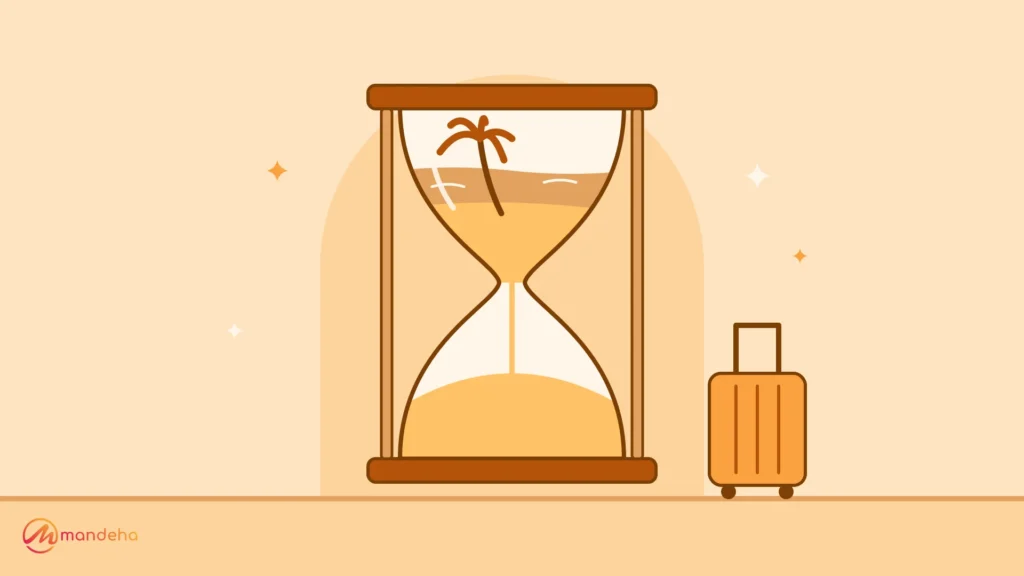
A comprehensive meta-analysis on vacation effects and mental health recovery found that vacation benefits, including reduced stress, improved mood and higher energy, fade quickly once people go back to work. A later study by the same team found they were largely gone within the first week. Not a month later. Not two weeks later. One week.
This is the fade-out effect. You go. You feel better. You come back. The environment returns. The stress returns. The patterns return. Nothing changed inside because nothing was designed to change inside.
Why Passive Travel Does Not Create Lasting Mental Health Change
Passive travel means changing your location while keeping the same mental habits. You bring your thought patterns, your stress responses, your unresolved tensions, and then you take them all home again. The destination never had a chance to do anything lasting because the travel was not structured to do anything lasting.
What Actually Changes the Outcome of Travel for Mental Health
Research on travel therapy effectiveness shows that when travel includes structured psychological practice, such as guided reflection, pattern interruption, mindfulness tools, and post-return integration, the outcomes shift significantly. The mechanism moves from temporary relief to what researchers call “skill transfer”: coping tools acquired during the trip that stay active and applicable after return.
Why the Industry Has Not Built This Yet
Smart travel founders building genuine wellness tourism and mental health programmes know it requires psychology professionals, not just wellness facilitators. It also requires pre-departure assessment and post-return integration. Most properties are not resourced for it, or incentivised for it. A luxury resort earns from occupancy and guest reviews, not from transformation outcomes that show up three months after checkout.
What Does Intentional Travel Psychology Actually Look Like?

Intentional travel psychology is travel designed with a clear psychological purpose, built-in tools for reflection and growth, and a structured framework for integrating the experience after returning home.
It is not about the destination. It is about what the environment is deliberately designed to provoke.
The LEGIT Model used in Mandeha’s travel psychology programmes is built precisely on this principle. Learning, Experience, Growth, Intentions, Transformation. Without all five elements aligned, even the most stunning landscape becomes a temporary escape rather than a catalyst for genuine psychological change.
This is why prescribing travel as a mental health intervention is not a metaphor. It is a structured framework. The environment creates the conditions. The structure creates the change.
Research in the International Journal of Tourism Research identifies tourism as a significant non-pharmacological mental health intervention, particularly for individuals in “suboptimal health status”: not clinically ill, but far from thriving. That describes most working adults today.
Recovery, when it actually works, is never accidental. It is designed with intention from before departure to well after return. The recovery approach at Mandeha is built on exactly this distinction.
The Real Distance Between Aesthetic Wellness and Psychological Design
Here is the clearest way to see the gap. Aesthetic wellness asks: Does this look like healing? Psychological design asks: What does this actually change?
A resort with morning yoga and a curated spa menu looks like proof that travel heals you. A retreat built on psychological assessment, structured clinical sessions, and post-stay integration is mental health support. The difference does not show up in a brochure. It shows up three months after the stay.
The tourism industry is beginning to evolve. 2025 wellness tourism research notes a genuine shift toward clinical psychology integration and evidence-based retreat design. Wellness and psychological travel consultants are working directly with hospitality properties to build psychologically rigorous programmes that go far beyond ambiance.
But the mainstream is still catching up. Academic research from 2025 specifically flags the lack of cohesive psychological understanding in how wellness tourism is currently designed and marketed, noting this as a critical gap the industry must address.
Most of what gets marketed as recovery today is premium leisure with better language.
You deserve to know the difference before you book.
Conclusion: Does Tourism Care About Mental Health?
So, does tourism care about mental health? In intention, yes. In capability, not yet. Not broadly.
Three things to carry with you.
First, leisure, wellness, and mental health support are different things. Travel being enjoyable does not make it therapeutic. Second, the fade-out effect is real. Without psychological structure, the mental health benefits of travel have a shelf life of roughly one week after you return. Third, genuinely effective travel for mental health is possible. It exists. But it requires intentional design, professional psychological frameworks, and a purpose that extends beyond the aesthetic.
If you are looking for an Indian cultural journey that actually moves something in you, not just around you, remember that your mental health deserves more than a beautiful view.
Frequently Asked Questions
Does tourism care about mental health?
Partly. The wellness tourism industry sells relaxation well, but few trips include the assessment, structure and follow-up that lasting change needs. Travel helps mental health most when it is designed with intention.
Is wellness tourism the same as mental health treatment?
No. Wellness tourism supports general wellbeing through spas, yoga or nature. Mental health treatment involves professional assessment and evidence-based care for specific conditions. They can overlap, but they differ.
How long do the mental health benefits of travel actually last?
Research shows ordinary holiday benefits usually fade soon after people return to work, often within the first week. Travel with structured reflection and support after the trip tends to produce longer-lasting results.
What makes a travel experience psychologically effective rather than just relaxing?
Three things: clear intentions set before you go, structured tools for reflection during the trip, and integration support after you return. Without them, even a great retreat is mostly short-term stress relief.
Can travel support mental health treatment?
Yes, as a complement. Travel can ease stress and burnout and create space for new thinking, but it does not replace clinical care. The results depend on psychological intention, not the destination or its price.
What should I look for in a wellness retreat that genuinely supports mental health?
Look for a psychologist involved in programme design, a pre-trip assessment, structured sessions with clear goals and a post-stay integration plan. If a property can’t explain its approach, that is your answer.
