
- What Is the Ganga Aarti in Rishikesh?
- The Psychology of Ritual: Why Humans Need It
- Why Rituals Reduce Anxiety
- Why Does Ganga Aarti Feel So Calming?
- Parmarth Niketan vs Triveni Ghat Aarti: Which Should You Choose?
- Ganga Aarti Experience for First Timers: How to Get the Most From It
- Ganga Aarti Rishikesh Timings
- Planning Your Visit: A Travel Psychologist's Tips
- How to Bring the Power of Ritual Home
- Final Thoughts: What the Ganga Aarti in Rishikesh Teaches Us
- Frequently Asked Questions
Quick Answer: The Ganga aarti in Rishikesh feels calming because it brings together things the mind finds steadying: a predictable sequence, rhythmic chanting, firelight, flowing water and hundreds of people sharing one moment. Research suggests rituals may lower anxiety, and shared rituals build a sense of belonging. Together, they give a busy mind permission to slow down.
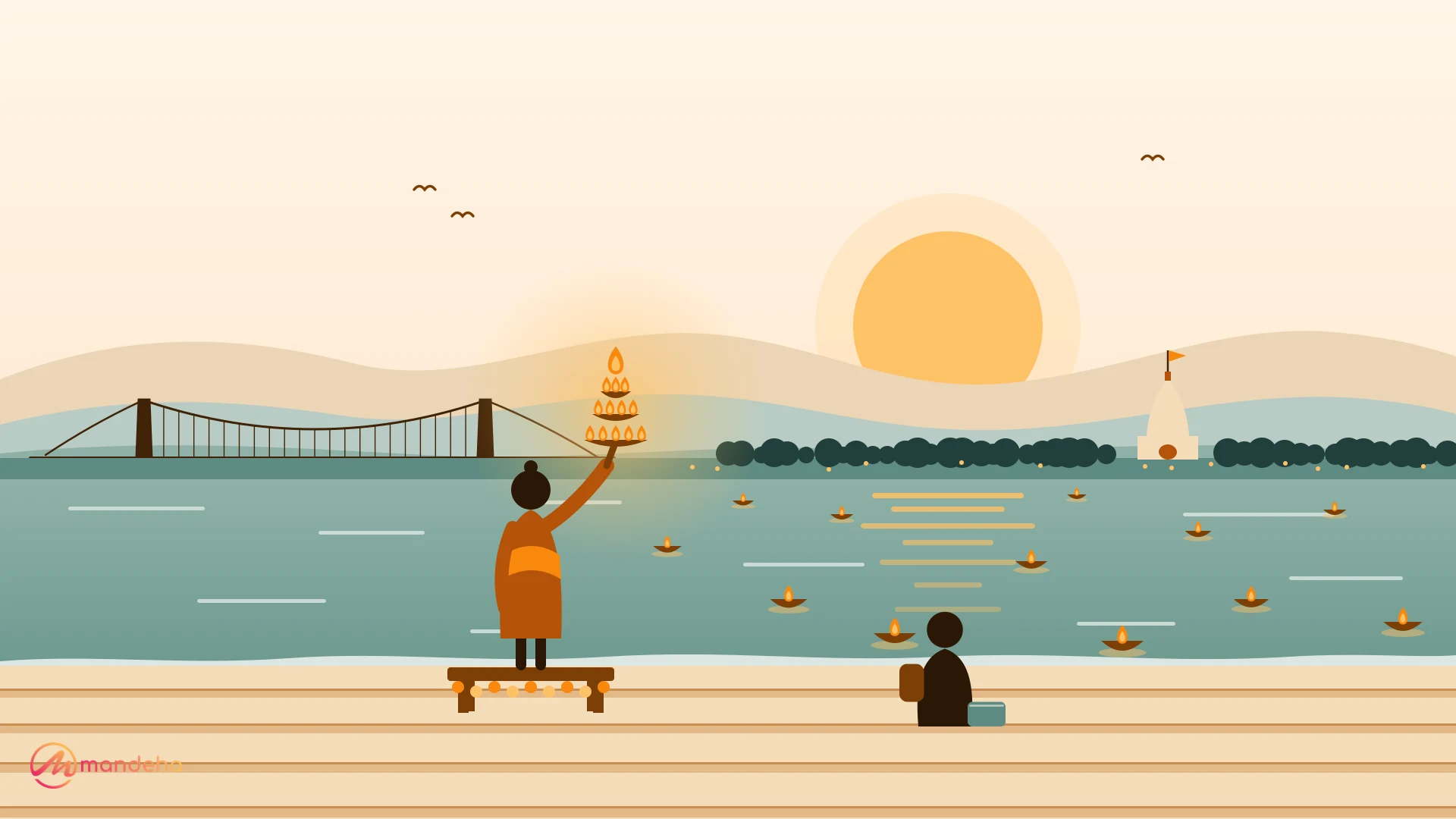
The sun drops behind the hills and the river turns copper. Bells begin. A row of priests lifts heavy brass lamps, and the flames swing in slow circles over the water. Around you, hundreds of strangers sing the same words, and for a while your phone, your inbox and your worries feel very far away.
Almost everyone who attends the Ganga aarti in Rishikesh describes some version of this feeling. Pilgrims and curious travellers alike often leave surprised by how moved they were.
At Mandeha, an unified travel psychology platform , we are interested in why that happens. This guide looks at the Rishikesh Ganga aarti through the psychology of ritual: what rituals do to the mind, why this one feels so peaceful, and how to get the most from your visit. If you are planning a calmer trip, it also fits into our guide to places to visit in India for mental peace.
What Is the Ganga Aarti in Rishikesh?
The Ganga aarti is a daily Hindu ceremony of worship offered to the river Ganga at dusk. Priests wave large oil lamps in circular movements, with bells, conch shells, hymns and chanting. In Rishikesh, the two best-known venues are Parmarth Niketan and Triveni Ghat, and both are free to attend.
The word “aarti” refers to the offering of light. For devotees, the Ganga is sacred, a mother who sustains life, and the ceremony is an act of gratitude and devotion.
The Parmarth Niketan Ganga aarti has been held every evening since 1997 and welcomes people of every faith. The Triveni Ghat aarti, often called the Maha Aarti, takes place at the city’s largest ghat, where the Ganga, Yamuna and Saraswati are traditionally believed to meet.
Psychology does not replace any of this meaning. It simply offers a second lens on why the Ganga aarti in Rishikesh lands so deeply, including for people who do not share the faith.
The Psychology of Ritual: Why Humans Need It
The psychology of ritual is the study of how fixed, symbolic sequences of actions affect our emotions, thinking and relationships. Researchers have found that rituals help people regulate their feelings, prepare for challenges and feel connected to others. Every known human culture has rituals, which suggests they meet a deep psychological need.
Psychologists define a ritual as a set sequence of symbolic actions, usually formal and repeated, that has no direct practical purpose. Lighting a lamp does nothing practical for a river. That is exactly what makes it a ritual: the meaning matters more than the mechanics.
An integrative review by Hobson and colleagues (2018) groups the psychological benefits of rituals into three functions:
- Regulating emotions: rituals help settle difficult feelings and steady the mind.
- Regulating goals and performance: rituals help people prepare for, and focus on, what matters.
- Regulating social connection: shared rituals bind individuals into a group.
The review also describes two routes. Some effects come from a ritual’s physical features, such as rhythm and repetition. Others come from the meaning we attach to it. The Rishikesh Ganga aarti is unusually rich in both, which is why it interests us in travel psychology.
Why Rituals Reduce Anxiety
Research suggests rituals may reduce anxiety by giving the mind a predictable structure when life feels uncertain. A ritual tells you exactly what happens next, which creates a sense of order and control. In experiments, people who performed a short ritual before a stressful task reported less anxiety and showed lower heart rates.
Do rituals really reduce anxiety?
The evidence is promising. In a series of experiments, Brooks and colleagues (2016) asked people to do stressful things, such as singing in front of a stranger or taking a difficult maths test. Those who first completed a brief ritual felt less anxious, had lower heart rates and performed better.
Two findings stand out. The benefit appeared mainly when people were already stressed. And the same actions worked better when people were told they were a “ritual” rather than “random behaviours”. Meaning, again, matters.
How rituals calm the mind
- Predictability and control: you know the sequence, so the anxious mind, which dislikes uncertainty, can stop scanning for what might go wrong.
- A place for attention: chanting and watching flames give attention one simple place to rest, much like mindfulness practice.
- Meaning: a ritual connects a small moment to something far larger than your own worries.
None of this makes a ritual a treatment for anxiety. But it does explain why rituals reduce anxiety for so many people, and why people across cultures turn to them in hard times.
Why Does Ganga Aarti Feel So Calming?

The Ganga aarti in Rishikesh feels calming because it engages several forces at once: awe at the river and fire, a full sensory experience of sound, light and scent, and the sense of belonging that comes from a crowd singing together. Each of these may quieten everyday worry. Together, they are unusually powerful, which is why Ganga aarti feels so peaceful.
Awe
Standing beside a vast, fast-moving river at dusk is humbling. Psychologists describe awe as the feeling of meeting something bigger than yourself. In a 2015 study by Piff and colleagues, people who felt awe reported feeling smaller and less self-important, and became more generous towards others. For travellers, that shift in perspective matters: worries carried from home can look smaller beside a river this old.
Collective effervescence and belonging
Sociologist Émile Durkheim used the term collective effervescence for the shared emotional charge people feel when they gather for a ritual. A 2022 meta-analysis in Frontiers in Psychology found this shared state is linked to stronger group identity, positive emotions and a greater sense of belonging.
At the aarti, you sing, clap and sway with strangers. For solo travellers especially, that brief feeling of being part of something can be deeply reassuring.
Sensory immersion
Firelight, bells, camphor and incense, the rush of water: the ceremony fills every sense. When the senses are this full, there is less room for rumination. This is why the Ganga aarti for mental peace works even for visitors who arrive sceptical.
Emotional release
Many visitors find themselves unexpectedly tearful. A safe, collective setting can let held-in emotions surface and pass. That is a normal response, and nothing to be embarrassed about.
Parmarth Niketan vs Triveni Ghat Aarti: Which Should You Choose?

The best place to watch Ganga aarti in Rishikesh depends on what you want. Choose the Parmarth Niketan Ganga aarti for a structured, musical ceremony with a mixed, international crowd. Choose the Triveni Ghat aarti for a more traditional, devotional atmosphere among pilgrims and local families. Both are beautiful, and both are free.
| Parmarth Niketan | Triveni Ghat | |
| Crowd | Pilgrims, ashram guests and many international visitors | Mostly pilgrims and local families |
| Atmosphere | Organised and musical, with bhajans led by young ashram students | Traditional and devotional, with Vedic hymns, bells and floating diyas |
| Best for | First-time visitors and those who want to sing along | Travellers who want a more local, less staged feel |
| Viewing tips | Sit on the ghat steps facing the river; arrive early for a front spot | Arrive early and stand along the ghat edge to see the lamps and diyas |
Parmarth Niketan vs Triveni Ghat aarti is not really a contest. If you have more than one evening, try both. Noticing how differently each one feels is itself a useful exercise, and that kind of attention is at the heart of experiential travel.
Ganga Aarti Experience for First Timers: How to Get the Most From It
For a good Ganga aarti experience for first timers, arrive early, choose a spot where you can see both the priests and the river, and keep your phone away for most of the ceremony. Treat the aarti less as a show to record and more as something to take part in.
How early should I reach for Ganga aarti?
Aim to arrive 30 to 60 minutes before sunset, and earlier on weekends, holidays and festival days, when the ghats fill quickly. Arriving early also gives you time to settle, watch the river and let your body slow down before the ceremony begins.
During the ceremony
- Sit close to the river if you can; the lamps and their reflections are the heart of it.
- Take one or two photos, then put your phone away. Recording keeps part of your mind outside the moment.
- Join in where it feels right, whether that is clapping, humming or simply following the rhythm.
- Dress modestly and remove footwear where asked, out of respect.
A five-minute reflection afterwards
Before rejoining the crowds, find a quiet step and ask yourself three questions:
- What did I feel in my body during the aarti?
- When did my mind feel quietest?
- What am I carrying that I would like to set down?
Writing a few lines helps the Ganga aarti experience stay with you. It is also a simple way to notice how travel affects mental health in your own life.
Ganga Aarti Rishikesh Timings
The Ganga aarti in Rishikesh is held every evening around sunset at both Parmarth Niketan and Triveni Ghat. Because sunset shifts through the year, the ceremony starts earlier in winter and later in summer. It usually lasts between 45 minutes and an hour.
Since Ganga aarti Rishikesh timings change with the season, do not rely on a fixed time from an old article. Check with Parmarth Niketan, or ask at your hotel or ashram on the day. During the monsoon, high water can also affect riverside ceremonies, so confirm before you set out.
Planning Your Visit: A Travel Psychologist’s Tips
Plan your visit to protect the calm you came for. Decide in advance which ghat you will go to and how you will get there, leave time to spare, and pick a quieter day if crowds drain you. Small decisions made early leave your mind free to be present at the aarti.
- Fix your route beforehand. Parmarth Niketan is on the Swarg Ashram side of the river, near Ram Jhula; Triveni Ghat is in the main town. Last-minute navigation keeps stress high.
- Build in a buffer. If you arrive rushed, your body is still in “getting there” mode when the ceremony starts.
- Match the day to your energy. Weekends and festivals such as Ganga Dussehra draw very large crowds. If crowds overwhelm you, choose a weekday or the quieter morning aarti at Triveni Ghat.
- Plan for sensory sensitivity. The bells, chanting and crowd are loud. Sitting near the edge, with a clear way out, helps your nervous system stay settled.
- Travelling solo? Sit near families or groups. Shared ritual is one of the quickest ways to feel less alone on the road.
- Leave space afterwards. Give the experience ten minutes to settle before switching back into travel mode.
How to Bring the Power of Ritual Home

You can carry the psychological benefits of rituals home by creating small, meaningful acts that mark moments in your day. The key is meaning, not efficiency. Lighting a lamp at dusk, pausing for gratitude before a meal or a weekly walk by water can carry some of the aarti’s calm into ordinary life.
A ritual is different from a routine. A routine is about getting something done, like packing a bag. A ritual is about meaning; it marks a moment as special. If you want the practical side of calming down before a journey, our guide to a pre-trip routine covers that.
A few rituals you could try:
- Light a lamp or candle at sunset and take three slow breaths.
- Name one thing you are grateful for before your evening meal.
- Mark the start of each trip by writing a short intention.
- Gather friends or family for a shared weekly ritual: a meal, a song or a walk.
Final Thoughts: What the Ganga Aarti in Rishikesh Teaches Us
The Ganga aarti in Rishikesh has drawn people to the riverbank for generations, and psychology helps explain part of its pull. Predictable structure, awe, shared song and full sensory immersion come together in one hour at dusk, and the mind responds.
You do not need to share the faith to feel it, but it helps to arrive with respect and attention. Moments like this are why we encourage intentional cultural travel in India: travel that changes how you feel, not just what you see.
At Mandeha, an applied travel psychology practice, we design trips around moments like this one. If you would like to experience the Rishikesh Ganga aarti with a psychologist’s guidance, explore our travel psychology journey.
Frequently Asked Questions
What time is Ganga aarti in Rishikesh?
The Ganga aarti in Rishikesh takes place every evening around sunset at both Parmarth Niketan and Triveni Ghat. It starts earlier in winter and later in summer, so check the time with Parmarth Niketan or ask locally on the day.
Which is better, Parmarth Niketan Ganga aarti or Triveni Ghat aarti?
Neither is better; they offer different moods. The Parmarth Niketan Ganga aarti is structured and musical, with an international crowd. The Triveni Ghat aarti feels more traditional and devotional, with mostly pilgrims and local families. Try both if you can.
Why does Ganga aarti feel so calming?
Ganga aarti combines a predictable ritual, rhythmic chanting, firelight and flowing water with a crowd sharing one moment. Research suggests rituals may lower anxiety, while awe and collective singing build a sense of belonging that quietens everyday worries.
Do rituals really reduce anxiety?
Research suggests they can. In experiments by Brooks and colleagues, people who performed a short ritual before a stressful task felt less anxious and had lower heart rates. Rituals can support calm, but they are not a treatment for anxiety disorders.
Can non-Hindus attend Ganga aarti in Rishikesh?
Yes. The Ganga aarti in Rishikesh is open to everyone, and Parmarth Niketan welcomes people of all faiths. Dress modestly, remove footwear where asked, and follow the lead of the priests and devotees during the ceremony.
How early should I reach for Ganga aarti?
Arrive 30 to 60 minutes before sunset for a good spot, and earlier on weekends, holidays and festival days. Arriving early gives you time to settle, watch the river and slow down before your Ganga aarti experience begins.
