
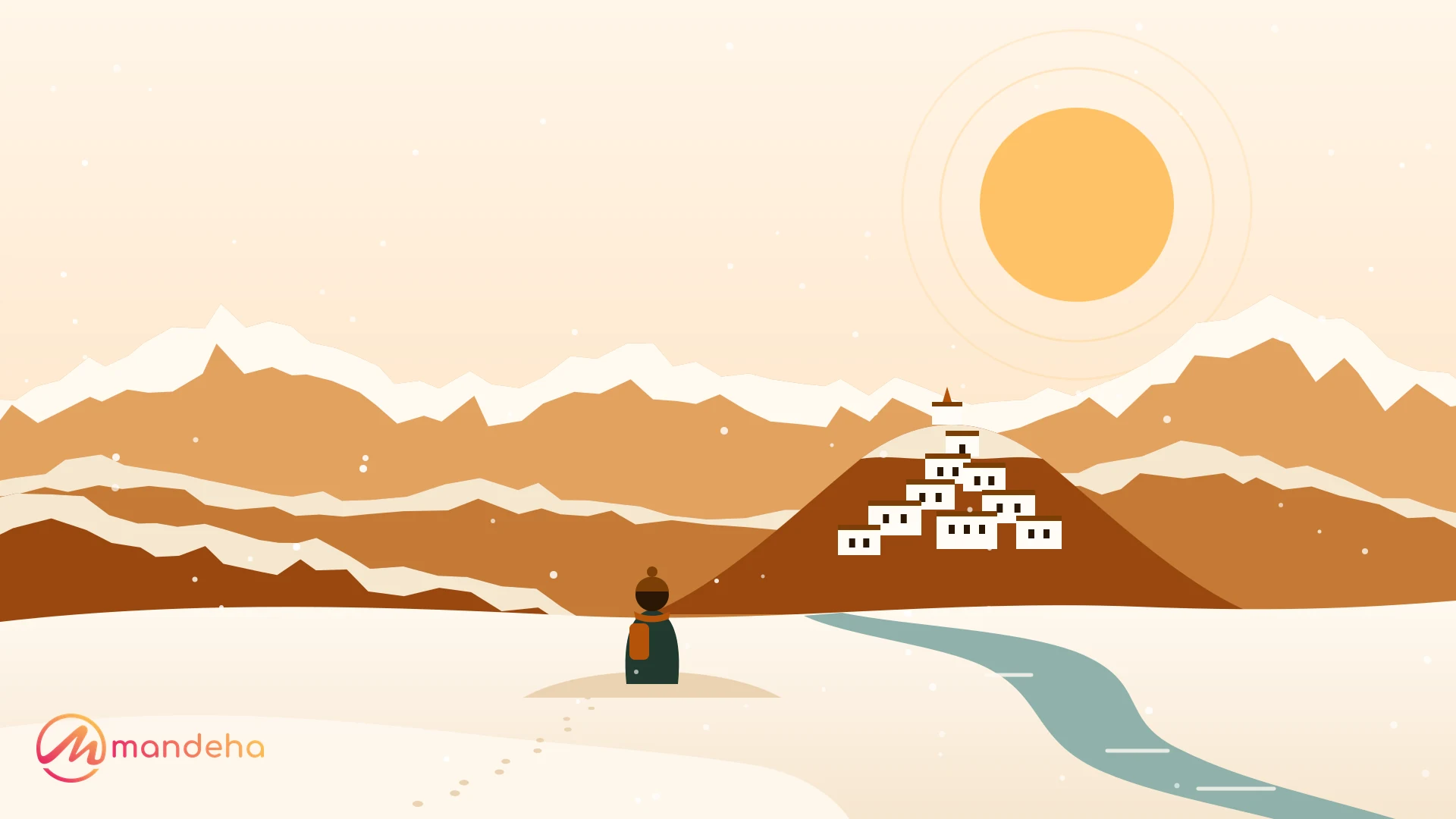
- What Is White Spiti?
- What Does Silence Do to a Tired Mind?
- Why Snow Makes You Feel Calm
- Is Winter Spiti Good for a Mental Reset?
- What Travellers Feel on a Winter Spiti Trip
- Who Should Not Visit Spiti Valley in Winter?
- Spiti Valley in Winter: The Practical Basics
- A Psychologist's Pace for Spiti Valley in Winter
- How to Make Your Winter Spiti Trip Restorative
- Conclusion
- Frequently Asked Questions
Quick Answer: Spiti Valley in winter offers what a tired mind rarely gets: deep silence, almost no crowds and a simple daily rhythm built around warmth, food and rest. White Spiti suits experienced travellers who want quiet and slowness. It does not suit first time Himalayan travellers or anyone who needs comfort, certainty and reliable internet.
Most tired minds are not short of rest. They are short of quiet. A normal week is a stream of notifications, traffic, open tabs and small decisions, and the brain rarely gets a stretch of time with nothing asking for its attention.
Spiti Valley in winter removes almost all of it. The roads empty out, the villages slow down and the snow mutes the landscape. Days shrink to a few simple tasks: stay warm, eat well, walk a little, sleep early.
That is exactly why a winter Spiti trip appeals to people with mental fatigue, and also why it is not for everyone. This guide explains what silence and snow actually do to the mind, who Spiti Valley in winter suits, and how to make the trip restorative rather than exhausting. It is part of our psychologist’s guide to places to visit in India for mental peace.
What Is White Spiti?
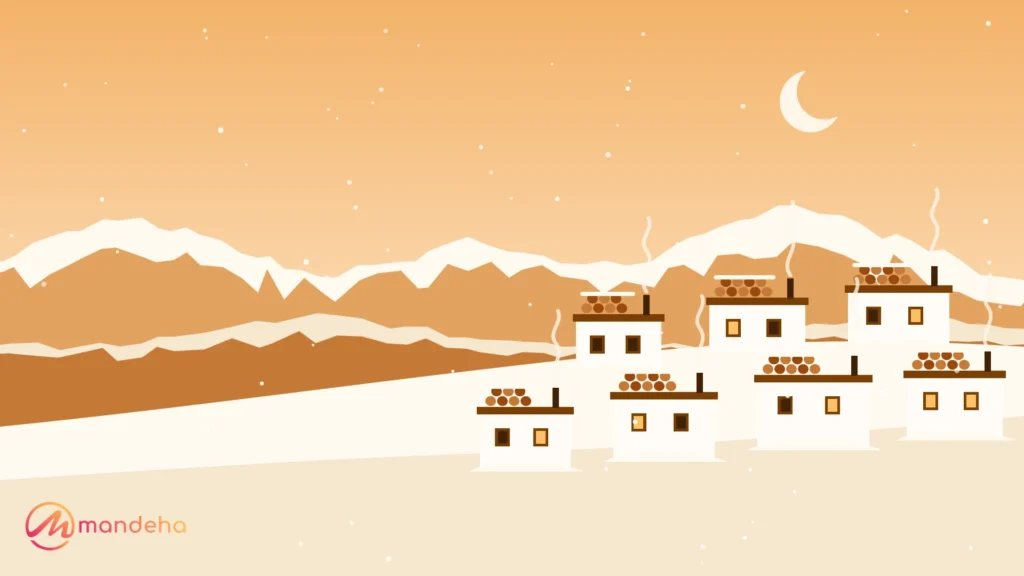
White Spiti is the name travellers give to Spiti Valley in winter, roughly December to March, when snow covers the valley and the tourist season ends. Rivers freeze at the edges, villages like Kibber and Langza sit under snow, and the roads fall quiet.
In winter, life moves indoors. Families gather around the bukhari, a wood burning stove that heats the main room, and guests share that warmth in a Spiti winter homestay. Mornings start late, evenings end early, and the day follows the daylight.
Snowfall in Spiti can begin as early as November, and each month feels a little different, to the body and to the mind.
Spiti Valley in Winter, Month by Month
| Month | What to expect | What it does to the mind | Who it suits |
| Spiti Valley in December | Fresh snow, the valley quietening, short days | The novelty of first snow and a gentle step into winter quiet | Experienced mountain travellers trying winter for the first time |
| Spiti Valley in January | Full snow cover and some of the hardest cold of the year | The deepest silence and fewest distractions, but cold that demands patience | People seeking maximum stillness who cope well with discomfort |
| Spiti Valley in February | Still deeply snowbound, the classic white Spiti | Long homestay evenings that suit reflection and journaling | Reflective travellers and small, calm groups |
| March | Snow stays, days are longer, roads slightly easier | More daylight tends to lift energy and mood, with less sense of isolation | Travellers who want snow with a little more light and flexibility |
What Does Silence Do to a Tired Mind?
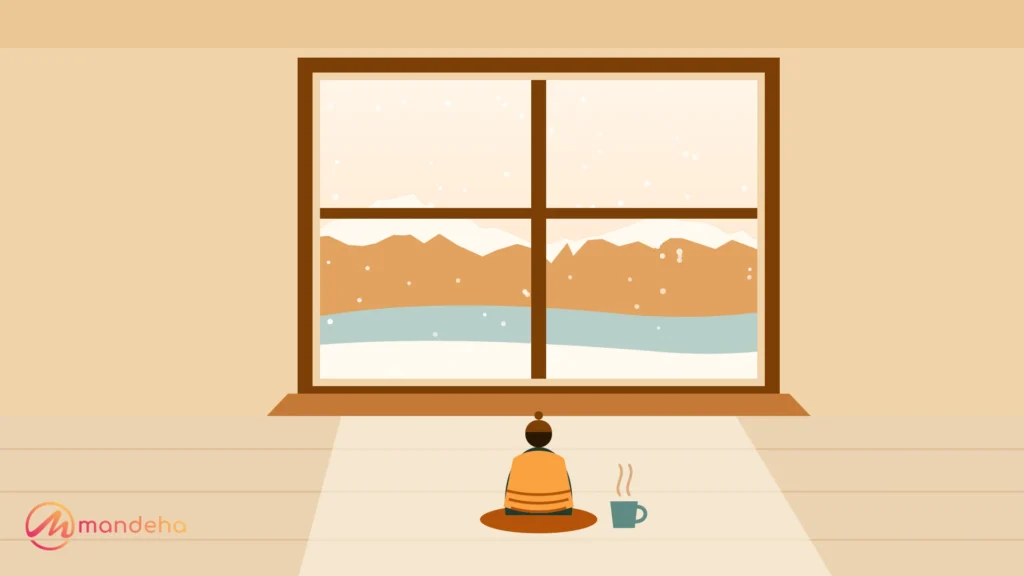
Silence gives an overloaded brain a chance to stop filtering and start recovering. Most of us live with a high sensory load, a constant stream of sound, light and information that the brain has to sort, even when we are not paying attention.
Attention restoration theory explains why this matters. Psychologist Stephen Kaplan described directed attention as the effortful focus we use for work, screens and traffic. It runs down with use, and it recovers best in settings that ask very little of it.
Research on the benefits of silence points the same way, though some of it is early. In a 2006 study in the journal Heart, two minute pauses of silence between music tracks lowered heart rate, blood pressure and breathing rate, even below the levels people had before the music began. A later study linked daily silence with more new brain cells in the hippocampus, a region tied to memory, but that work was done in mice, not people.
So what does silence do to your brain? It cuts the work of filtering noise, lets the stress response settle, and leaves room for thoughts to sort themselves out. Spiti Valley in winter offers this kind of silence for days at a time, not minutes.
Why Snow Makes You Feel Calm
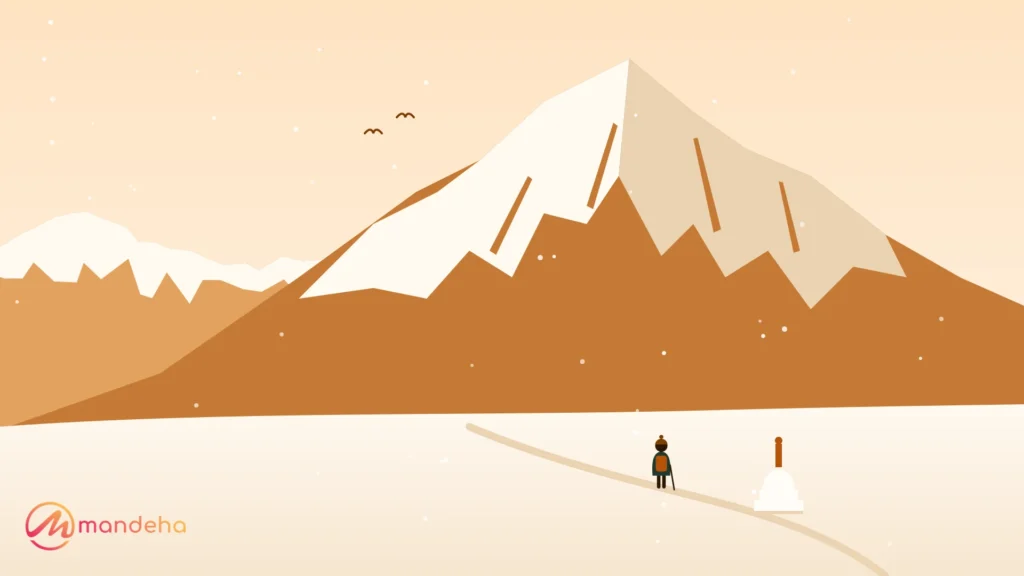
Snow calms the mind mainly by simplifying what you see and hear. A snow covered valley has fewer colours, fewer edges and fewer moving parts, and fresh snow absorbs sound, so the whole landscape becomes quieter.
This is close to what the Kaplans called soft fascination: a gentle, effortless interest, like watching snowfall in Spiti or light moving slowly across a ridge. It holds your attention without draining it, which is exactly the kind of attention a tired mind can afford.
Then there is awe, the feeling of standing in front of something far larger than yourself. In a 2022 study in the journal Emotion, older adults who took weekly 15 minute “awe walks” for eight weeks reported more positive emotions and less daily distress, and their photos showed a growing “small self”. The scale of the mountains around Kaza and Key Monastery invites exactly this shift in perspective.
It is worth being honest here. Cold, discomfort and uncertainty are stressors too. The calm of Spiti Valley in winter comes from its simplicity, not from enduring hardship. If the cold becomes the whole experience, the restorative effect disappears.
Is Winter Spiti Good for a Mental Reset?
Winter Spiti can be a strong mental reset for people whose exhaustion comes from too much input, too many decisions and too little quiet. A winter trip for mental health works best when the goal is to slow down, not to run away.
That difference matters. Escape travel tries to outrun a problem, which is usually waiting at home. Healing travel uses distance and quiet to understand the problem better. We explain this in our piece on healing travel vs escape travel.
Spiti Valley in winter suits the second kind. There is little to do, little to buy and little to scroll. With nothing to fill the hours, thoughts have time to slow down, and things that felt urgent at home often start to look smaller.
There is also a difference between restful solitude and loneliness. Solitude is chosen quiet that leaves you calmer. Loneliness is unwanted isolation that leaves you lower. Homestay evenings help keep the first from sliding into the second.
So is winter Spiti worth it? For an experienced traveller who wants stillness and can accept discomfort, often yes. For someone who wants comfort, variety or a fixed schedule, a summer trip or a gentler destination will do more good. Our guide to how travel supports emotional recovery explains what to look for.
What Travellers Feel on a Winter Spiti Trip
Many people who come to Mandeha before a Himalayan journey describe a tiredness that sleep does not fix. Before the trip, a short Travel Assist assessment helps them name what they need, such as rest, clarity or getting their spark back. After the trip, a Wellbeing Landscape review helps them see what actually changed, so the calm they found in the mountains does not fade the week they return.
In quiet, low stimulation places like Spiti in winter, the first day or two often feel restless, because the mind keeps reaching for its usual input: the phone, the news, the next task. After that, attention tends to settle, and small things, like light on a ridge or a long conversation over tea, start to feel like enough.
A traveller on one of our Himalayan journeys described the shift like this:
“That personalization cost nothing. It is the most valuable thing I brought home.” Samay Miyaa, Traveller – Himachal Pradesh
Who Should Not Visit Spiti Valley in Winter?
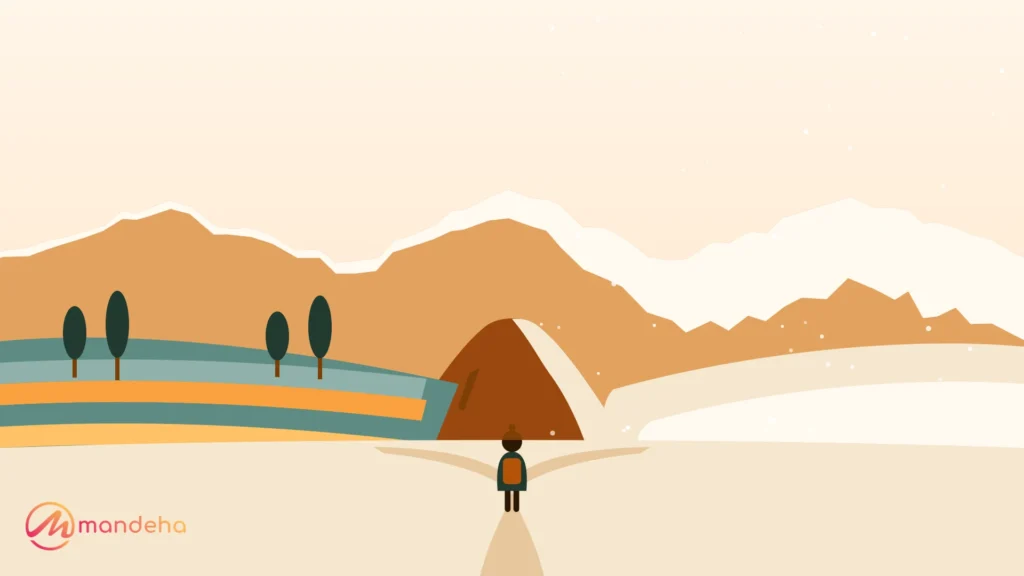
Spiti Valley in winter is not a good choice for a first Himalayan trip. From a travel psychology view, the cold, the roads and the isolation add stress all at once, and a beginner has no past mountain experience to steady them. Novelty helps the mind only while it stays manageable.
As a winter trip for mental health, it is also not right for:
- people with heart or lung conditions
- families with small children or elderly parents
- anyone who needs reliable internet for work
- anyone with a fixed return date and no room for delays
Is winter Spiti safe for first timers? It can be done with an experienced group and local support, but it is not where we would suggest starting. Speak to a doctor before any high altitude winter trip, especially if you have a health condition.
Psychologist’s Note: I suggest Spiti Valley in winter to people who are mentally tired but physically well, and who find quiet restful rather than unsettling. I steer people away from it when they are already anxious about cold, isolation or uncertainty, because those worries can take over the whole trip. If that sounds like you, start with a gentler place and come to Spiti later.
If worries about roads, cold or delays are already building, our guide to managing travel anxiety can help.
Spiti Valley in Winter: The Practical Basics
Spiti Valley in winter needs more planning than a summer trip, and the practical side directly shapes how restful it feels. Keep your plans simple and conservative.
How to reach Spiti in winter
In winter, Spiti is reached only through the Shimla to Kinnaur route, via Kinnaur villages such as Nako and on to Tabo and Kaza. Can you go to Kaza from Manali in winter? No. The Manali route over Kunzum Pass closes for the season, so plan the full journey through Kinnaur. Check the latest road status with the Lahaul and Spiti district administration before you leave.
Spiti winter temperature
In winter, daytime temperatures in Spiti can stay around minus 5°C, and nights in the coldest months can fall to about minus 25 to minus 30°C. Cold at this level affects sleep, appetite and mood, so plan for warmth first and sightseeing second.
Spiti winter homestay life
Most hotels close for the season, so you will almost certainly stay in a Spiti winter homestay. Expect frozen water pipes, dry toilets and one warm room heated by a bukhari. Sleep can be harder in a cold, unfamiliar room, and that is normal; our piece on the first night effect explains why.
What to pack for winter Spiti
- thermal inner layers, top and bottom
- a down jacket and a windproof outer layer
- woollen socks, gloves and a warm cap
- a sleeping bag suited to temperatures well below zero (VERIFY rating with your operator)
- lip balm, sunscreen and sunglasses for snow glare
- a power bank and a written copy of key phone numbers
Keep at least two buffer days for snow delays. A calm pre trip routine also helps you arrive less frazzled.
A Psychologist’s Pace for Spiti Valley in Winter
A restorative winter trip climbs slowly and leaves empty space in each day. This sample 7 day route follows the Shimla to Kinnaur road, and each stop has a psychological purpose as well as a place on the map.
| Day | Route | Psychological purpose |
| 1 | Chandigarh or Shimla to Narkanda | Transition day: leave work mode behind, with no sightseeing goals |
| 2 | Narkanda to Sangla or Kalpa | A gentle climb and the first evening of real quiet |
| 3 | Kalpa to Nako | Slow the pace: a short village walk and an early night |
| 4 | Nako to Tabo | Reflection at Tabo Monastery, one of the oldest in the valley |
| 5 | Tabo to Kaza, via Dhankar | Arrive in the heart of the valley without rushing |
| 6 | Kaza, Key Monastery and Kibber | One place, then rest: a full day of deep silence |
| 7 | Kaza | Buffer and integration day: journaling, homestay time and room for snow delays |
The return follows the same road through Kinnaur. Mandeha does not book your trip. We help you check that your plan fits what you need from it. Driving times depend on snow and road conditions, so treat this as a rhythm, not a fixed plan.
How to Make Your Winter Spiti Trip Restorative
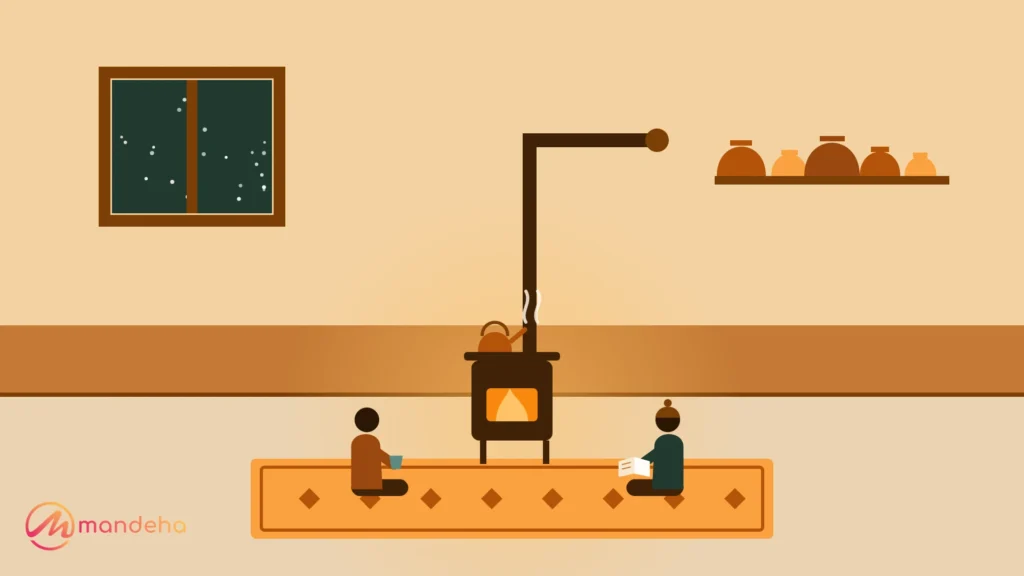
A winter Spiti trip becomes restorative when you do less, not more. These five practices help the quiet do its work:
- A silent morning sit. Spend ten minutes with tea at the window before you speak to anyone or check your phone.
- Phone free hours. Mobile network is limited in much of the valley, so turn that limit into a choice. Our guide to switching off where the network barely reaches shows how.
- An evening journal. Write three lines about what you noticed that day. Our travel journaling guide explains why this small habit helps the mind process a trip.
- One place a day. Visit Key Monastery or Dhankar, then come back and rest, instead of chasing a packed itinerary through the cold.
- Time with your hosts. Conversations around the bukhari are often the warmest part of Spiti Valley in winter, and they keep solitude from turning into loneliness.
Conclusion
Spiti Valley in winter is not a holiday in the usual sense. It is a long stretch of silence, snow and simple routine, and for the right person that is exactly what a tired mind needs. The benefits of silence and soft fascination are real, but so are the cold and the uncertainty. Go if you are well, experienced and ready to slow down. If you want to experience white Spiti with the guidance of a travel psychologist.
Frequently Asked Questions
Is winter Spiti worth it?
Yes, for experienced travellers who want deep quiet and can handle serious cold. Spiti Valley in winter offers silence, empty roads and a slow homestay routine. If you need comfort, certainty or reliable internet, a summer trip will suit you better.
What is white Spiti?
White Spiti is the name for Spiti Valley in winter, roughly December to March, when snow covers the villages and monasteries. Most hotels close, travellers stay in homestays, and the valley becomes very quiet, with few visitors on the roads.
Can you go to Kaza from Manali in winter?
No. The Manali route over Kunzum Pass closes in winter, so Kaza is reached only through the Shimla to Kinnaur route. Keep at least two buffer days for snow delays, and check the latest road status before you set out.
How cold does Spiti get in winter?
Very cold. Daytime temperatures can stay around minus 5°C, and nights in the coldest months can drop to about minus 25 to minus 30°C. Water pipes freeze, so expect dry toilets and one heated room in most homestays.
Is winter Spiti safe for first time travellers?
It is not recommended. We do not suggest winter Spiti for a first Himalayan trip, because the cold, the roads and the isolation add stress all at once. Start with a summer trip, and speak to a doctor before any high altitude winter travel.
What does silence do to your brain?
Silence reduces the load of filtering constant noise, which lets your stress response settle. Research links short pauses of silence with lower heart rate and blood pressure, and an animal study linked daily silence with new brain cell growth.
